
The Prisma series: Fascism is a distinct phenomenon of modern capitalism. There were no fascist regimes in the world until Mussolini’s dictatorship emerged in the 1920s. Before this period, humanity had experienced 6,000 years of various repressive states, none of which could be classified as fascist.
 Yonatan Mosquera
Fascists are considered “low-born.” Mussolini’s Italy was not the only dictatorship of its time. Just across the Mediterranean, Primo de Rivera established a military dictatorship in Spain in 1923, effectively eliminating any semblance of democracy. However, Rivera’s regime was not fascist, as evidenced by his relationship with the traditional ruling classes.
Rivera was an aristocrat and a member of the military elite, having held prominent positions in the administrations of Valencia, Madrid, and Barcelona before his coup in 1923. In contrast, Mussolini was a member of the Socialist Party, and Hitler was part of the National Socialist Workers’ Party. Both leaders were self-made men from humble origins, viewing themselves as “outsiders” opposed to the traditional ruling classes. They justified their dictatorships as a “revolution” against the elites—a concept that would have been repugnant to the aristocratic Primo de Rivera, the 2nd Marquis of Estella.
Rivera’s dictatorship sought to restore Spain to its traditional glory and was supported by military and monarchical elites. In contrast, Mussolini and Hitler presented themselves as champions of a “people’s revolution” against the “degenerate” patricians, displaying hostility toward the traditional high-born elite. Thus, fascism represents a unique arousal of the plebeian masses.
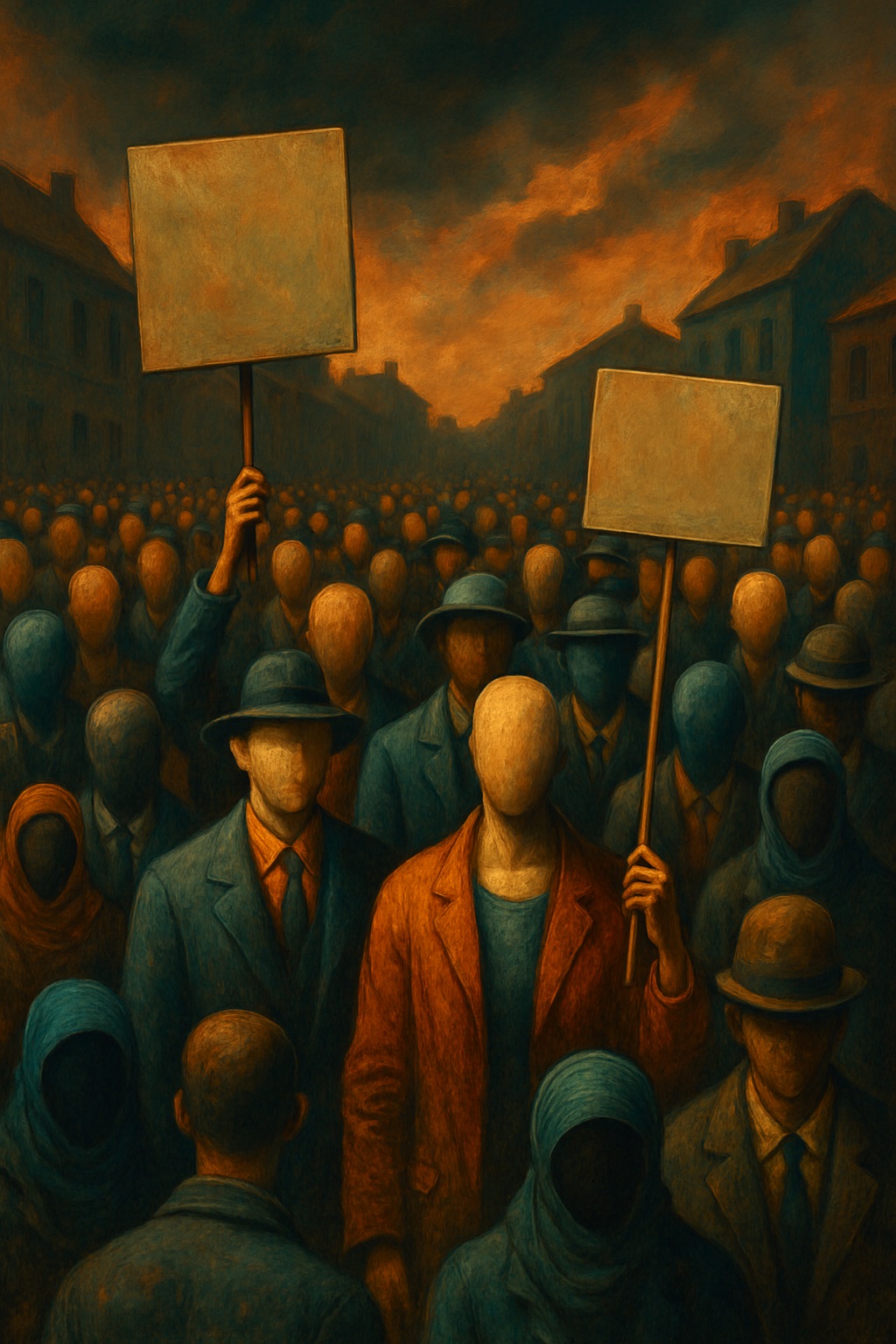
Fascism is a mass movement
During extreme upheaval, the traditional institutions of bourgeois democracy, including political parties and parliaments, lose the trust of the masses. They are seen as hopelessly corrupt, morally bankrupt, and incapable of providing real solutions. Consequently, fascism seeks to attract those millions of people desperate for an escape from the intolerable crisis of capitalism and the devastation it brings. Without significant elements of socialist or populist rhetoric, fascism could not mobilise the masses.
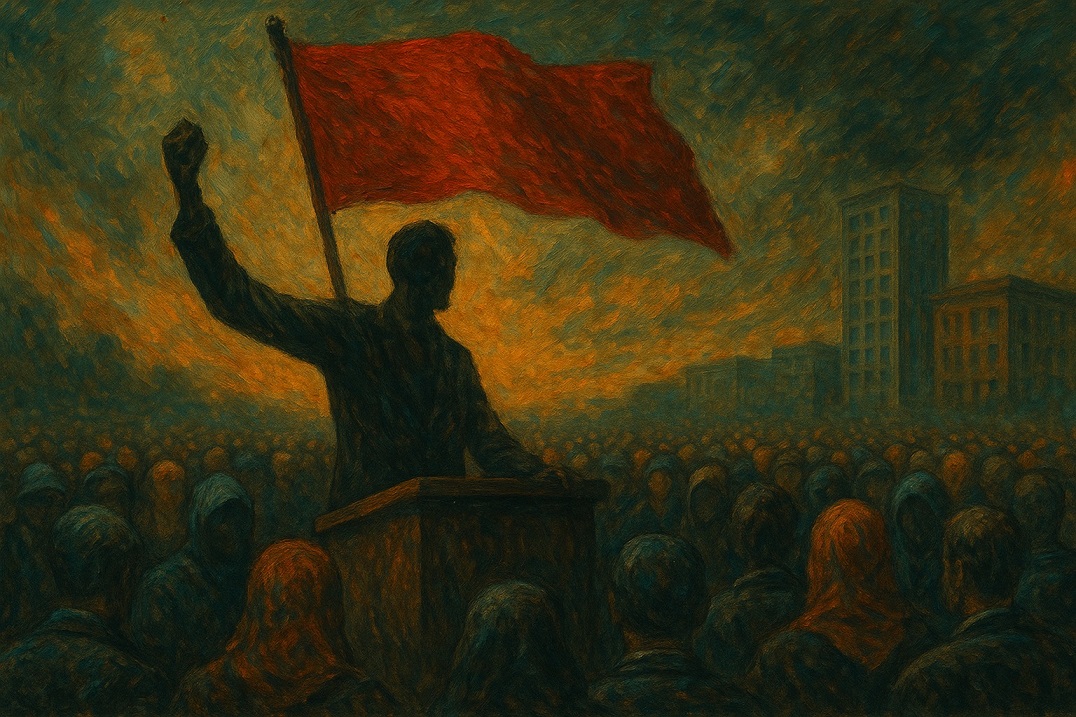 The significant role of the petty bourgeoisie masses throughout the three main stages of capitalist society’s development can be summarised as follows.
The first stage is revolutionary Jacobinism, which emerged when revolutionary methods were necessary at the dawn of capitalism.
The second stage is opportunistic reformism, such as social democracy, which occurred during the system’s maturity. In this period, orderly, democratic, and peaceful methods were needed to stabilise bourgeois domination. The final stage is fascist tyranny, which arises during the decline of capitalism. In this phase, the bourgeoisie must use civil war tactics against the proletariat to enforce super-exploitation.
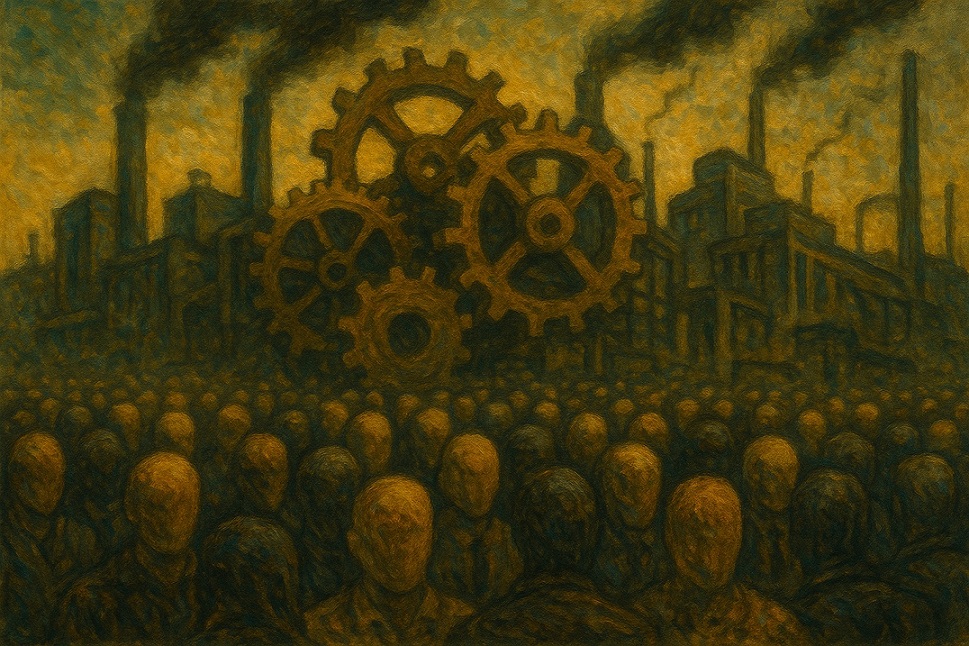
Today, during the epoch of capitalist decline, the magnates of financial capital cannot oppose the working class on their own, just as yesteryear, during the epoch of bourgeois ascendancy, the liberal bourgeoisie could not dismantle feudalism and the monarchy without help. They need the support of the petty bourgeoisie of town and country. To gain this support, it is crucial to rally, energise, and mobilise the disenchanted masses of the population.
 The Nazi party promises included better pensions and insurance for the old, increased employment, protectionist measures for independent artisans and shopkeepers, abolition of ground rent, expropriation of land without compensation in favour of small farmers, the breaking of “slavery of interest” by big bankers, nationalisation of big business trusts, profit-sharing in industrial enterprises, and the abolition of the professional army in favour of a “people’s army”.
Such rhetoric was necessary to whip up the masses’ sentiments and drive them into action. Support for the Nazi Party, which was less than three percent of eligible voters in 1924, increased to 31.1 percent in July 1932, 26.5 percent in November 1932, and 38.7 percent in March 1933. The rural and urban poor, including shopkeepers, small farmers, artisans, domestic workers, and their families, disproportionately supported the Nazis. They were drawn to Hitler’s criticisms of big business and government, as well as his promises for intensive economic development, the expropriation of land from “Jewish real estate owners,” and the resettlement of landless people in eastern Germany.
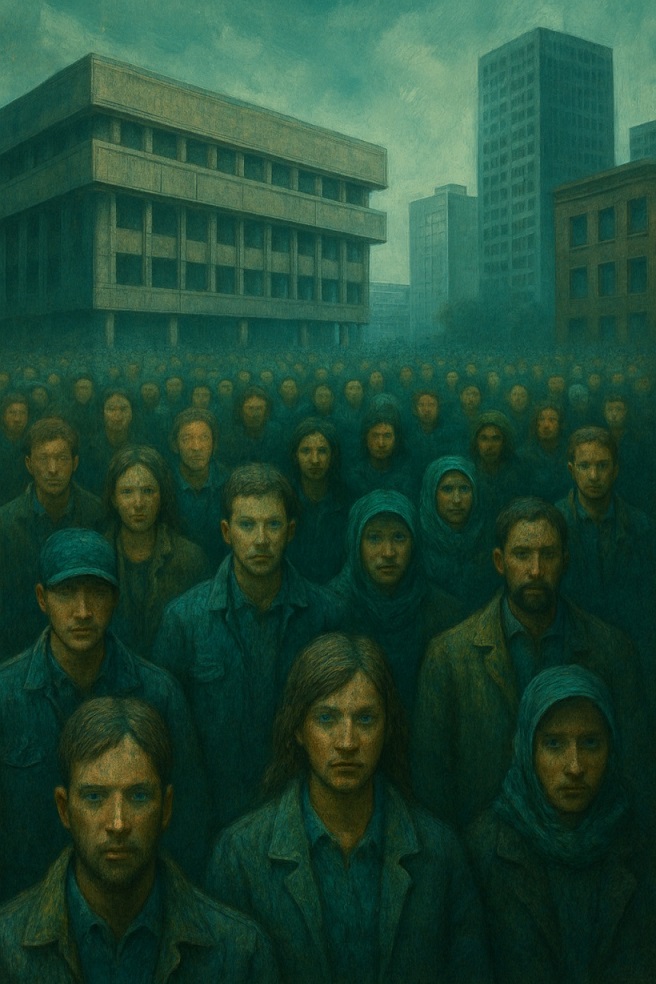 Throughout all three stages, the self-determination of the plebeian masses has played a crucial role.
The capitalist and landowning class are an infinitesimal minority of the population; they lack the numbers for a mass movement.
However, although small in numbers, the exploiting classes remain economically and culturally dominant under capitalism.
Neither Hitler nor Mussolini, who struggled to gain widespread support for their movements, could have reached the heights of power without the financial backing, weaponry, and political support from the big bourgeoisie.
So why did the ruling classes, who initially opposed the fascist movements, come to believe that supporting this “plebeian revolution” would serve their interests?
We will explore this question in the following piece, “Fascism and Big Business”.
(Images generated with artificial intelligence (ChatGPT, OpenAI)
Serie de The Prisma: ‘Fascismo’
Defining fascism, defeating fascism
The Prisma series: ‘Fascism’: Is Meloni a fascist?
The series “Fascism”: Can Macrón save us from fascism?
The Prisma series: Fascism, just another word for “repression”?










.jpg)












