
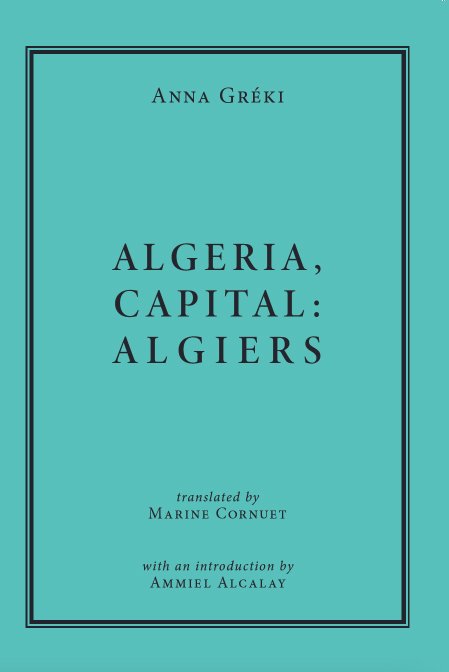
The translator of the first edition in English of Anna Gréki’s “Algérie, capitale, Alger” quotes some lines from a poem where Gréki speaks of wanting to “reveal a certain movement / a certain rhythm, certain relations / of people to a situation”.
 Sean Sheehan
Born in Algeria, her parents were French settlers but progressive in their outlook and she was not inculcated with racist attitudes.
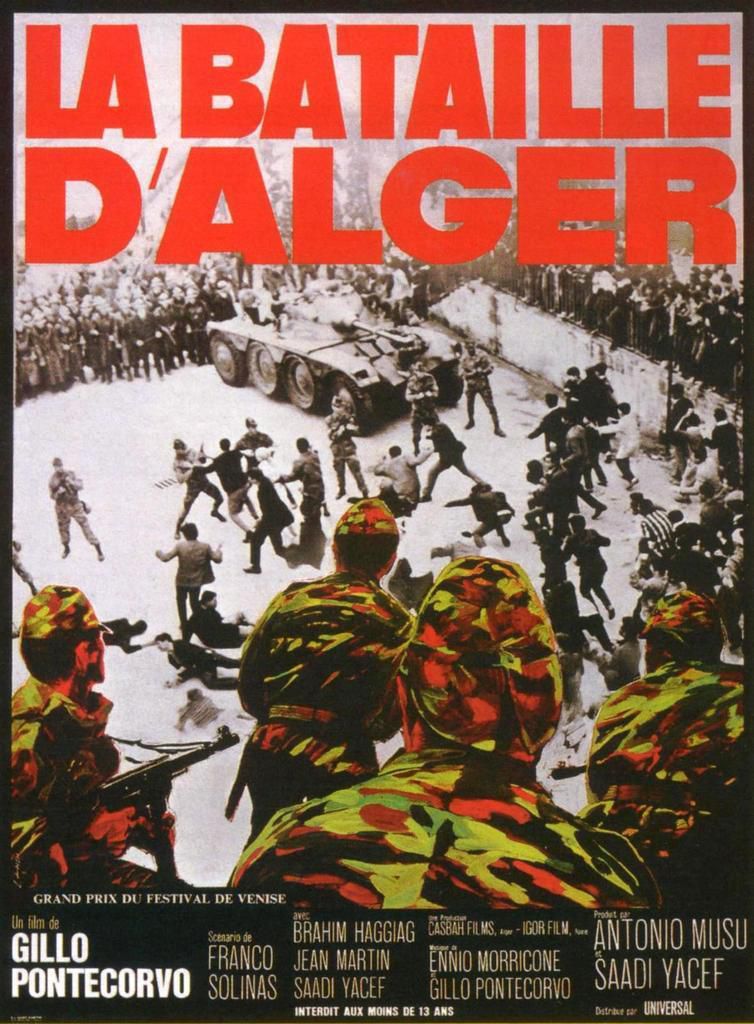
The situation is the Algerian revolution (1954-62) against French colonial rule and the best introduction to this conflict is the astonishing “The Battle of Algiers”, the 1966 film directed by Pontecorvo, shot on location and with much of the action played by those who lived through the actual battle. Edited versions of the film are available online but the full film needs to be seen to understand what Gréki means by her words about a particular rhythm and relations within the situation.
She was arrested in 1957 for her support of the revolution, imprisoned and tortured. Being of French descent probably helped in her deportation, unlike her partner, Ahmed Inal, who was murdered by the French just before her arrest. She may not have known this when she dedicates a number of poems to him. Like all her poems, they were written in French while she was in prison – “reduced to not starving to death” – and published as “Algérie, capitale, Alger” in 1963. Returning to live in Algeria after independence, Gréki referred to herself as an Algerian of French descent.
 Her poems reveal her love of the land where she grew up – a small town in the Aurès Mountains in the northeast of Algeria – and her commitment to justice and equality. Each of the four sections of “Algérie, capital: Algeri” begins with a few lines from other poets that express her own radical allegiances, one of which is she voices with words from Miguel Hernandez’s “Vientos del pueblo” (“Winds of the people carry me”).
Her poems, appearing also in this precious collection in their original French, establish her status as a major poet, one who speaks in ways that resonate with truth. The opening lines of “With rage in my heart” express what must be felt about what is happening in Palestine.
I can no longer love but with rage in my heart
It’s my way of having a heart of plenty
It’s my way of defeating pain
It’s my way of setting ashes ablaze
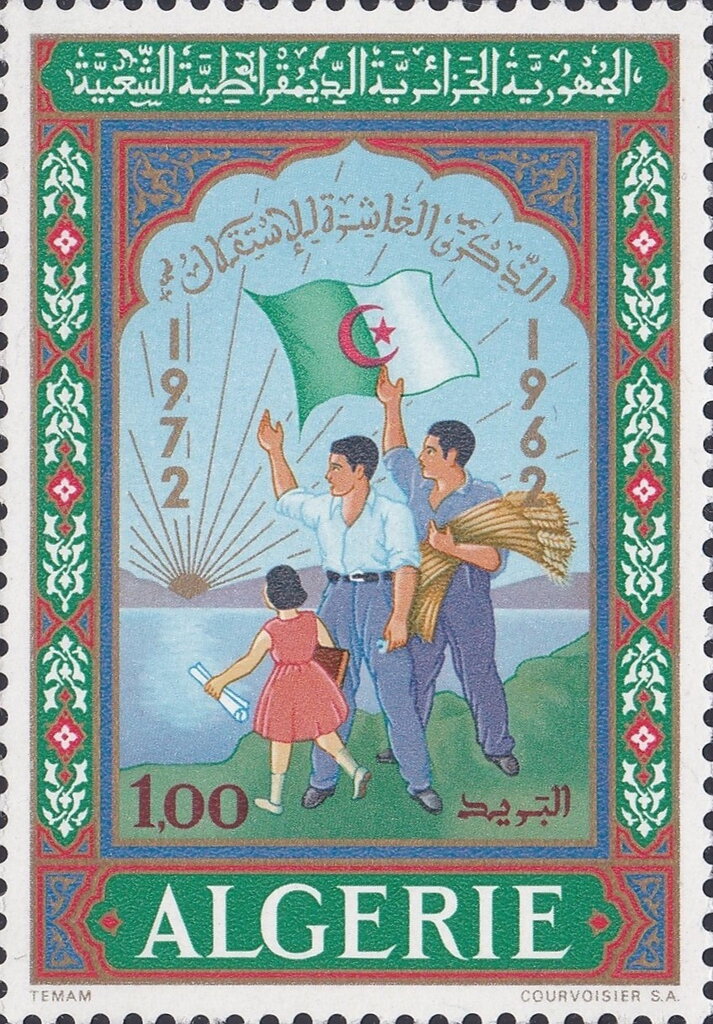 She imagines a future time of peace when the key will be left in the door so that “the street comes in through the window / The entire street, its sun and its children’. This poem concludes:
We won’t need to talk much
To live is enough and we will have learned
To live
In the words that the translator quotes about seeking to realise a situation, Gréki speaks of her wish ‘to give back to life / what it is owed’.
“Algeria, capital: Algiers” by Anna Gréki is published by Pinsapo Press.










.jpg)












