
There is a type of conifer, the Trojan horse fir, growing on a mountain in the part of western Turkey that meets the Aegean Sea.
 Sean Sheehan
It grows above the plain where the city of Troy stood until, as Homer recounts in the “Iliad”, it was finally captured and ransacked by the ancient Greeks. A footnote in Harriet Rix’s “The genius of trees” explains its name.
Two Scottish botanists, knowing their Homer, were sure it must have been the kind of tree that the Greeks cut down to make the Trojan horse and take Troy.
This is Rix’s way of introducing her chapter about how and why some trees have evolved to burn and, as with the rest of the book, she tells a fascinating and compelling story.
A convincing case is made that the asteroid that hit Yucatan in Mexico 66 million years ago was more significant for occasioning the split between conifer and broadleaved trees than for the extinction of ground-based dinosaurs. Animals that did survive continued to evolve in partnership with trees, like the Cercropia or trumpet tree, common in the rainforests of Central and South America, and a favourite of sloths and the ants that do not harm them but protect the trees from insects and vines.
 Fossils of the earliest forests date back nearly 400 million years and before they grew earth’s landscape was an unruly mess of mountains, rocks and storm-bearing seas.
There was no grass, or rivers or animals. Any algae that did wash up on a shoreline was destroyed by sunlight until, in a Darwinian moment of serendipity, an alga survived UV rays and its photosynthesising cells developed into the first land plants.
Out of this chemistry, trees evolved and pacified earth by breaking rock, thus facilitating the growth of soil, and by bringing oxygen into the atmosphere made animal life, including eventually our own, possible on Earth.
Rix brings 21st-century learning and love to her appreciation of trees and Elwes and Henry did something similar a century earlier in “The trees of Britain and Ireland”.
Photographs of trees had been exhibited as early as 1852 but never with the expertise and professionalism that the two naturalists brought to their seven-volume work that appeared between 1906 and 1913. Their detailed catalogue contained botanical descriptions and information on distribution and cultivation. RRB’s lovely 128-page photobook has a selection of the commissioned photographs that accompanied the catalogue.
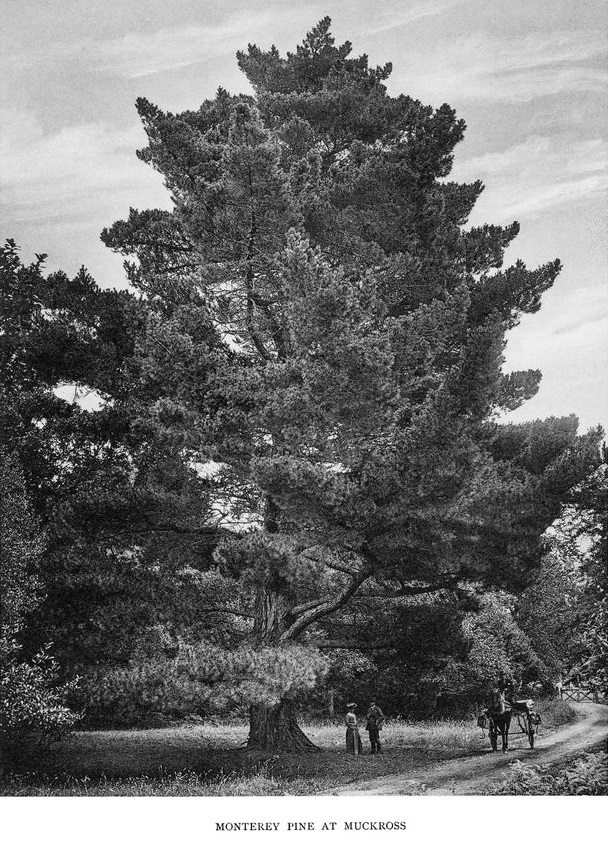 They were mostly taken by Robert Goy Foster, described in the 1911 census as “postmaster, druggist, photographer, motor engineer”, and Edward Jonathan Wallis who was a wood engraver before becoming a fulltime photographer.
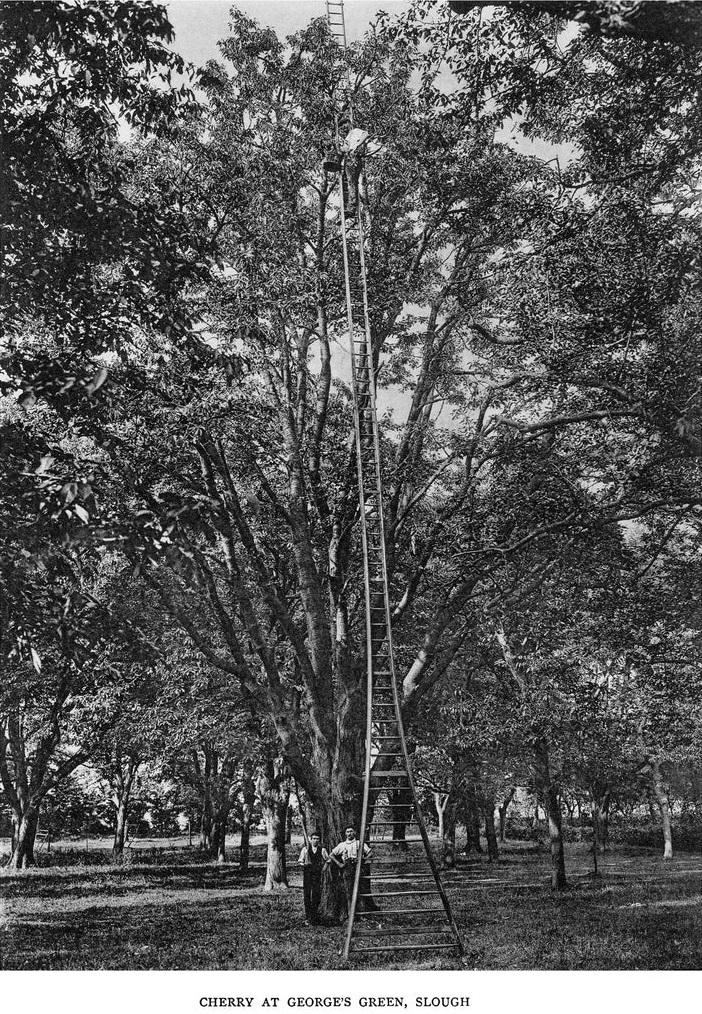
Indications of a tree’s height were given by including one or more humans in their images; with a cherry tree in Slough, they whimsically brought a ladder into the picture.
“The genius of trees” by Harriet Rix is published by The Bodley Head. “The trees of Britain and Ireland” by Henry John Elwes and Augustine Henry is published by RRB Photobooks.
(Images supplied by the publisher)










.jpg)












