
Yasmin*, a Brazilian living in England, explains how her physical characteristics trigger stereotypes about Latin American women when she has dates with English men. Although she does not always feel discriminated against, she talks about patterns of fetishisation and the feeling that she has to make a continual effort to distance herself from the imaginary “Latina”. The Prisma series: “Fetishisation of Latinas in the UK”.
 Sara Piquer Martí
After I hit the video call icon, Yasmin appears on my screen. Although the picture is quite blurred, I can see the features of a woman with light-coloured skin, blonde hair and blue eyes smiling at me. She could pass for an Englishwoman were it not for the slight Brazilian accent, mixed with a hint of Spanish, which reveals itself with her first words.
She is 34 years old. She was born in Brazil and lived there until she was 13 when she moved to Spain for more than a decade. Later, she made the leap to the United Kingdom: first to Belfast and then Lincoln, where she has spent three-and-a-half years working as a nurse for the NHS.
There is a constant tension running through Yasmin’s story between how she is perceived and how she wants to be perceived. But who is Yasmin really?
“If I don’t open my mouth, a lot of people don’t realise I’m not from here”, she tells me.
And at that moment our conversation begins.
What happens when they discover you are a Latina?
A lot of comments are about my physical appearance. Especially my curves. I’ve even been told that I’m “shaped like a guitar”, as though that is something typical of Latina women. People also say they know I’m not English from the way I dance or because I stand closer and smile more.
 Does this happen on dates?
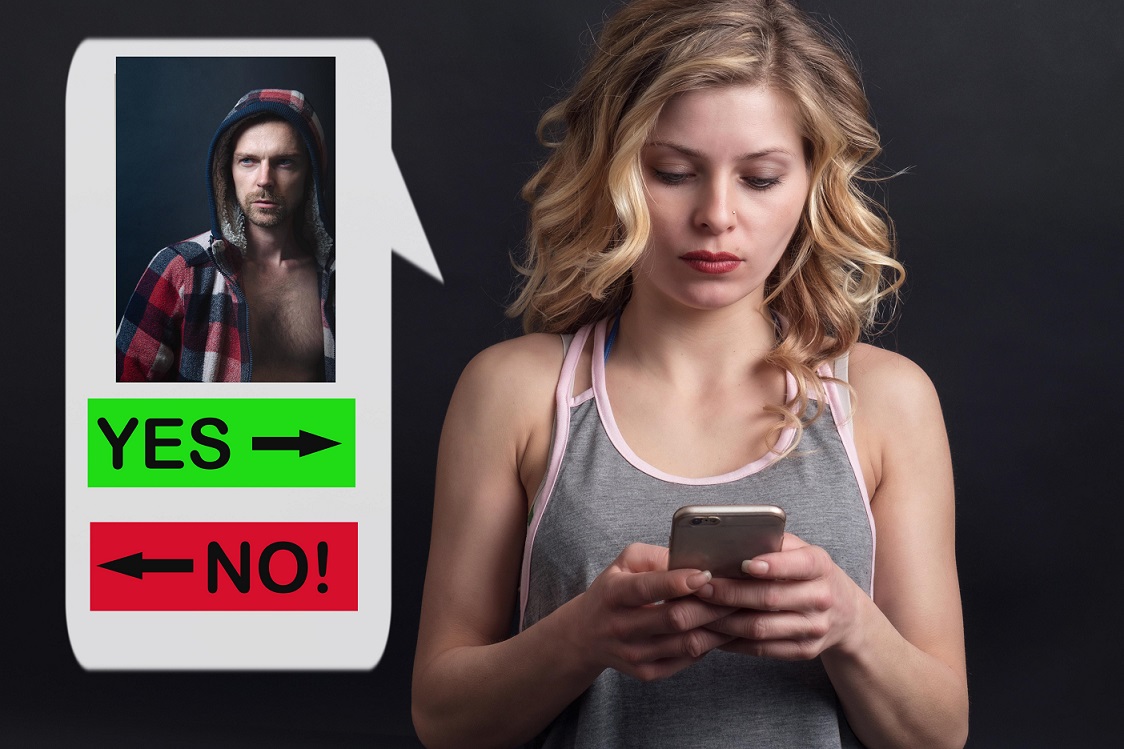
es, especially on dates. I have been single for five years and I’ve had a lot of “more than friends” situations. When I began going out with English men, I noticed they were constantly making comments about my body. On Tinder, for example, as soon as they saw my Brazilian and Spanish flags, they would ask if I was a “spicy Latina”. It’s a pattern that happens a lot.
Can you tell me about a specific situation?
Yes. A guy I was talking to said to me, drunk, that he could only talk to a girl like me when he was like that, drunk. He said he loved my curves, my accent, everything.
How did that make you feel? Did you feel fetishised?
I don’t think so. Let’s see: I know I’m a good-looking woman and quite striking to look at. So I don’t feel discriminated against. I do think that objectification of women is quite generalised among men and happens all over the world.
Yes, objectification happens to us because we are women, but I am referring to fetishisation, men who look at Latina women as a fetish, to satisfy their desire.
It did happen to me with an ex-boyfriend of mine. All his girlfriends were Brazilian, and he has married a Brazilian woman. He was English. When he first met me, he didn’t know that I was Latina. And when he found out he told me that he liked me even more because of it. He used to say things to me like, “Wow, you’re Latina!” He would say it as he was looking at my body.
And how did that affect you?
There was a conversation we had that really annoyed me and it was the fact that he told me I was too white, precisely because there is a stereotype of the Latina woman. He was looking for a specific profile.
 Have you experienced other situations of sexualization through the Latina stereotype?
Many. I’ve been asked to dance nude in the street, when I was wearing a bikini. I’ve also had proposals to sleep with them straight after dinner. It seems like they don’t want to know about me. It seems they’re only interested in my curves.
So, you do feel you have been treated differently because you are a Latina?
Yes. Completely. Because, although they also talk like that to the girls from here, I have received an avalanche of comments! And… I don’t know. For example, a few years ago I spoke to an English woman who had been going out with a young guy that I had been out with. When he was with her, he was one sort of person and with me he was completely different. With me he used to talk a lot about sex and his sexual fantasies, and I hadn’t even slept with him. She told me that he had never made that sort of comment to her.
Where do you think this stereotype comes from?
I think it’s to do with how carnival and samba are perceived… Women paint their naked bodies to dance in the carnivals, and I think that is the stereotype that men have of Brazilian women, naked, dancing, and laughing…
But in Brazil we see it as an art, we see it as something nice, something artistic. It’s not a naked woman dancing in the street. It’s a woman who has been training; she’s practically an athlete.
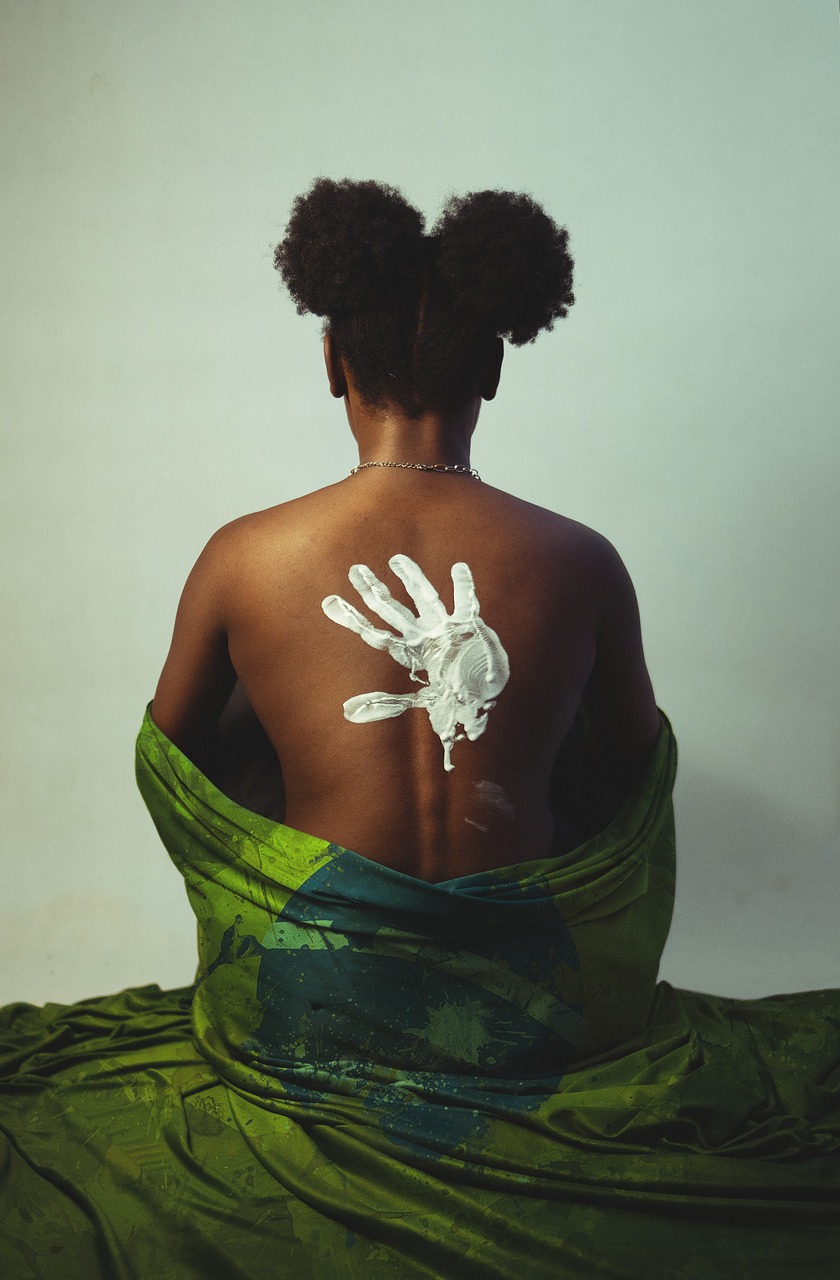 That is how it is experienced by us, Brazilian women and men. But men in the rest of the world, and especially in the United Kingdom, see a woman who is dancing naked. They sexualize it.
Does this affect the way you are or the way you relate to other people?
Yes. I don’t think I’m seen as the typical stereotype of a Latina woman, but I do think I have had to take a great deal of care for that not be the case. I have had to protect myself a lot to avoid falling into the stereotype. I’ve had to make considerable extra effort to continually prove the fact that I am not like that.
Have you felt obliged to change your behaviour?
Yes. I have been stricter with myself. I avoid certain attitudes, so I’m not misinterpreted. And that’s tiring because you’re constantly demonstrating what you are not.
If you could give English men a message, what would you say to them?
That we women are not sex objects. That we are not available to fulfil a fantasy. We are people, we work, we have our lives. And although we might be open and affectionate, it doesn’t mean we are easy or manipulable. They should respect us in the same way they respect English women.
And what would you say to a Latina woman arriving in the United Kingdom?
Be careful. Be observant. Understand that here certain attitudes can be misinterpreted. Protect yourself. It is hard, but it is the reality.
The conversation ends and Yasmin’s image remains frozen for a few seconds before disappearing from the screen forever. Her story is evidence of a duality: on the one hand, her European features mean she passes unnoticed, but on the other hand, she feels she has to make a constant effort not to be pigeonholed in a stereotype.
 Yasmin is the reflection of someone who has had to learn to move among outside expectations, to negotiate her identity in the face of an oppressive stereotype. Today, she has made it very clear: her existence is more than a body, an accent or a label.
Behind her fear of being pigeonholed, there is a woman with a unique identity in a country that does not always understand that latinism is as diverse as the people who live in the region.
*Yasmin, A fictitious name at the interviewee’s request.
(Translated by Philip Walker – Email: philipwalkertranslation@gmail.com) – Photos: Pixabay
The Prisma Series: “Fetishisation of Latinas in the UK”
The symbolic violence of social media against Latinas
Being a Latina on social media: from stereotypes to abuse
From algorithms to real life: stereotypes of Latinas
Dating, stereotypes and prejudice: being a Latina in the UK
Body, accent and outside views: Latinas in the UK










.jpg)












