
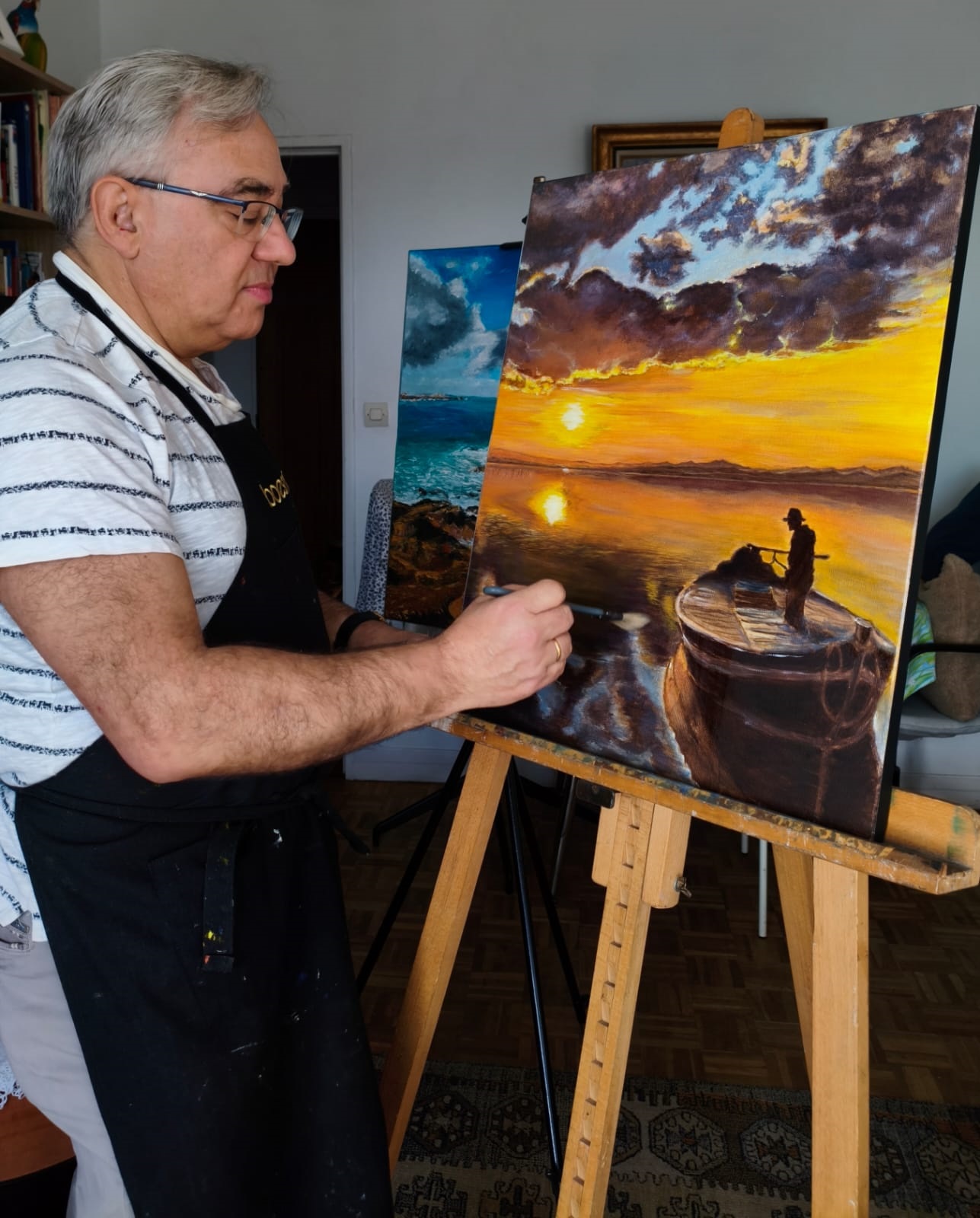
Miguel Ángel Ferris belongs to a generation marked by the transition from the Francoist dictatorship to democracy. In times of enforced silence, he forged his outlook based on commitment, justice and collectivity. He has always sought to spread his ideas. Now, this journey finds new expression through his first solo exhibition which opens on 23rd April.
Teresa Galindo L.
Some lives are written in many territories. That of Miguel Ángel Ferrís is one of them. With a long background in teaching, unionism and social activism, and after two decades living in cities like Rabat, Casablanca, Tangier, Brussels and Paris as well as his native Valencia (Spain), and visiting Colombia and Peru where he has strong links to family and friends, he decided to immerse himself in one of the fine arts: painting.
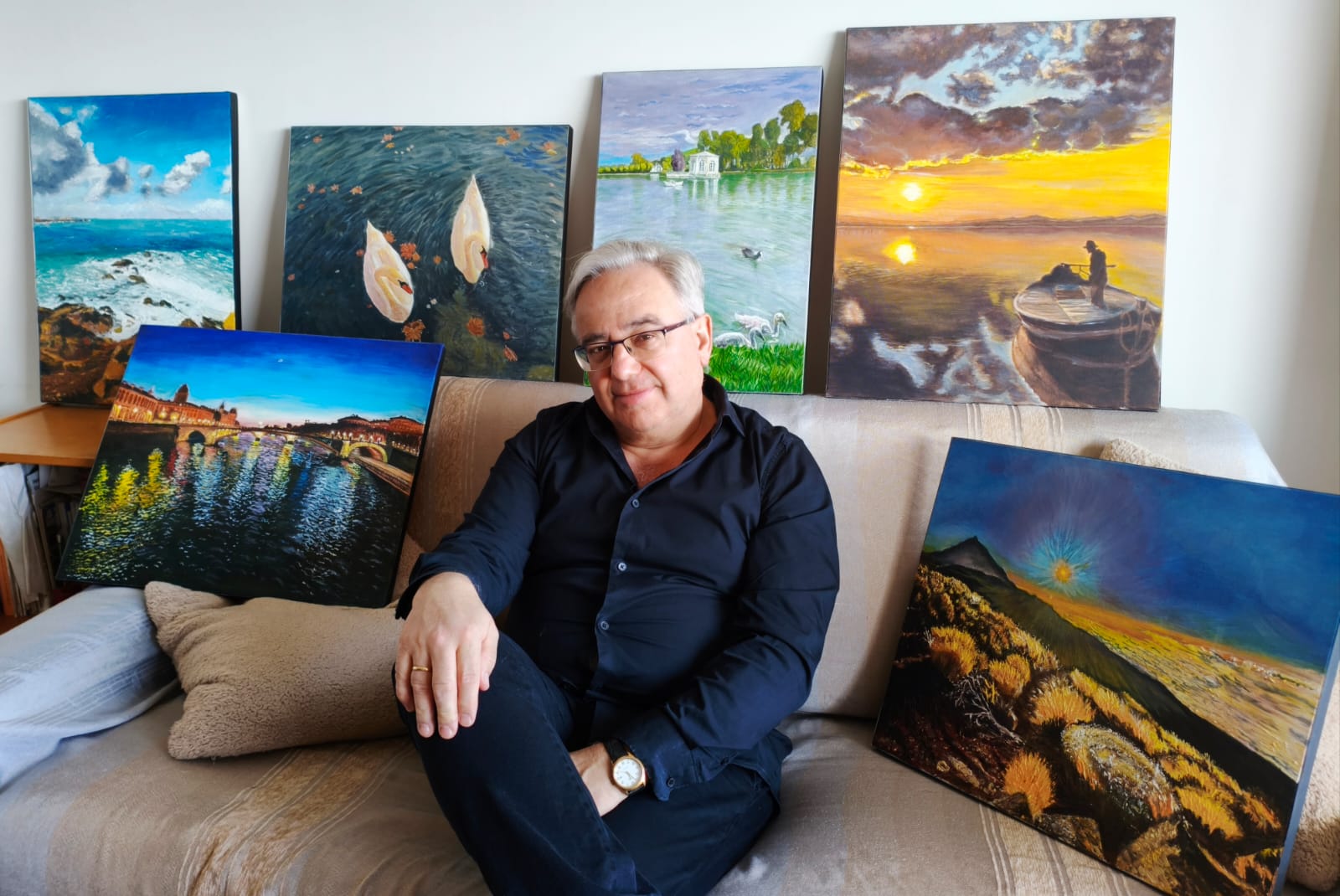
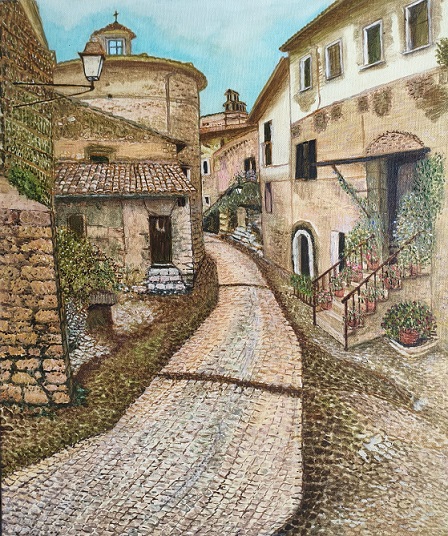
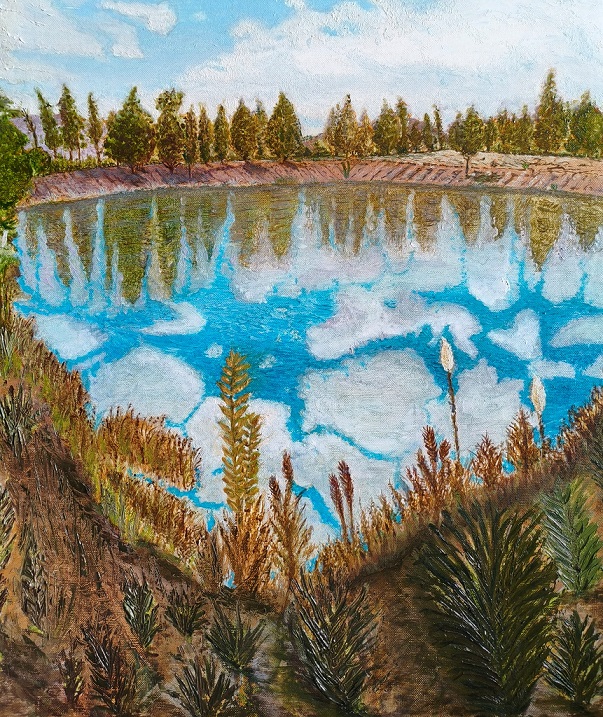
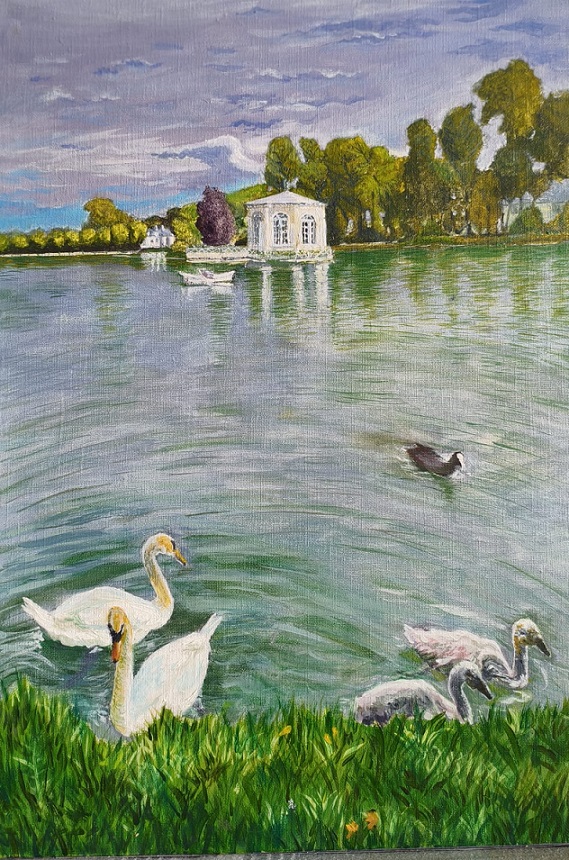
This is how, after several years’ intensive work, he has come to present in Valencia “Water, mirror of life”, his first solo exhibition, with thirteen canvasses that express the mutations inherent in changes and new ways of belonging. Each new stage of his life has left its mark on him and, he says, “pushed aside certainties and broadened questions”.
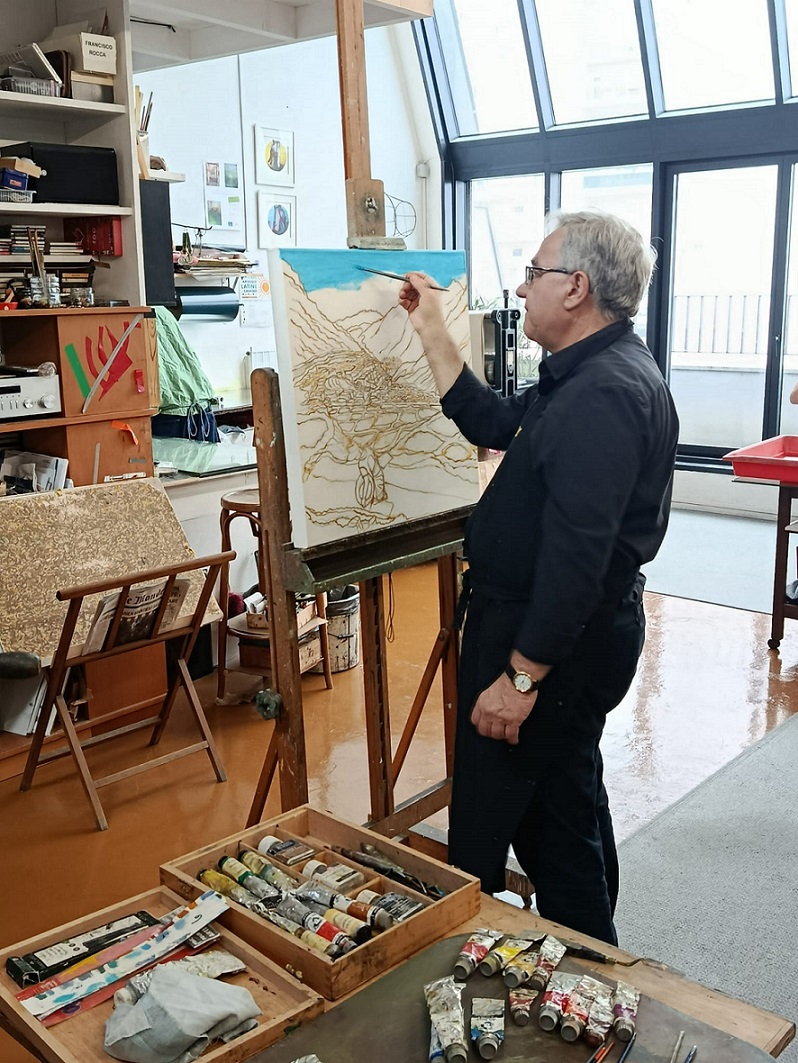
It is in Paris where he has been able to shape his new profile, under the wing of the painter Francisco Rocca who has guided his talent and enabled him to successfully tackle his new language. For Miguel Ángel classrooms, conventions and rallies have the same importance as paintbrushes and colours, because painting is simply another way of connecting with reality and expressing the feelings and emotions he picked up as a traveller and migrant crossing borders.
Rather than a change of direction, his entry into the world of painting seems to be a continuation of what he has always been searching for: a way of expressing – now through art – an experience marked by transit and transformation.
In “Water, mirror of life”, there is a reflection on the relationship between water, earth and life. What is the origin of this concept and what are you trying to say through it?
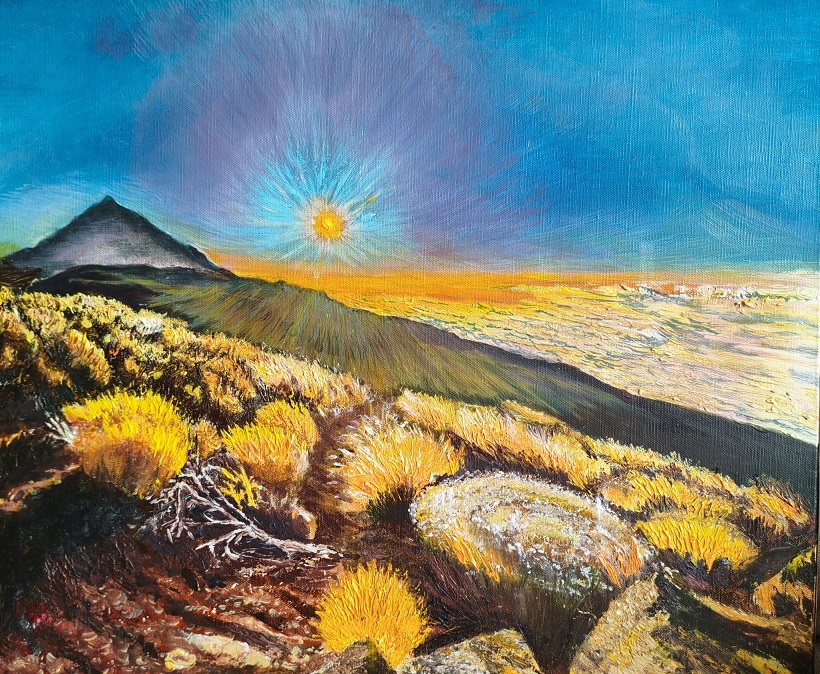
The link between the pieces exhibited is the trio of elements which, in turn, make up a triangle of realities that frame the landscape and our own lives.
Water, as a mirror of the sky or an eternal portal through which we glimpse the universe, is reflected both in its substrate, earth, and in the product of nature itself in its most inclusive sense, populated with human beings, animals and plants. The exhibition seeks to transmit emotion, but underlying it is the attempt to portray areality in danger which we must preserve and not just contemplate.
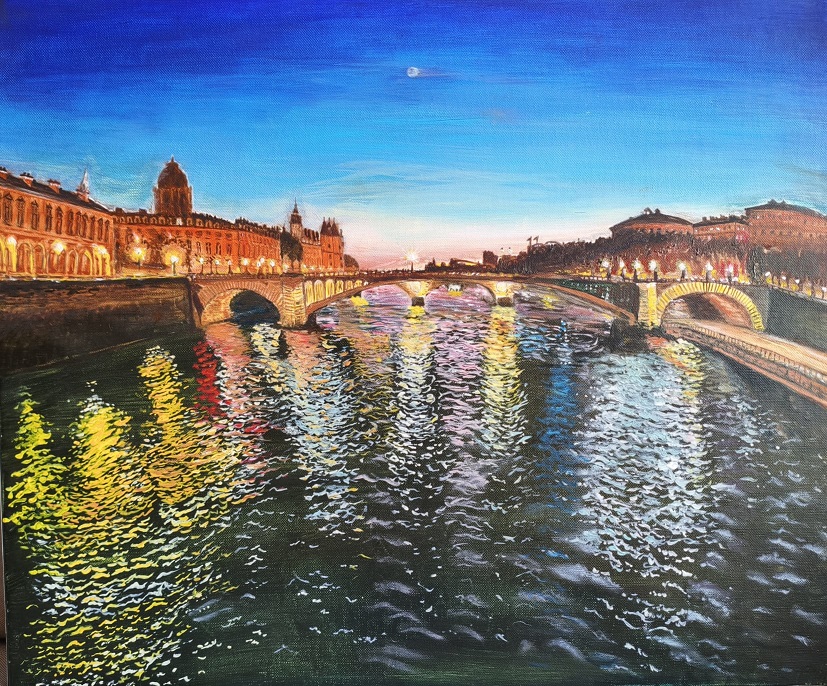
Over the last two decades you have lived in Morocco, Belgium and France, you have close links to Colombia and Peru and you are a constant traveller. Have these contexts transformed your creative outlook?
The selection of pictures, in fact, involves a personal itinerary which mixes scenarios I have lived through in the last few years and which, one way or another, have imprinted themselves on my retina’s colour palette. Travelling to or living in very varied corners of the world feeds your pictorial potential, although the evocation of fantasy places, recreated through the artist’s imagination, has always existed, without the need for real lived experience. I have had and enjoy that privilege.
Valencia, your birthplace, is famous for its light and for being the cradle of artists like Sorolla and Pinazo. Does the mediterranean light have any influence on your paintings?
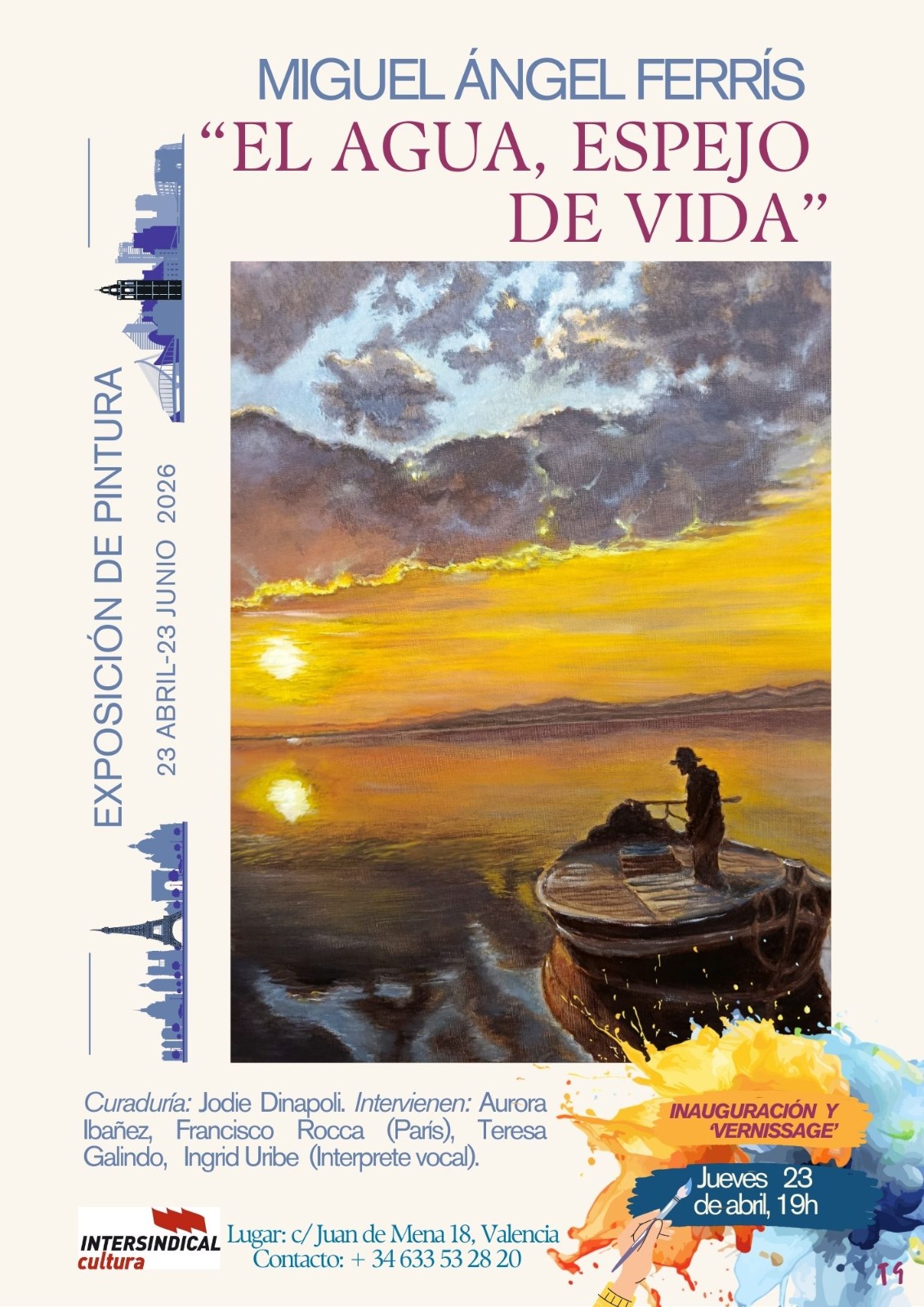
It is true that the mediterranean lights and the straight-line layout of the fields divided into the smallholdings of the rich Valencian land are references that might have had an influence on my search for my own style or, at least, for a theme that reflects my origins to a large extent. The picture that announces “Water, mirror of life” is of dusk on the Albufera lake and pays a certain homage to the aforementioned Valencian pictorial school: light, use of colour and identity landscape elements.
You began painting late in life. How did you discover your artistic qualities? What was the process and the transition from social activist, teacher and unionist towards painting?
It has all been the fruit of chance and I don’t know if also of a certain predisposition hidden behind the urgency and importance of the social aspect that crossed different stages of my life. In Tangier, another city where two lights, the Mediterranean and Atlantic, merge, an art teacher pushed me towards paintbrushes and exhibited my first acrylic picture in the city’s most central gallery. In Paris, curiosity dragged me from the many museums and frequent private viewings with friends to painting lessons where they took me under their wing, stimulated me and accompanied my fundamentally self-taught process.
How would you relate your previous journey to your current artistic practice? Do you feel it is continuity or rupture?
In my personal journey everything has been about, to a large extent, the necessity to communicate: the exercise of political, union and social activism, the creation of alternative means of expression, being a teacher in primary education and classes at the university.
Art has completed this primary instinct or impulse described with the opening towards an outlook that is more intimate, thought through and nuanced, capable of capturing the essence and infiniteness of a special moment in that dialogue with reality and its recreation.
In that sense there has been total continuity, it has just been a change of language.
Has painting changed the way you understand your own story?
It has permitted me an exercise of introspection, of looking beyond the obvious, from a certain transcendence stripped of spiritual resonances. And the writing of an autobiography that I am finishing at the moment has allowed me to better understand my own evolution and look with desire at possible paths to continue learning both on a personal level and an artistic level.
Your work in this exhibition has naturalist elements. Do you plan to evolve towards a less figurative style of painting?
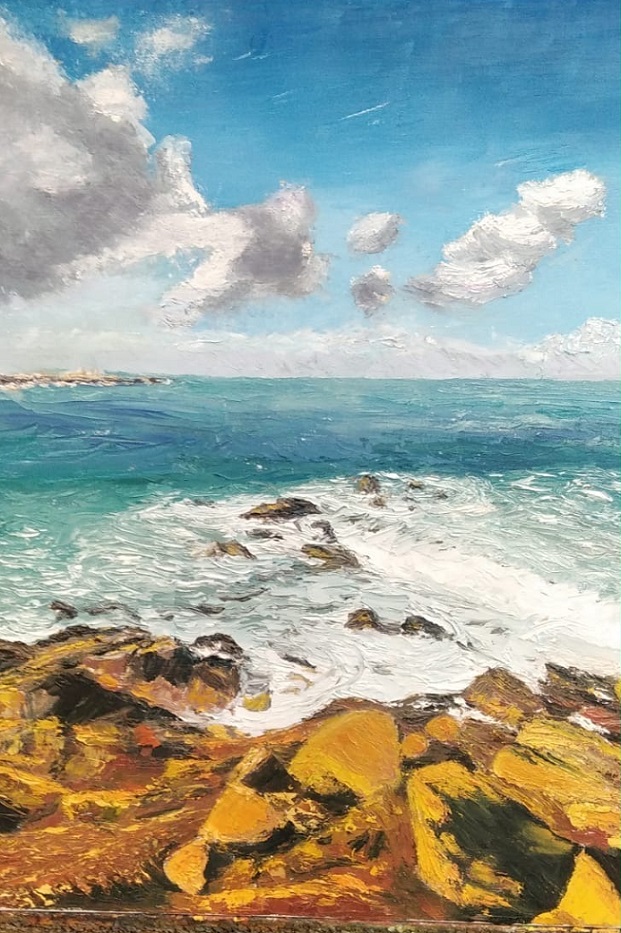
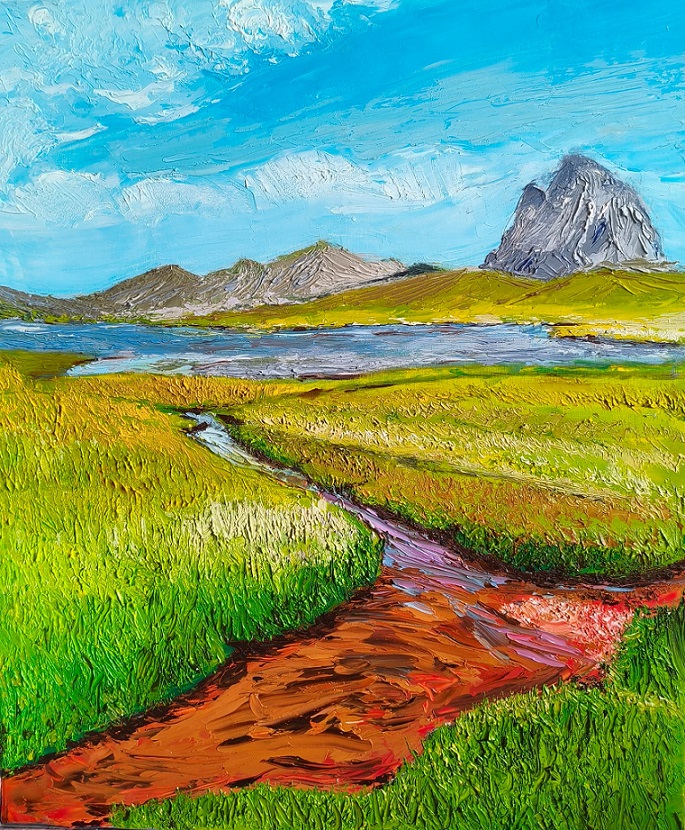
In a couple of the pictures being exhibited I show a certain transition towards the abstract, although I have a lot of respect for this artistic language and I still haven’t explored its possibilities in depth. Naturalism, as well as being the result of my admiration for the works of the impressionists and their habitual themes, is a learning phase that will help me develop a more personal pictorial style and concepts.
 Have you thought of painting human figures or reflecting social problems?
I have always considered myself a potential “social artist” having dedicated myself quite a lot to agit-prop.
One result of that was, for example, the establishment of a war council to create a mural against Spain’s entry into NATO, when I was barely 21 years old. Designing publications have also been a precedent. I am convinced that artistic commitments to social matters have been essential in most transforming political proposals, often making up vanguards that have broken with the status quo in one area or another. It is towards that focus that I would like to direct my steps in the future.
(Translated by Philip Walker – Email: philipwalkertranslation@gmail.com) – Photos supplied by Teresa Galindo and authorised for publication.










.jpg)












