
A chance family revelation led Argentine journalist Cristina Rafanelli to uncover the extraordinary life of her great-aunt Leda Rafanelli — an anarchist writer, feminist, Muslim and former lover of Benito Mussolini — while tracing the enduring parallels between political repression, resistance and storytelling across generations.
Clelia Frondaroli
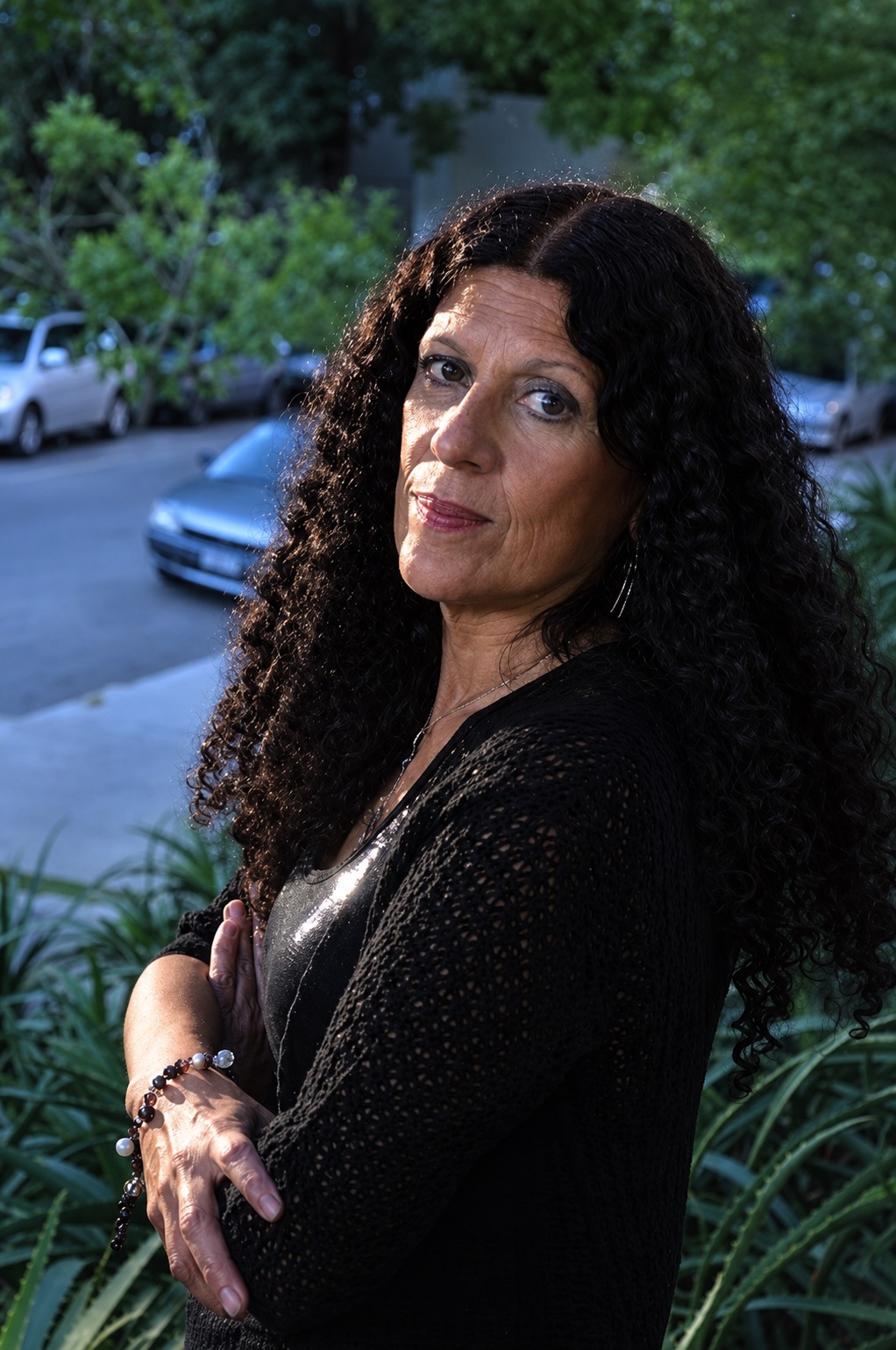
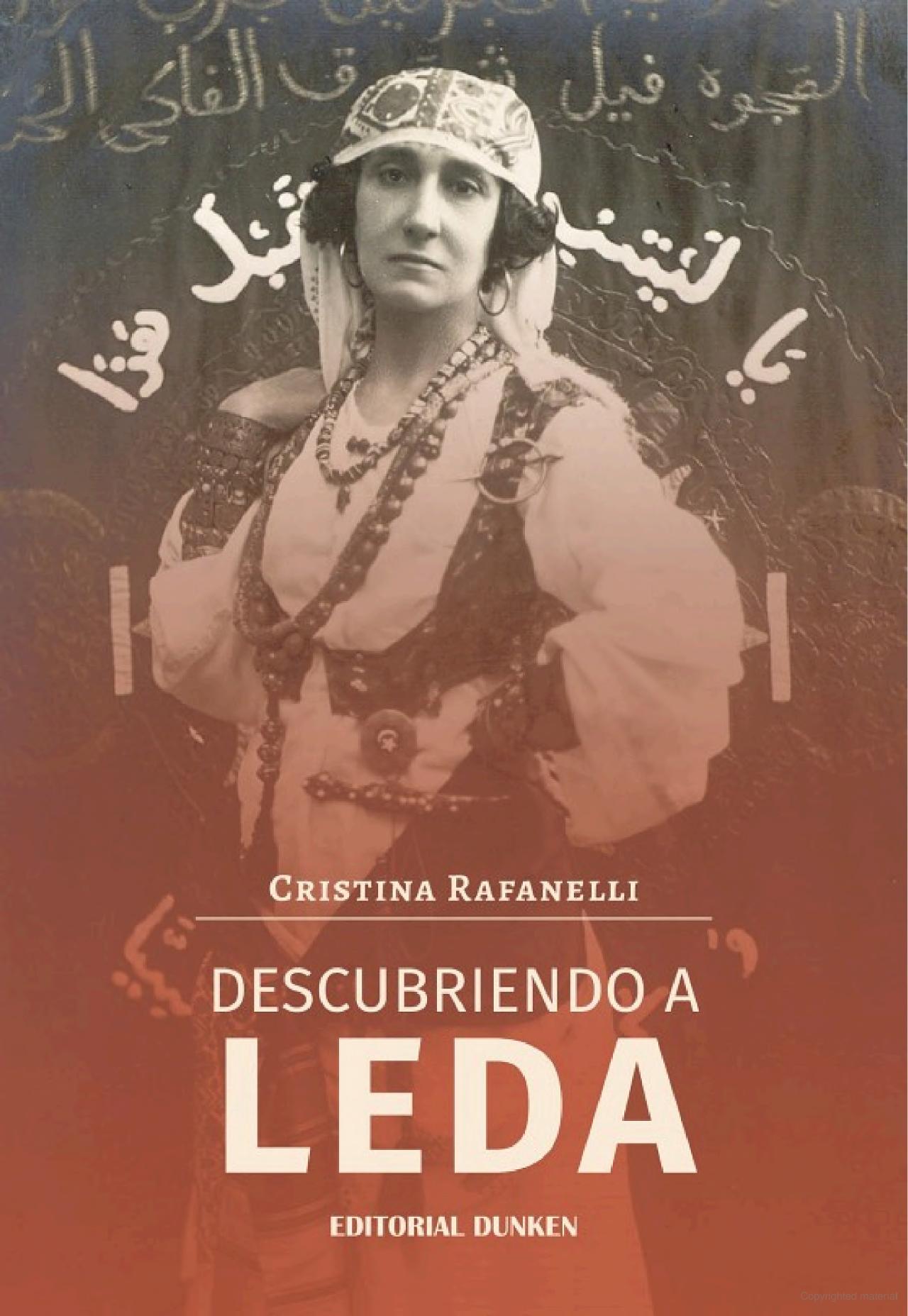
Leda Rafanelli’s life can be summed up by the title of her biography, ‘I belong only to myself.’ “That’s exactly the kind of woman she was,” says Cristina Rafanelli, the author of “Descubriendo a Leda” (Discovering Leda), proudly describing her great-aunt.
“She was an anarchist; she was anti-militarist and anti-colonialist. She was a free woman”, Rafanelli continues, painting a picture of a woman who rebelled against the restrictions of her time. But “Descubriendo a Leda” is not only a book that reveals Leda’s story to the reader, but it has also revealed a part of Rafanelli’s past to herself.
“In 2014, when I was about to travel to Florence to present my book “Aimé Painé: the voice of the Mapuche people”, which had just been published, my cousin revealed our grandfather had a cousin who was a lover of Benito Mussolini.”
The Buenos Aires native had known that her grandfather migrated to Argentina to escape the Second World War in Italy, yet her knowledge of her ancestral roots essentially stopped there.
“That scared me, you know, the idea that I might have a fascist ancestor. I thought, ‘Wow, it can’t be.’ But as I began to investigate her life, I found that the exact opposite was true.” Leda and Mussolini had met when they were both young journalists, while Mussolini was the editor-in-chief of the Italian Socialist Party newspaper, Avanti!. Rafanelli makes clear that their relationship began and ended long before he became the infamous fascist leader.
But the point of the novel, Rafanelli says, is to highlight that Leda was more than just her relationship to Mussolini. Born in 1880, at a time when the Catholic Church reigned supreme in the country, Leda was a Muslim and feminist, although more in her own “personal sense” than fitting today’s conventions.
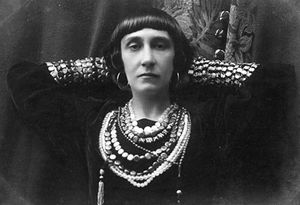
It was also her surname that would appear before her husband’s as the title of their publishing house: Rafanelli-Polli. Although the anarchist writer had left school after only a couple of years, Cristina notes she was an autodidact and, through her love of reading, became an intellectual herself. The books she would later go on to write revealed a curiosity well beyond her era.
Rafanelli never had a chance to meet her great aunt, who died in 1971 aged 91, but the two years spent writing, translating, and investigating Leda’s texts led to the discovery of similarities that Rafanelli never imagined. Although she was unable to visit Leda’s birthplace, Pistoia at the time of writing – the work of both fiction and non-fiction weaves Leda’s true identity with Giorgio Mancini, a fictional journalist who travels to Italy to give her a letter.
“It was amazing when I realised that I had an ancestor who was a writer and a journalist like me,” says Rafanelli, who just 12 years ago had no idea of her great aunt’s existence. “So maybe my path was subconscious or in my genes all along.”
And the two women share more than just those similarities. They both valued pacifism and anarchism and wrote during a dictatorship that threatened to silence their ideas.
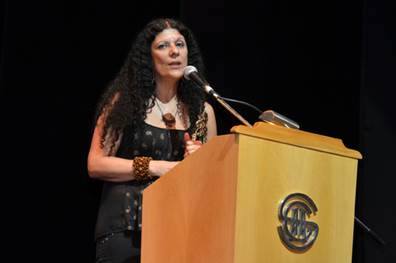 But Rafanelli’s work goes beyond Leda’s story. What is clear from speaking to the journalist-turned-author is the force of her beliefs and her desire to seek out injustices.
She has spent more than 20 years recounting the lives of the Mapuche — the indigenous people of Chile and Argentina — through a series of novels and radio documentaries.
In 2013, the journalist received the Argentores Award for best radio documentary for her radio programme Estacion Rock. Then she was awarded a Martin Fierro for her work on Aimé Painé. This is what journalism means for her: “To be based on investigation. To look deeper.” Her chronicle of the Mapuche people’s struggles with injustice, persecution, and displacement began after an encounter with Painé, the Mapuche folk singer who dedicated herself to sharing the music of her people. The two met while Rafanelli was working at Expreso Imaginario and eventually led to a biography, the only one to exist which details the singer’s life.
After that meeting, “I began to appreciate what the Native people do for the territories, for the land,” Cristina explains. “They have always protected the water and the woods, and now that same nature is in danger because the Argentinian government is trying to mine the glaciers in the south. But that is our water.”
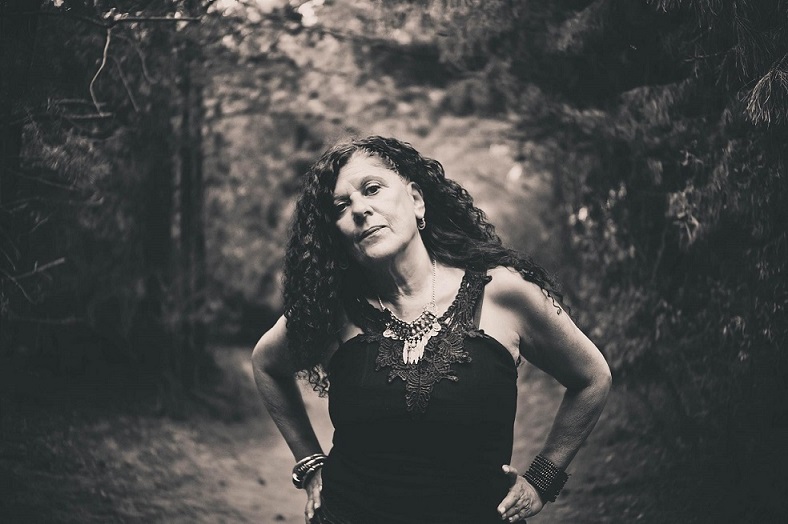 And problems have continued for the Mapuche people, who had faced injustices even before the Desert Campaign in the 1870s annexed Patagonia and the Pampas. In the last year alone, a spate of evictions has needlessly targeted the Mapuche communities, leaving them in danger of displacement once more.
“The problem is that justice will always be against them,” says Rafanelli, who believes the situation will not improve under the current government. “They are trying to live on their land peacefully, and instead they are constantly targeted.” Rafanelli has had her share of struggles too. During the dictatorship that began in 1976, she published in Expreso Imaginario and her experience inevitably shaped her work and journalistic freedom.
“We knew that we couldn’t say what was going on directly. So, at that time, I remember we had to write many things in metaphor, trying to say the same things, but with different words. We had to do that to protect ourselves.”
Once again, this is not a good time for journalists in Argentina. “I don’t know what will happen to my country if we go on like this, really. I set the novel [“Descubriendo a Leda”] in the 1970s, and I believe the ‘70s have come back, with all the war and violence around the world.”
 Expressing her disappointment that her country voted for the current president, she believes the situation can change once Argentina’s people realise the gravity of these reforms and politics. But some damage, she believes, has already been done.
Beyond Rafanelli’s dreams of a better, more peaceful future for both Argentina and the rest of the world, she also has one dream for herself. Once her book tour concludes, she will continue her latest novel of tales and poetry.
But she also hopes that “Descubriendo a Leda” will have its moment in the cinema and that parts of Leda’s life will be seen on the wider screen.
That, Rafanelli believes, would be an incredibly impactful conclusion to her great-aunt’s story.
(Photos supplied by the interviewee and authorised for publication)










.jpg)












