
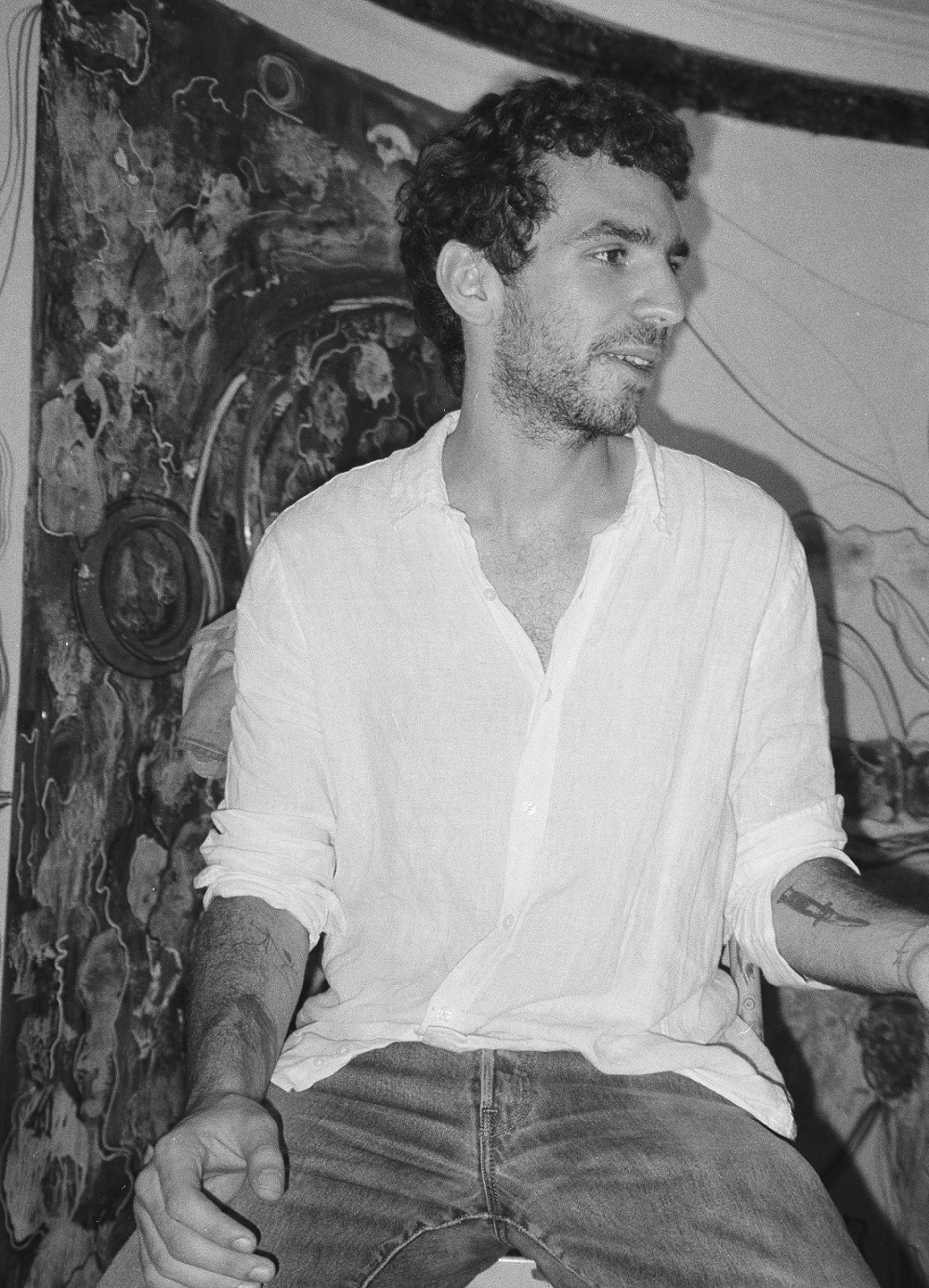
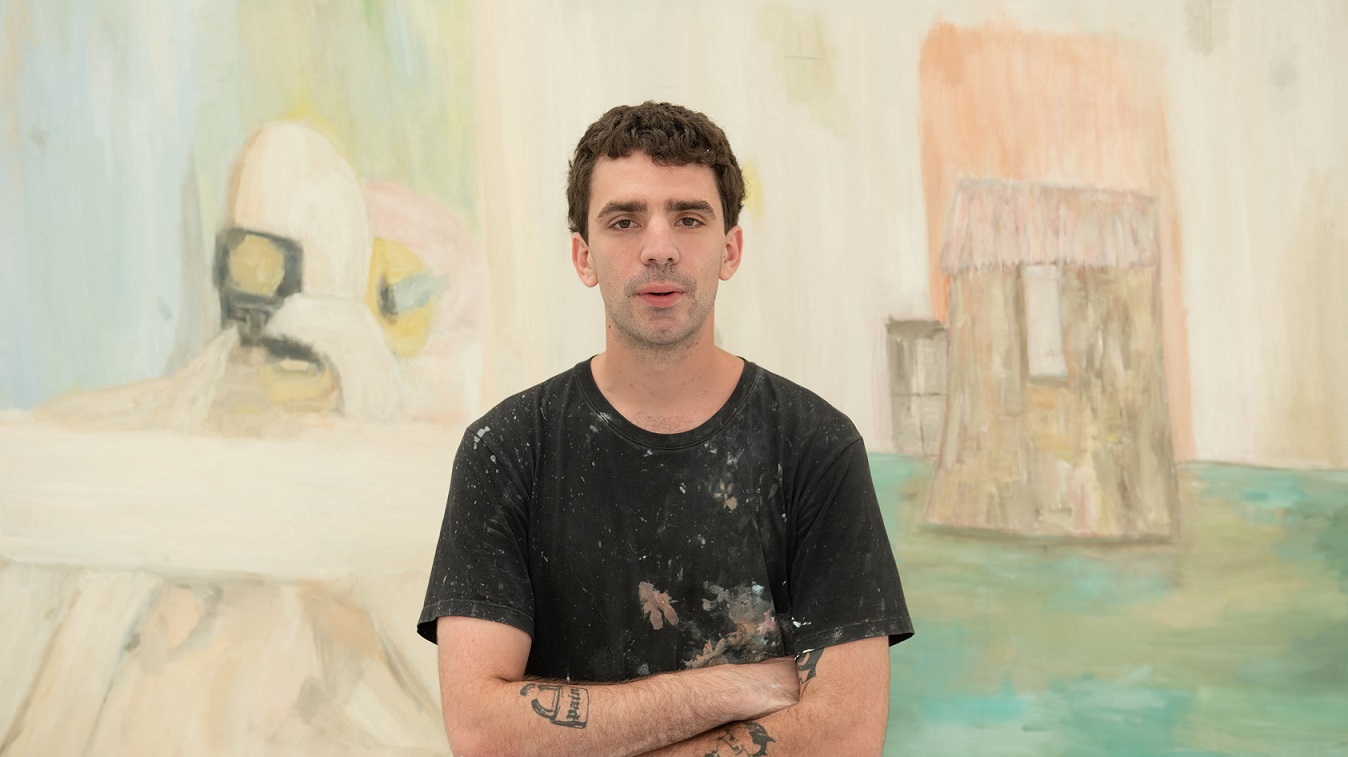
From Buenos Aires to London, Argentinian artist Benito Ekmekdjian is blurring the lines between canvas and stage. With his latest series exploring love and personal relationships, Ekmekdjian shares his journey from his early roots in graffiti to creating pieces that bring his paintings to life.
Clelia Frondaroli
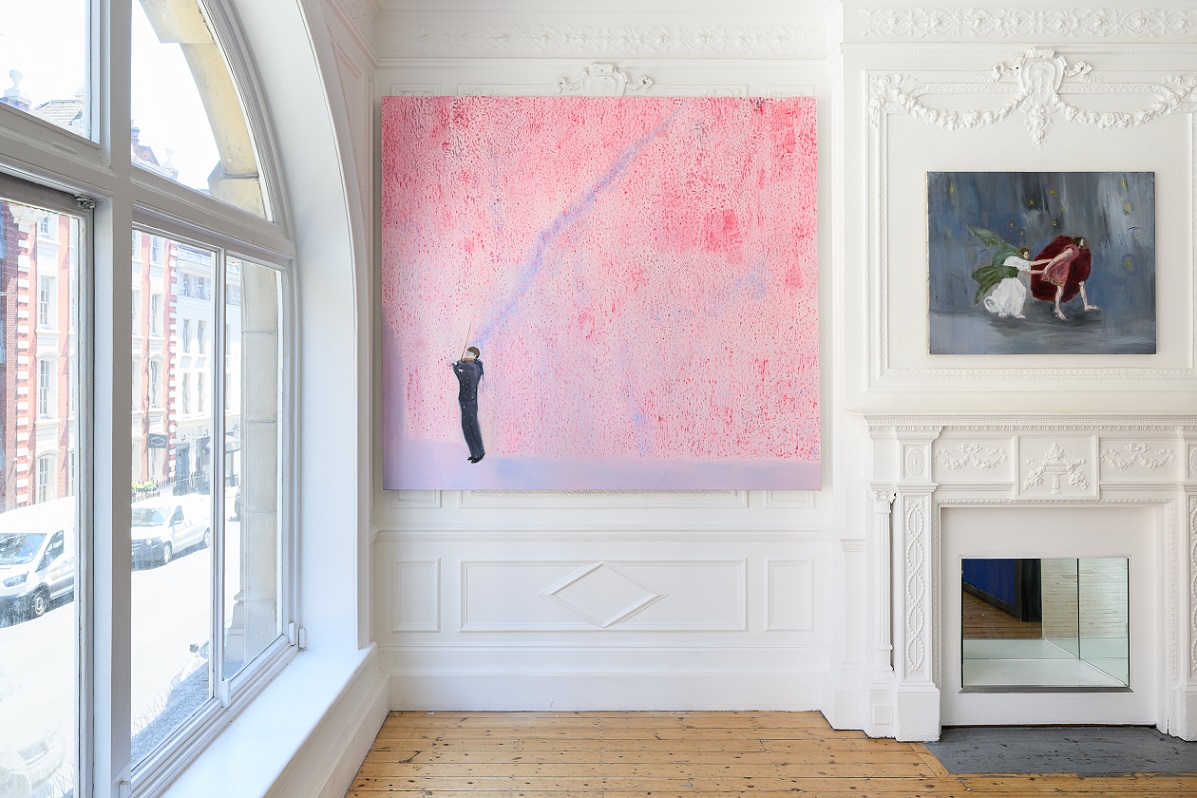
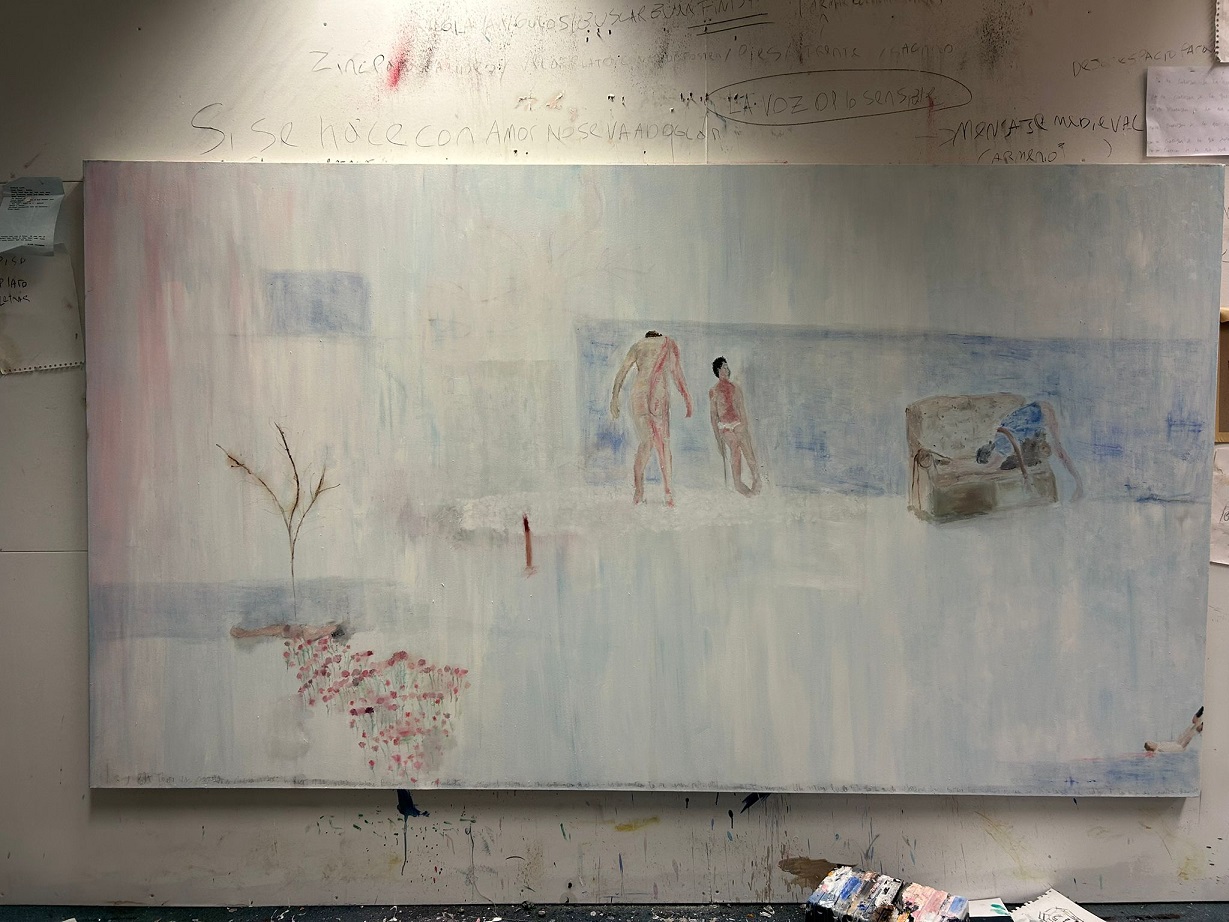
In the corner of a washed-red background, a lone figure stands with only their profile in view, soundlessly playing the violin. The painting, placed against a stark blank wall, forms part of the latest series of works by Benito Ekmekdjian, titled “Every single person I loved”.
One of eight completed works, the collection represents a series of relationships and situations experienced by the Argentinian artist throughout his life, ranging from romantic encounters to family and friendships. On the exhibition’s opening night, a performance scripted, rehearsed and directed by Ekmekdjian himself brought each of the pieces’ characters to life. The outcome, he says, “was amazing. It was uncomfortable but so impactful”.
Speaking from a sun-dappled Rome —where he has resided for the last month or so — Buenos Aires-born Ekmekdjian has always been surrounded by the arts. His mother was a writer and a chef, and his grandmother ran a textile-only gallery in Buenos Aires, a piece of his background he only recently found out about. Although painting remains Ekmekdjian’s preferred medium, the artist actually began with graffiti as a child, which, he jokes, sometimes got him in “trouble”. He explains: “When I was 13 or 14 years old, I saw painting in front of a canvas as quite boring; I felt it had no risk. In more mature graffiti artists, I saw a certain fearlessness that I wanted.”
But with the guidance of a mentor —Argentinian artist Laura Quesada— who took him on as her protégé, the now-25-year-old realised that painting was a better vehicle for his ideas and that it could afford him more opportunities.
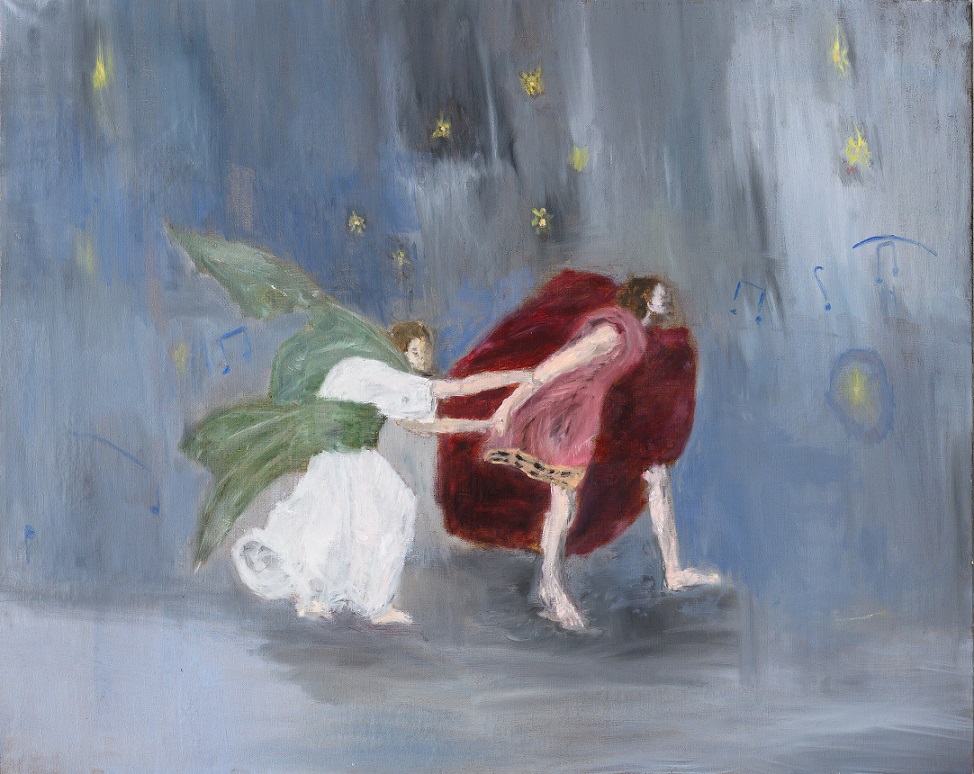 His early artistic development was largely influenced by the works of “the giants”, particularly those from the School of London. Francis Bacon, Lucian Freud and William Gillies, as well as American artist Cy Twombly, are just some of the artists he credits with helping him understand space, symbolism and beauty in art. Although now, Ekmekdjian believes, they serve a different purpose in his work.
“I have all these artists in my head all the time,” he says, revealing how his style has developed. “But I went from idolising them to seeing them almost as books that I could open, learn from, and adapt to my own painting language.”
It was at Bath Spa University in 2024, during his master’s degree in Fine Art, that he decided to push his art to its limits. Spending up to 16 hours a day in the studio, his time there — although marked by introspection and a certain reclusiveness ((he recalls seeing only “two people all year”) —allowed him to quickly progress as an artist. In the summer of 2025, his move to London and subsequent exhibition at the Argentine Ambassador’s residence instead taught him how to navigate his life and career in the UK.
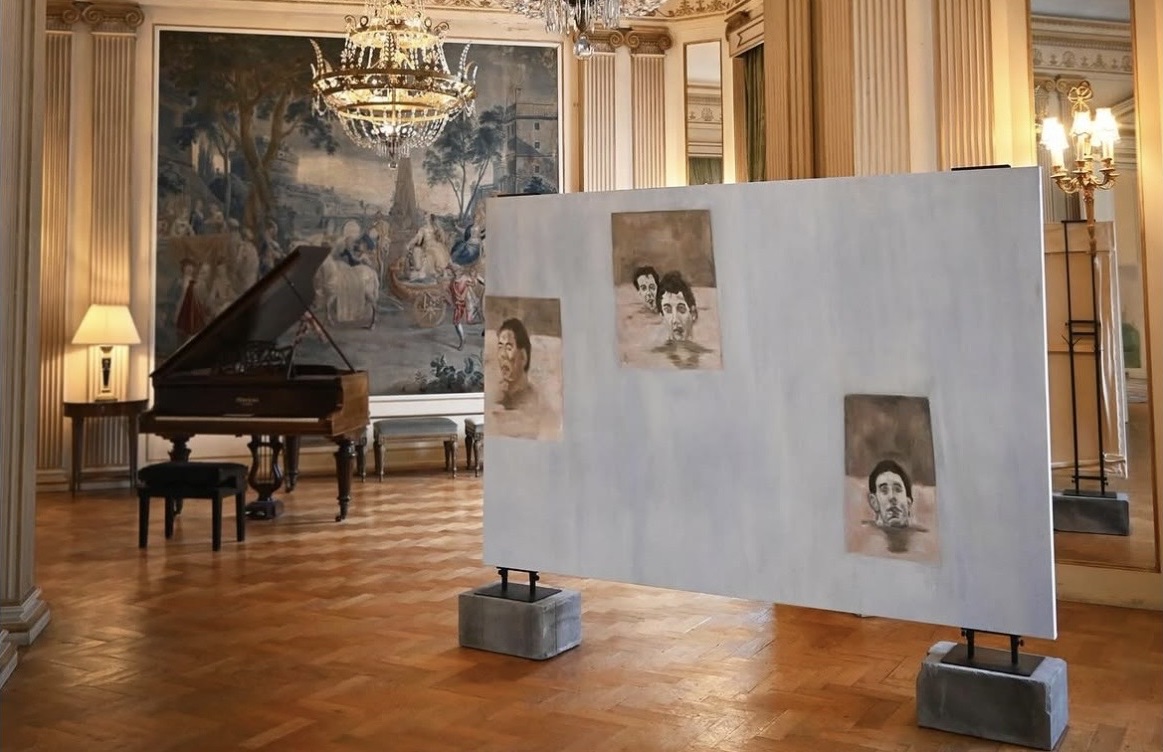 “I think the most difficult thing for me,” he reflects, “was how different social etiquettes are in the UK compared to Argentina.”
For him, Latin American countries have an ease and openness to friendships that did not necessarily translate in the same way in the UK. But the moment he learnt to embrace these differences, he found he could “navigate relationships much better because I could adapt to what they needed”.
Now, after closing his last exhibition at the General Assembly in London, a new series has begun to take form, which will eventually become a 25-piece collection named “Protesta”. Born out of a “discomfort” surrounding the state of the world, the paintings — of which four are currently completed — contain materials found at protests and rallies, including stones, rocks and debris. “I fell in love with the materiality of the protest,” he explains, “and I decided that the only way to channel this anger for me would be through what I was doing.”
 Describing aspects of protesting as almost theatrical —the idea of throwing stones and shouting en masse as choreographic movements — he thought it would be an increasingly important subject to cover, especially given how closely he works with the performing arts. Accompanying each new collection is a script, bringing a new dimension to his work that would allow these pieces to eventually be staged.
Although always interested in acting, and even featured in a number of local Argentinian Broadway shows as a teen, the artist says he became involved with directing as he saw a “universe” inside his body of work that he thought “had the potential of coming out”. He continues: “So it’s this whole circle of my situations in life becoming paintings, and my paintings becoming plays.”
Now, he hopes to give those who are feeling demotivated with their art and the challenges that come with breaking intothe industry the belief that, with the right mindset and a little work ethic, anyone can do it.
 Although rejection and setbacks are commonplace in the art world, Ekmekdjian believes that his pieces can show younger artists that, for them too, success is possible.
And while the professional opportunities available to him in London mean that his career will remain in the city for the time being, the dream for him would be “to always paint, whenever and wherever I want”.
(Photos supplied by Benito Ekmekdjian for free publication in The Prisma)










.jpg)












