
James Joyce’s “Finnegans wake” has long been studied but learning how to read the book is a different if complementary matter. A good way to begin is by listening to its unique soundscapes and rhythms.
 Sean Sheehan
With a copy of the novel’s opening pages before you– the James Joyce Digital Archive, with linked annotations, is especially useful in this regard – a place to start is a reading by Eimear McBride of the book’s fifth paragraph (beginning “Bygmester Finnegan, of the Stuttering Hand…”).
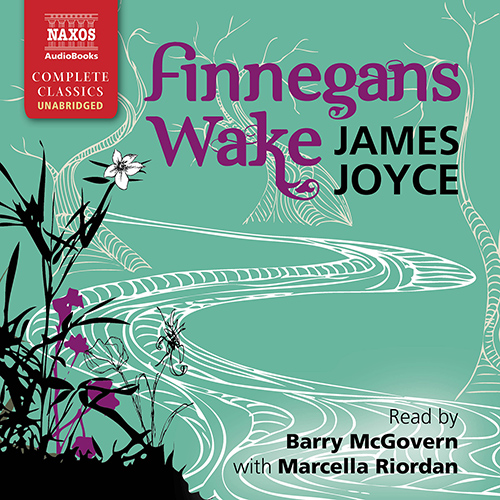
If this whets the appetite without leaving you too dumbfounded go any further, the next step is to embark on a life-long engagement with Joyce’s monumental novel with the help of an unabridged reading.
Naxos have enlisted Barry McGovern and Marcella Riordan to produce one and it is astonishingly successful.
At some stage, having a print copy of “Finnegans wake” may become indispensable if only for the pleasure of reading passages aloud to sense its magic.
The idea of translating the book into other languages, including Spanish, may seem masochistic but this has not deterred people from making the attempt. Attempts also continue to make “Finnegans wake” more understandable by attributing a conventional plot to its multi-layered text and syntax but these can only go so far because the book is not a work of naturalistic fiction. It is a non-Euclidean novel where the ‘characters’ are best read as projections of the self; various accusations against HCE (the ‘character’ whose name is Humphrey Chimpden Earwicker) being reiterations of anxieties and doubts within one’s self.
 A more radical retooling of the role of the Wake’s reader involves abandoning anthropocentric thinking so as to extend portrayals of inter- and intra-relationships to the nonhuman world.
When the [every] One of Here Comes Everyone is taken to include nonhuman animals and other natural forms – like rivers and trees – the reader is invited to participate in ecocriticsm.
This term, for the exploration of relationships between a work of literature and the physical, non-human environment, goes back more than a decade to Alison Lacivita’s “The ecology of Finnegans wake” and is now taken further in an exciting set of essays now available in a paperback edition from Edinburgh University Press.
Twelve essays in the book open fresh perspectives for appreciating what is being given voice to by Joyce: “A remarkable variety of animal life and ecological processes, as registered in its unparalleled multi-vocality”, as the editors put it.
 It has become a cliché to describe the Wake as a universal history but HCE (aka Here Comes Everyone) was also the nickname of an obese politician whose liberal imperialism Joyce was probably mocking; imperialism, after all, is a form of political universalism.
The voices of history – and ecology – resound through a novel that denies essentialism by showing how everything that is only comes to have meaning in relation to something else.
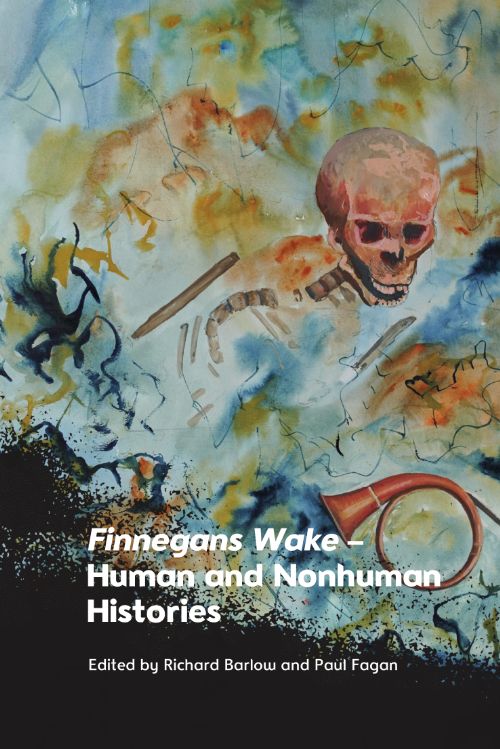
“Finnegans wake – human and nonhuman histories”, edited by Richard Barlow and Paul Fagan, is published by Edinburgh University Press.










.jpg)












