
From the historic labour struggles of the last century to its consolidation in Britain, Latin American heritage is redefining its place in the world. The journey of a diaspora that now numbers half a million people reveals the constant challenge of preserving culture in the face of discriminatory rhetoric. September, Latin American Heritage Month.
 Pablo Muñoz
In 1965, the United States ran out of grapes, leading to the Delano Grape Strike. A strike by pickers, mostly Latin Americans, led by Mexican-Americans César Chávez and Dolores Huerta, triggered a powerful labour movement that forced the nation to turn its gaze to a community that had hitherto been invisible.
Three years later, rallying under their own slogans, Chicano students in Los Angeles walked out of classes to protest against the poor academic conditions suffered by Latinos. They did not remain silent, and their echo inspired many others.
Muralist David Siqueiros once defined Latin Americans as a people who are “born fighting”.
It was the echo of the struggle of students, pickers, and Latinos in the US during the 1960s that inspired pioneering Hispanic-American congressmen Edward Roybal and Henry González to champion Proclamation 3869. Signed in 1968, it gave rise to Hispanic Heritage Week, the historical foundation that opened the doors to today’s Hispanic Heritage Month. A celebration commemorating Latino life in the North American country, which, like all life, is now expanding globally. Exhibitions are held at Madrid’s Casa de América. Manila and Auckland host Latin American film festivals, and Tokyo holds a cultural exchange festival. As García Márquez noted when accepting the Nobel Prize in Literature in 1982, the Latino response to repression, plunder, and neglect “is life”.
And in the United Kingdom, it is known as “Latin American Heritage Month” and has existed since 2020. According to international migration reports, the UK is among the European countries that receive the highest number of Latin American immigrants. Estimates by the Coalition of Latin Americans in the UK (CLAUK) place this community at at least 500,000 people. Formed over decades, this community offers a window into the immigrant soul of the Latino.
 To understand how Latino life in the country has changed since the 1970s, and to learn whether that “life” Gabo spoke of can still be felt despite the characteristic English cold, The Prisma interviewed Enrique Sáenz, Chair of the Board of Trustees of Latin American House, an institution in London with over 40 years of experience supporting Latin American immigrants.
What does it mean to be Latino?
One definition of what it means to be Latino is having been born in Latin America and having been exposed for years to the culture of one’s birthplace. One may not have been born in Latin America but, primarily through close family ties, consider oneself Latino/a by adopting certain customs, traditions, linguistic regionalisms, diets, behaviours, religion, and a sense of belonging to Latin America.
Members of indigenous nations in Latin America have experienced or undergone a process of Latinisation upon feeling or being forced to adopt cultural practices foreign to the traditions of their ancestors.
When and for what reasons did Latin Americans begin arriving in this country?
 The diaspora is believed to have begun before the 1970s. Thousands of people arrived in the United Kingdom fleeing repressive regimes in their countries, particularly from Chile, Argentina, Brazil, Uruguay, Peru, Colombia, or Guatemala, among others.
How has migration varied over the decades?
In recent decades, the large number of Latin Americans arriving in the United Kingdom is made up of those who could be described as “European Latin Americans”. For people who perhaps do not speak other languages, such as English, German, or French, a fairly obvious place to migrate to was Spain. When the economic situation worsened there, those who had emigrated saw an opportunity to move once again, and Great Britain offers economic opportunities as a fairly wealthy country.
What differences are there between today’s immigrants and those from 40 years ago?
As the pendulum of history has seen the return of democratic governments in Latin American countries, political diaspora has tended to decrease. In that sense, political migration acts as a barometer of individual freedoms in the region. Unfortunately, inequality and the resulting economic precariousness affecting the majority of Latin Americans in our countries have been, and continue to be, a historical constant that explains the larger volume of economic migration in recent years.
 However, the number of Latin Americans arriving from continental Europe exceeds the number of people arriving directly from Latin America.
Who is more conscious of their identity and roots, the political or the economic immigrant?
The desire to preserve a specific identity differs between those forced to emigrate to safeguard their personal safety and that of their family — as is the case for political exiles or refugees — and those who freely choose to leave their country. I would say there is a greater willingness to adapt on the part of people migrating for economic reasons, unlike those of a political nature, who might be thought to possess a more vivid sense of identity. But it is a subjective question. Even when sharing the same origin and the same roots, the feeling of identity varies among individuals, groups, and nationalities within the community.
Do both feel equally proud of their origins?
There is a great and shared pride between both groups in their origins and roots. I like the idea that, when outside Latin America, one works full-time at being Latin American. But that great pride is made public in different ways. The more established a person is — having a high degree of certainty regarding their residency status, greater social acceptance, or a better command of English — the more openly that pride is expressed compared to those in vulnerable situations, who fear highlighting their distinctiveness or differences.
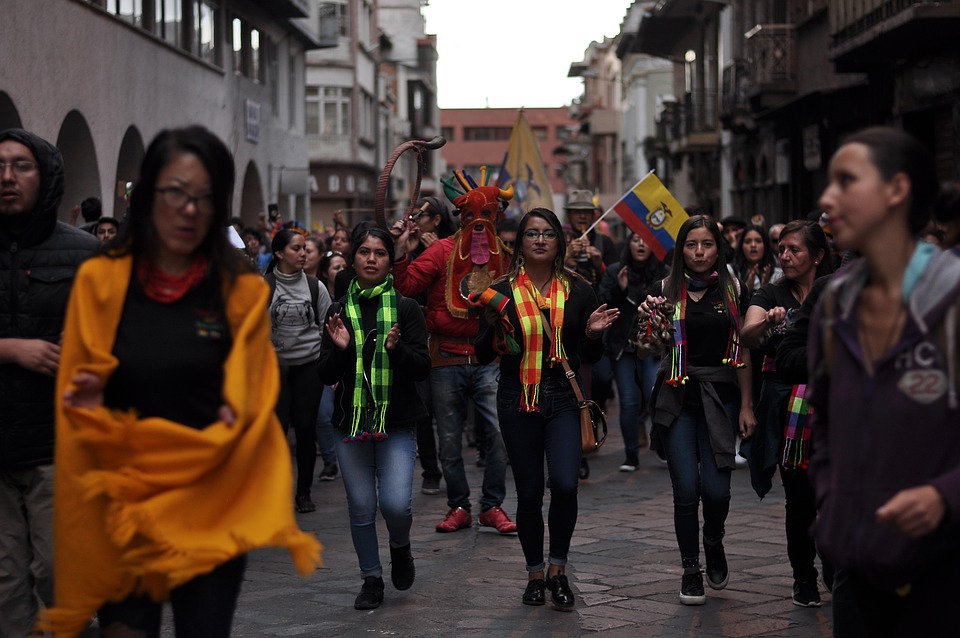 There are also fewer limitations to identifying as Latin American when living in cities like London, Manchester, Leeds, or Brighton, where ethnic, racial, and cultural diversity is more normalised.
People feel less intimidated about being who they are when living alongside other communities, becoming another piece in the mosaic of these major urban centres.
Does the United Kingdom allow Latino culture to be valued?
Language proficiency is a barrier faced by those coming from countries where English has not been imposed. Latin Americans, or people of colour with other identities, must work twice as hard to gain recognition; they must be “more popish than the Pope” to be valued.
Is the footprint or impact of Latin Americans noticeable in this country?
Yes, definitely. The primary contribution is cultural. Frida Kahlo stands out in the visual arts, as does the Argentine theorist Ernesto Laclau, who began his career at the University of Essex in the 1970s and developed an influential body of work on populism and hegemony that subsequently influenced the understanding of left-wing populism in Latin America.
London has been an intellectual hub both for exiles fleeing military dictatorships and for individuals drawn by academic opportunities, following in the footsteps of key figures of Hispanic-American independence such as Francisco de Miranda, Simón Bolívar, Andrés Bello, or Bernardo O’Higgins.
 Chilean, Argentine, and Uruguayan exiles fleeing the regimes of the 1970s and 1980s formed significant pillars of the Latin American community in London. From abroad, they spearheaded human rights campaigns, publishing activities, and political organising. The British capital became an institutional and organisational home that marked the academic and cultural life of the country.
What has Latin heritage contributed to British culture?
Everything relating to music, literature, food, and Spanish, which is increasingly widely spoken. Many people want to learn Castilian Spanish.
What are the stereotypes surrounding Latinos in this country?
The media have contributed greatly to creating generalisations that associate Latin Americans with laziness or criminality. Numerous films and narratives identify them with drug trafficking or a reluctance to work. Even the rhetoric of the Trump administration in the US reinforced the idea that those migrating from the South have malicious intentions. But it is the media, especially social networks, that promote these messages, maintaining a narrative that results in unfounded discrimination.
It seems that in the US, Latinos are the scapegoat as the main immigrant group. However, immigration in Europe is more fragmented. Does that make the situation of Latinos more relaxed regarding discrimination, or is it indifferent?
In the US, owing to the volume of arriving population, the focus is placed mainly on Latin Americans. In Europe, that attention is fragmented; but when discriminatory political rhetoric against immigration arises, everyone is lumped together: Latin Americans, Africans, Asians, etc.
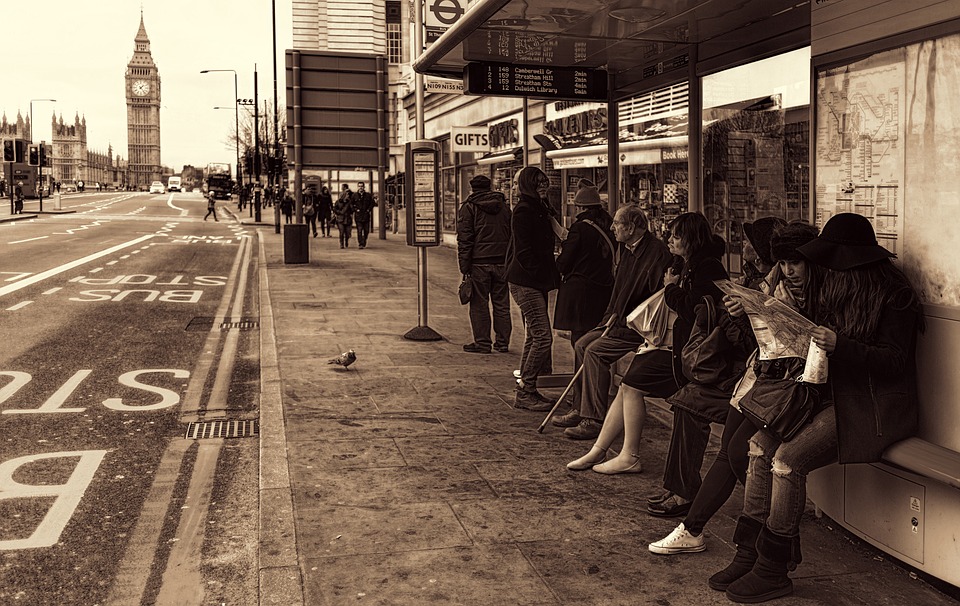 Latin Americans become a minority within the broader set of communities coming from other regions.
How is Latino identity defended by Latin American House?
Latin American identity is defined through every cultural expression: art, music, gastronomy, literature, language, regional speech, religion, and a shared past of tragedies and triumphs.
It is vital that Latin culture is respected because it is already part of British society. For this reason, the institution’s objective is to ensure that people coming to us feel supported and empowered to build a stable life through guidance, education, and the fostering of community ties.
(Translated by Rene Phelvin – Email: renephelvin@gmail,com) – Photos: Pixabay










.jpg)












