
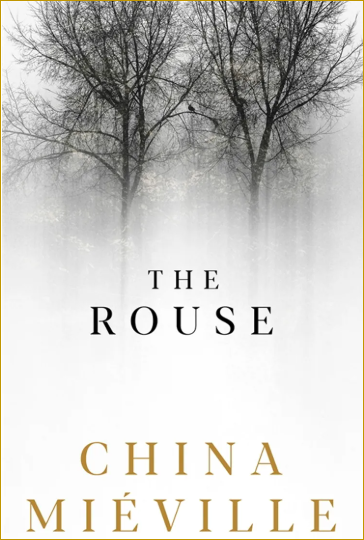
When it comes to fiction, it seemed China Miéville had gone into retirement – “The book of elsewhere”, two years ago, hardly counts – but now “The Rouse” has been published and the long wait has been worth it.
 Sean Sheehan
Coming in at nearly 1300 pages, this is a big novel, but a patient reader is richly rewarded as its different parts begin to coalesce to form something daringly special.
The early chapters, for a writer of weird fiction like Miéville, are surprisingly naturalistic, telling the story of a single mother in London in the early 1970s. Her vaguely defined disaffection with life becomes more pronounced in her son, Ewan, who becomes an increasingly enigmatic young man with an inexplicable career choice.
This part of the story ends suddenly with an unexplained death and – confronting finality – is felt by the character who does not die as ‘the absolute zero underlying all’ and who, as the ashes are strewn from its urn, experienced ‘with awe the diminution of mass’.
The unexplained death leads to rage (“If I was religious, I’d be happy to kill God”) and the absence of what a character calls “Hollywood closure”. It is also accompanied by an unanticipated change of place and time as the story switches to the 1950s and the British army’s response to the uprising against their colonial rule in Malaya. The plot thickens with more unexplained deaths, but the overall story never abandons characters from the novel’s opening part and moves back and forward between the metropolitan and the colonized.
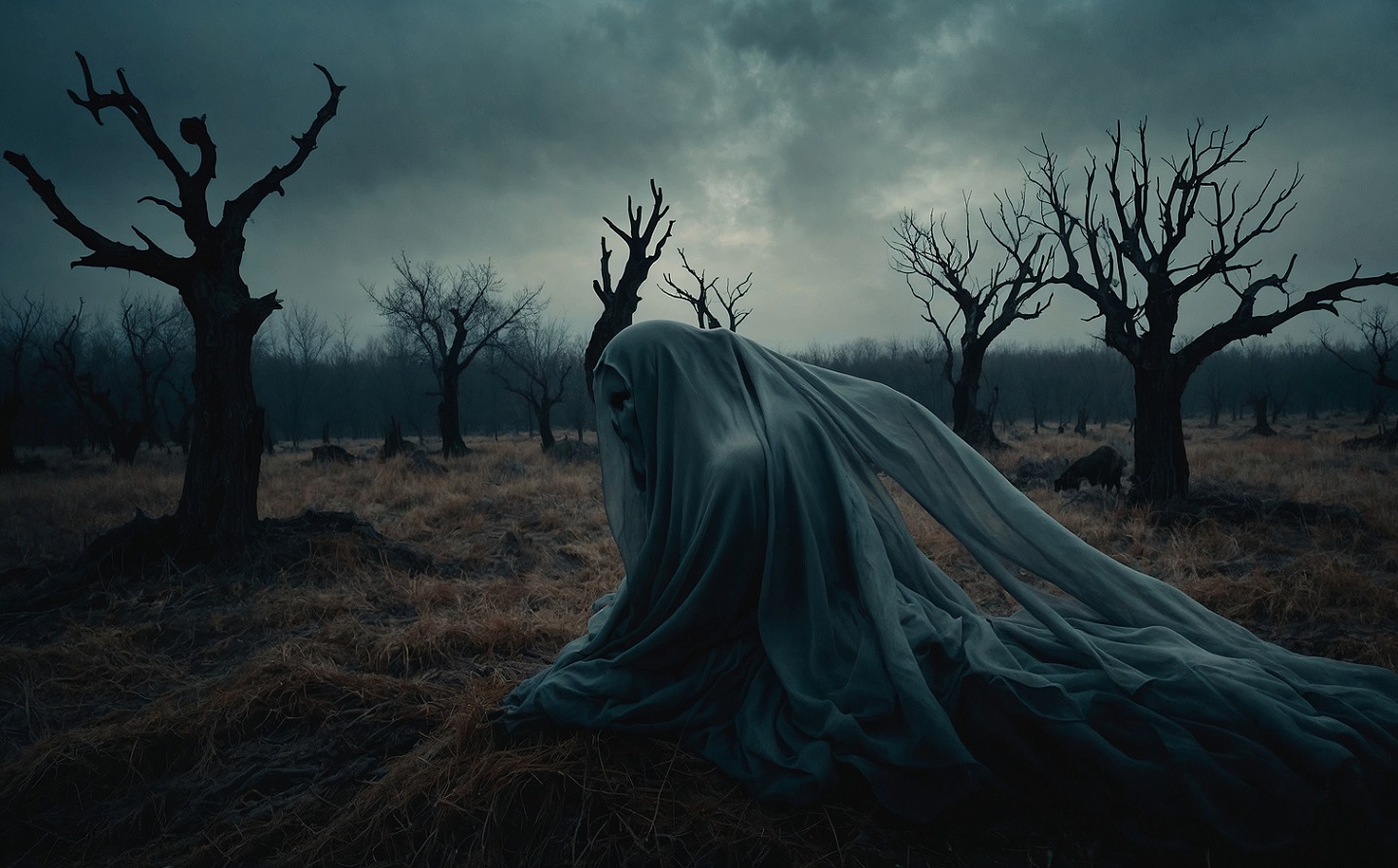 What happens in Malaya triggers a narrative swerve into the paranormal and the occult as evidence unfolds of strange happenings which lead to the formation of a special force in the British military called R Unit.
The ‘R’ stands for revenance, the coming back of what should not return – the dead – and Uniteers are those with an extrasensory awareness of phenomena beyond the rational order of things. This is explicitly related to dark folklore’s vocabulary for the uncanny, but it rules in a materialist base to psychokinetic manifestations that are (a)roused. Nomenclature flounders with this: ‘it’s a viscosity brought into presence by the scrape of matter and its other, a grinding of here and after, a and void.’ This netherworld of the ex nihilo (‘out of nothing’), born from death but not the dead, and what some would call the supernatural is pursued by R Unit as it – like the readers of this novel – struggle to understand a dimension that cannot easily be given a name.
 The ghost in “The Rouse” is the past: history is the book’s sediment, and the recurring historical references are not incidental and this becomes increasingly clear as the plot progresses.
At this point, the reader is about halfway through the novel: hold on tight, there is a lot more to come.
“The Rouse”, by China Miéville, is published by Picador (Pan Macmillan).
(Photos: Pixabay)
#










.jpg)












