
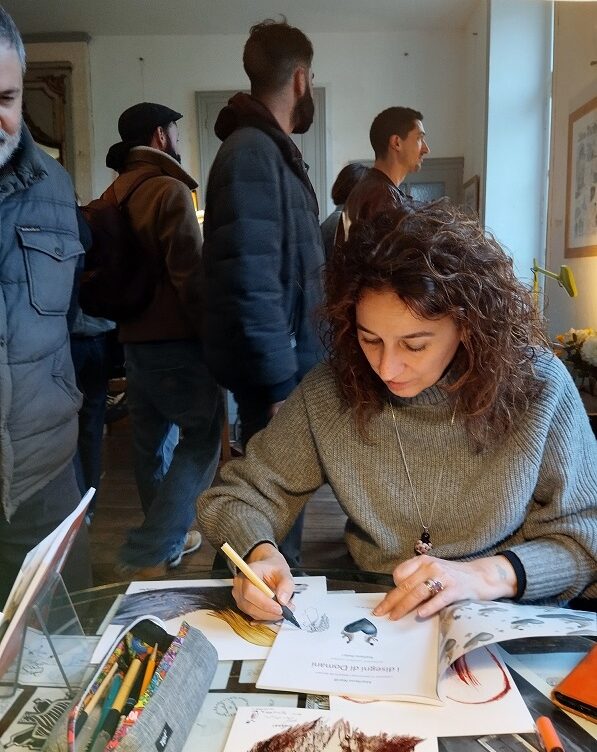
Her name resonates, and not only in Italy. She is a leading figure in the world of graphic humour, who has received several international awards. Through her work as editorial caricaturist she challenges social taboos, addresses global issues and sparks meaningful dialogue. She shared with The Prisma her perspective on the combination of art with journalism.
 Rola Zamzameh*
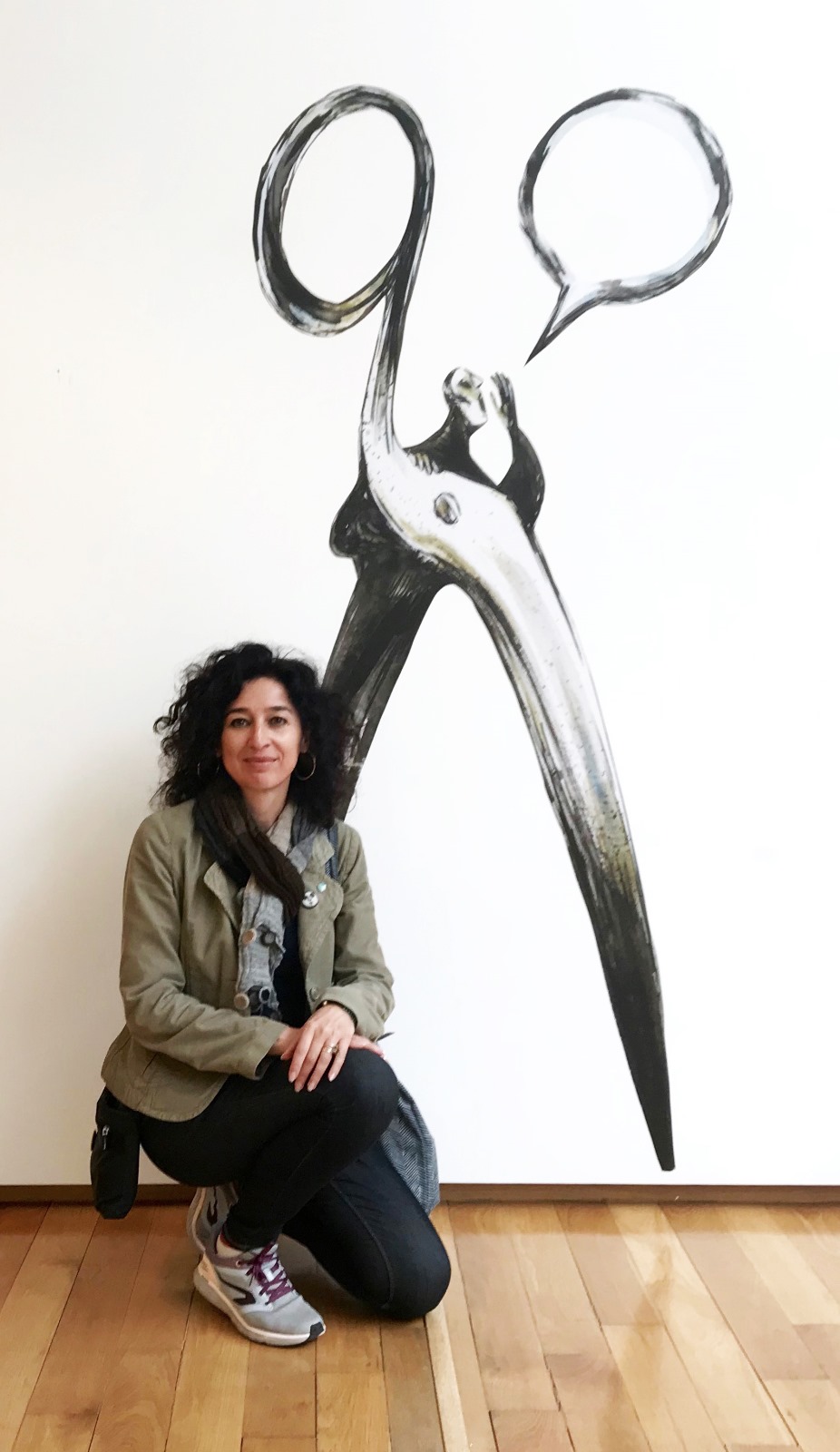
Marilena Nardi, born in 1966 in Chiampo, near Vicenza, Italy, has blended humour, social commentary, and artistic mastery in the world of editorial caricature.
After earning degrees in Art (1986) and Sculpture (1990), she began teaching Artistic Anatomy in 1992 and Illustration in 2003 at the Academy of Fine Arts in Venice. Since 1984, Nardi has participated in hundreds of caricature and illustration exhibitions worldwide. Her accolades include the Grand Prize at the 11th World Press Freedom International Editorial Cartoon Competition in Canada and the Premio Forte dei Marmi per la Satira Politica in 2013. With over 40 years of experience, Nardi has established herself as a bold and insightful artist who challenges societal norms and political systems.
What is your creative process, from conceptualizing an idea to completing a piece?
There is a definition I love: “a drawing is an idea with a line around it”. So, I try to visualize an idea, by drawing. I start with the topic. I inform myself; I read and make some sketches. I try to focus on the idea by drawing, identifying the shapes the best express in topic.
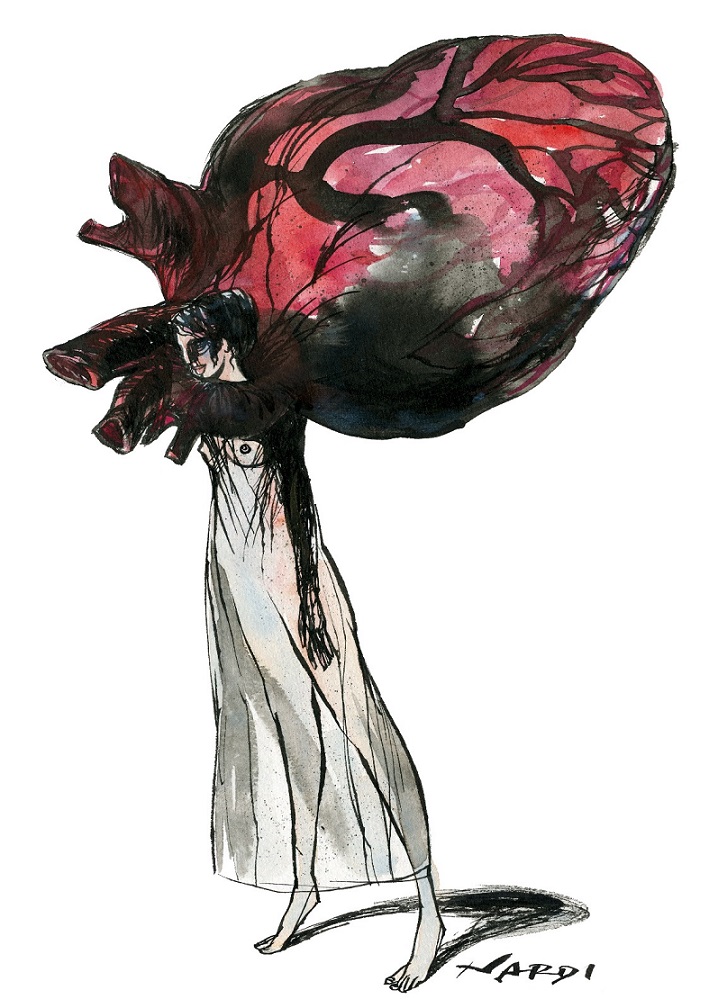 Then, I finalize the drawing according to the format and transfer it onto thick paper, for watercolours. A few pencil marks to set the figures out the subject and then I move on to brushes and Indian ink. If necessary, I add colours, otherwise I finish in black and white.
What inspires you to balance journalism and art in your editorial caricatures? How does humour connect them?
I think in editorial caricature, two worlds come together: art and journalism. I would like to use a metaphor. The editorial caricaturist is a bit like a tightrope walker: he moves like a tightrope walker on a tightrope between journalism, with the need for information and truthfulness of content, and art, which opens up different and deeper paths of understanding in the reader. Sometimes, I too am a bit closer to current events (with politics and caricatures), other times I get closer to expressive and poetic drawing. In this context, the balance is in humour!
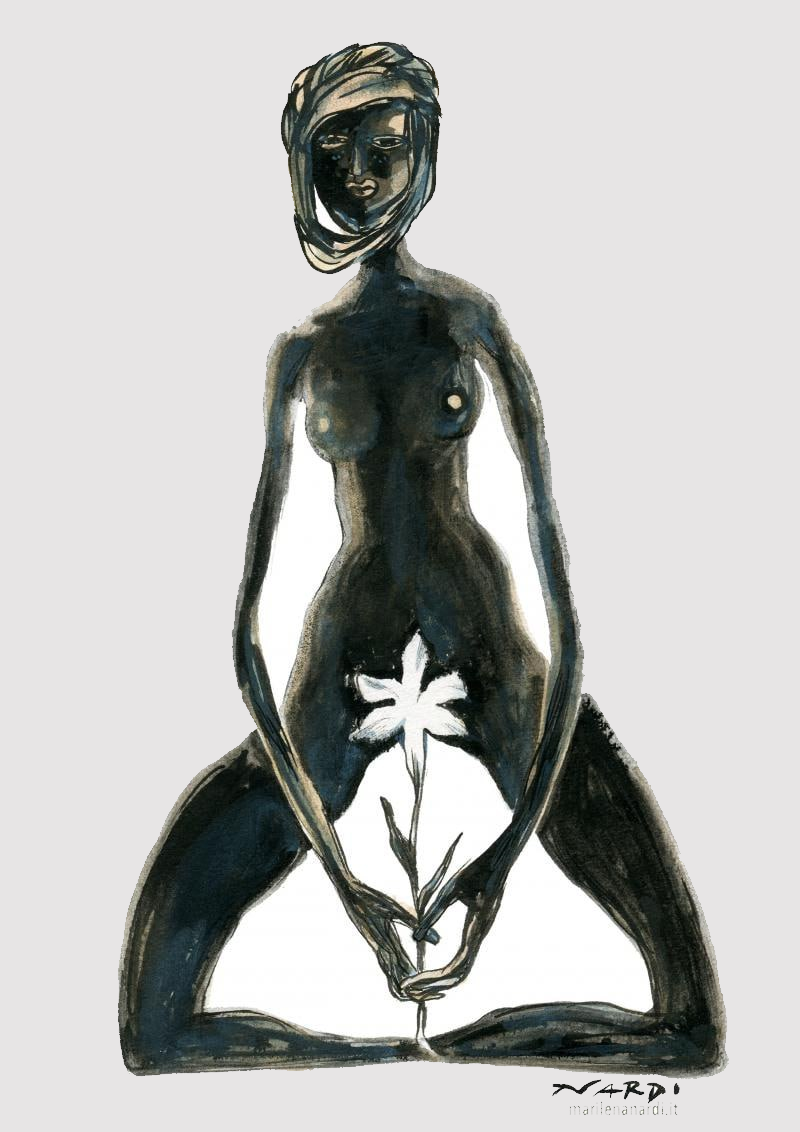
While addressing taboos such as the female body, you deliberately avoid undertones of eroticism. How did you develop this level of artistic maturity?
Taboos are linked to customs, which change from country to country and time to time. Some of these have their own meaning, others instead strongly contrast with the rights of some people and, in my opinion, must be fought against.
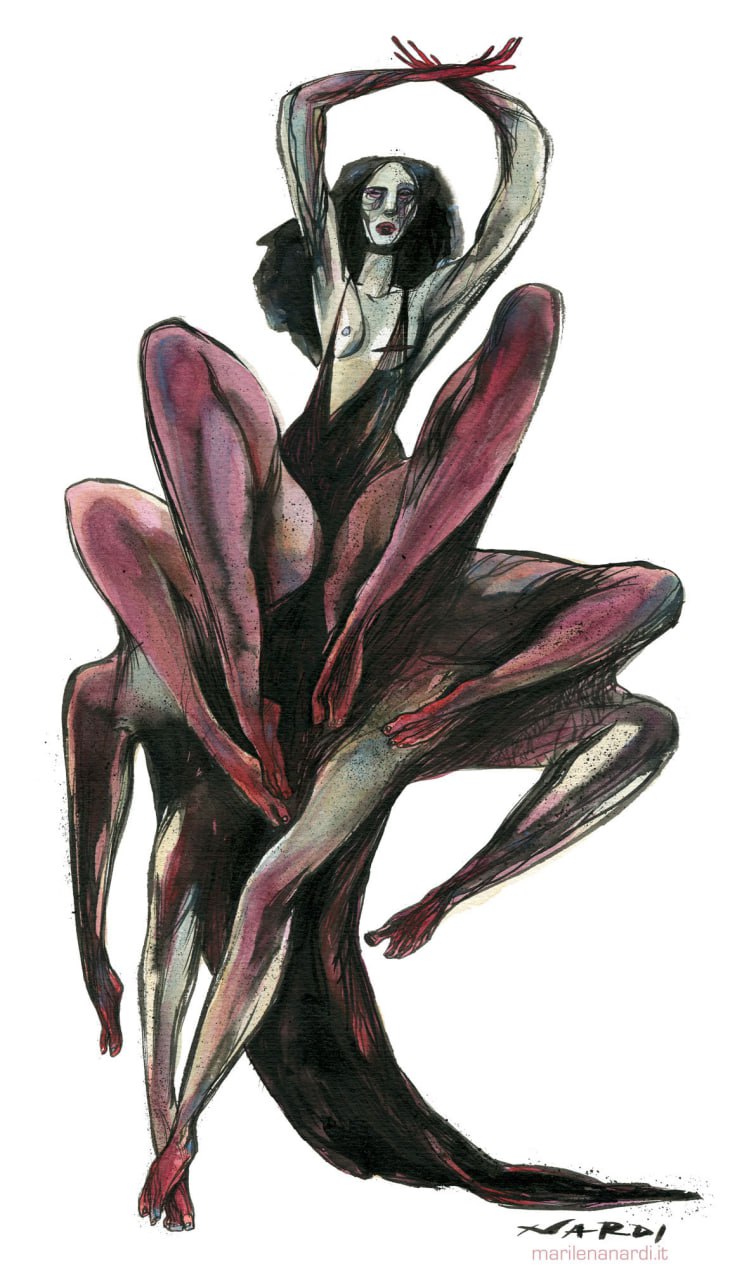 Myintention is to: To express my personal opinion through graphic language. Sometimes, it is not even an opinion but the “expression of a doubt” or “a question” that I asked myself. And that I present to the reader. To reflect together and to focus on certain topics. I use the most appropriate registers from depending on the moment but I always try to be clear and avoid the superfluous. If the topic is social, political, etc., there is no reason to add eroticism. On the other hand, I illustrated some poems by Baudelaire, from the collection “The Flowers of Evil”; in that case, many poems were strongly erotic and so were my drawings. It depends on the context.
Your minimalist use of colour and focusing on strong and bold lines stands out in the era of over-polished caricatures and cartoons. How did you develop this distinct style?
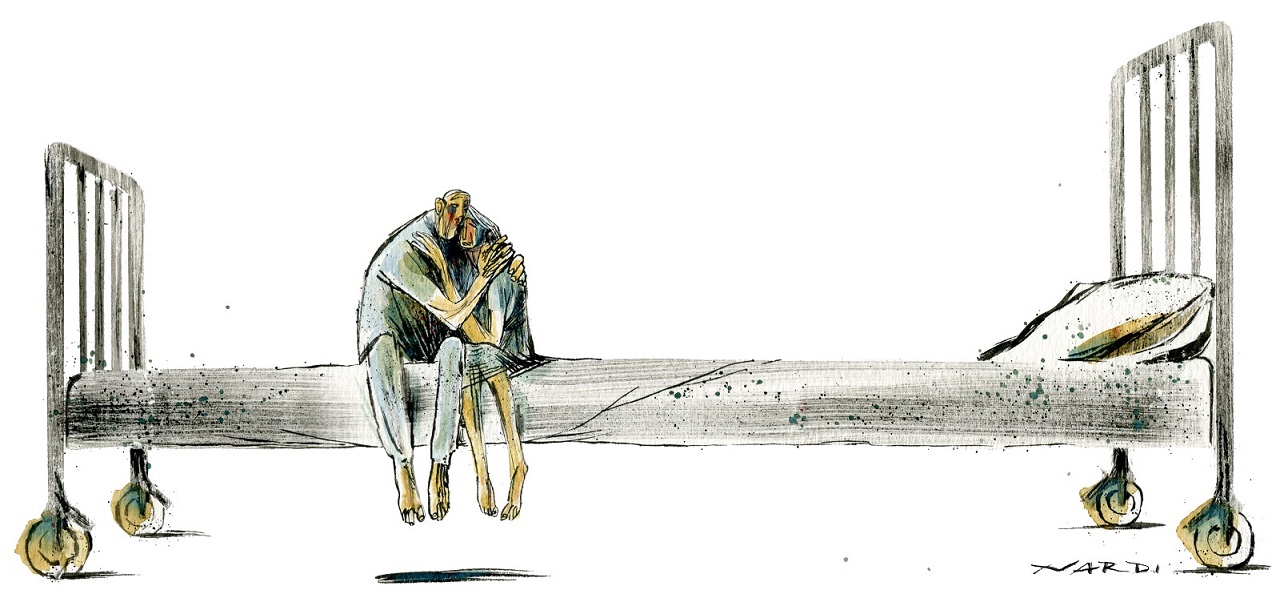
I started drawing in an era when computers and internet were not used, so I think and I work in a traditional way. I also love the imperfections of drawing. I use Indian ink, on watercolour paper, sometimes very black and pure, sometimes diluted. I use various types of brushes, very sensitive to any change in pressure. So, the signs can be thin or marked, and in general they are very expressive. I also love colour, but it is not always necessary. For this reason, in my works the colour is often rarefied or emblematic.
Unlike ink drawing, in digital drawing, which I also use for some works, infinite corrections are allowed. This affects and modifies the final result. I arrived at this style, gradually, following an inner need and my artistic taste that has also changed over time.
 Who or what has influenced your journey as a caricaturist?
I have learned a lot from various authors, both in the field of comics and satire. For me, an undisputed master of graphic humour is the Argentine “Quino”. I loved everything about him, from the character of “Mafalda” to his caricatures and comic strips without text. Thanks to him I understood in how many ways and with what lightness mixed with depth one could tell the nature of man. My first caricatures were strongly inspired by his. Then, as is normal, I took a different path, letting my style emerge and the need to address specific themes.
Many of your pieces address women’s rights and gender equality. How do you see the role of caricature, in advancing feminist discourse?
Unlike illustration, the profession of caricaturist has long been almost exclusively the prerogative of men. Women’s freedom, their rights, violence against women, discrimination, the wage gap for equal employment, etc., these and other themes related to gender issues did not seem to me to be sufficiently represented and felt by colleagues. I tried to draw these themes to compensate for these lacks. Sometimes a drawing can become emblematic and go viral, and therefore have a very strong social and political weight. But you can’t know beforehand.
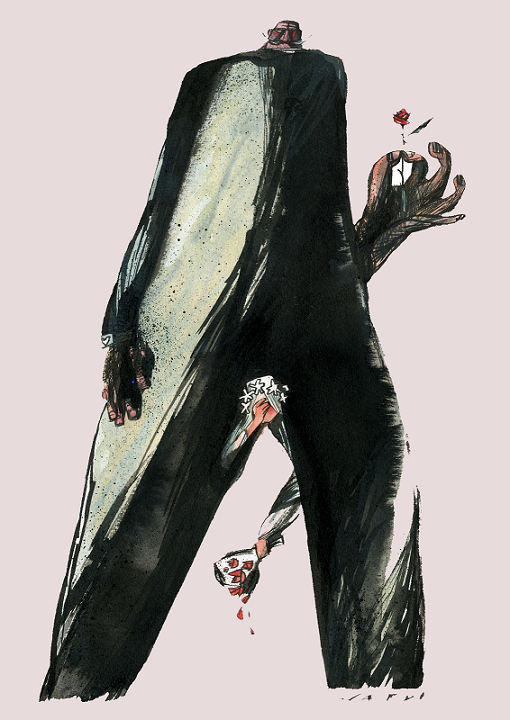 I can’t say if and to what extent art and in particular caricature are effective. But these are my tools, my language and my hope.
Unlike many artists who cater to popular trends, you seem to lead your audience instead of following their preferences. How has this approach impacted your career and reception of your work?
I am lucky to have two jobs: caricaturist and an illustration teacher at the Academy of Fine Arts in Venice.
It is tiring, but it is a condition of great freedom.
If a caricature is not liked and is not published, I “survive” anyway thanks to my work as a teacher. I have been able to refuse unwelcome proposals (…and advances) and follow my personal path. It has not been easy,
I have been the object of criticism, even heavy, from colleagues and some friends. But as Michela Murgia, an Italian writer and intellectual, loved to say, “We must please ourselves, not others”.
 Caricature often relies on humour, but your work seems to carry a profound seriousness at its core. How do you see the role of humour in your art?
First of all, humour is not comicality. It is an important ingredient in this work, but it is not the only one.
In an editorial design, in satire, in political caricature, the idea, the clarity of the message, the graphic quality and also humour count.
Satire is an art but also a tool for denunciation, of politicians, of society, of customs.
You can certainly smile, but my editorial caricature wants above all to make you think, wants to ask questions, wants to raise doubts.
*Next week: The Art of Caricature: human rights, freedom, and democracy.
*Rola Zamzameh: Senior journalist at European Commission and Parliament.
(Images and photos provided by the interviewee and authorized for free publication)










.jpg)












