
The continent that is South America had been culturally alive for 14,000 years before Europeans arrived, from nomadic hunting and gathering groups to the multinational, quasi-imperialistic state of the Incas.
 Sean Sheehan
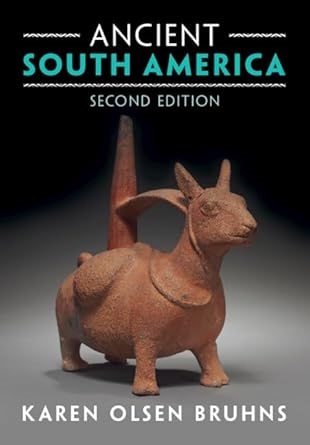
Ancient cultures are never fully recoverable but where Homer left us two major texts to puzzle over the nature of pre-classical Greeks, pre-colonial South America comes to us mediated by its conquerors. The second edition of “Ancient South America”, trying to bracket off the Western colonial gaze, presents the material evidence of societies before conquistadors and enforced christianization.
The basics for a pristine civilization had long been invented in South America– agriculture, irrigation systems, pottery, weavings and metallurgy – with writing and wheeled vehicles not deemed important.
There were other systems of notation, like the quipa using knotted cords, and wheels were of little use in vertical or heavily forested landscapes. The extraordinary diversity of physical environments resulted in permanent populations and consequent cultural developments mainly along the western margins. The first inhabitants, originating in northern Asia, are thought to have come from the Mexican-Central America isthmus, with settled agriculture developing in the 6000-3500 BCE period. Ongoing archaeological research is well covered and a chapter is devoted to the origins of corn (Zea mays mays).

Early signs of monumental architecture appear on the Peruvian coast, the art of making pottery emerging later in northern Colombi with Chavin in Peru becoming a ceremonial center around 1300 BCE. Metallurgy and textiles, ‘the high art of South America’, have their own chapters and are well illustrated.
Changes in population density and settlement patterns are associated with the development of warfare from around 200 BCE onwards. Attention is devoted to the conquest state of Tiahuanaco in Bolivia, perhaps the continent’s first empire, and then Huari in Peru before considering other large states in the central Andes. They possessed a draft animal, the llama, essential for the movement of goods and serving the Inca’s imperial needs.
A fascinating chapter looks at how archaeology is revealing new evidence about eastern South America and the Amazon. Marajó Island, at the mouth of the Amazon and about the size of Belgium, was inhabited from around 1500 BCE, with its fisheries becoming so well developed that intensive agriculture was unnecessary. Lowland archaeology suffers from a lack of cultural protection legislation and the cattle ranching that is destroying the environment.
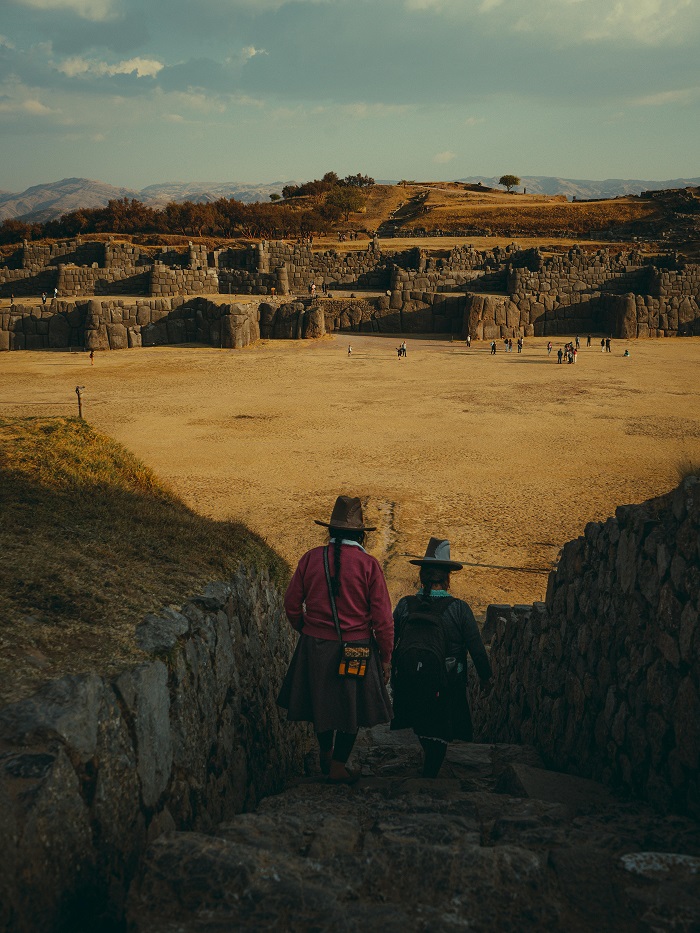
This wonderful overview of South America draws to an end as events in the fifteenth and sixteenth centuries make the societies of the Andes south of Colombia vulnerable to European invasion. Pachacuti expands the Inca state relentlessly; measles or smallpox spreads from the Spanish colony at Bunos Aires; civil war erupts and Europeans exploit disaffected ethnic groups and conquer the Americas. The ideological impact is immense: ‘predatory missionary activities have been going on since 1502 and continue until the present.’ The final insult, writes the author, is the international trade in looted antiquities and economic ‘progress’ contributing to the disappearance of the pre-Colombian past.
“Ancient South America”, by Karen Olsen Bruhns, is published by Cambridge University Press.










.jpg)













