
In his introduction to his new translation of Chekov’s “Three sisters” Rory Mullarkey rightly draws a comparison between the early 20th century Russian play and Samuel Beckett’s mid-century “Waiting for Godot”: “Two masterpieces sit, like bookends of Modernism, with a half-century of horror between them”.
Sean Sheehan
And, one could add, with more horror to come.
The three sisters live unfulfilled lives: the eldest, Olga, is a schoolteacher; 23-year-old Masha, snarky to the core, is married to a comically pompous man who disappoints her; only the youngest, Irina, on her name day is filled with the hope and expectation that her sisters have lost. A brother wishes for life in academia and all four hope eventually to return to their former home in Moscow.
The first Act, a strange mix of comedy and world weariness, gives way to ever decreasing hopes as their brother falls into gambling debts and mortgages the house, thus putting paid to their hopes and dreams. His mean-minded wife gradually takes over the house, the middle sister begins a torrid affair with the gorgeous Captain Aleksandr Vershinin and the eldest takes on the headship of her school – just more work. Everyone in this play is connected to the wrong person or in the wrong place.
By Act Four, the army whose arrival in a small provincial town made the sisters’ lives more interesting are leaving. The youngest, Irina, has given up in despai and rages to her sisters that she sees no future for herself but drudgery. Finally, she agrees to marry a man she does not love just to get away from her life but he is killed by one of the officers, jealous of his relationship with Irina.
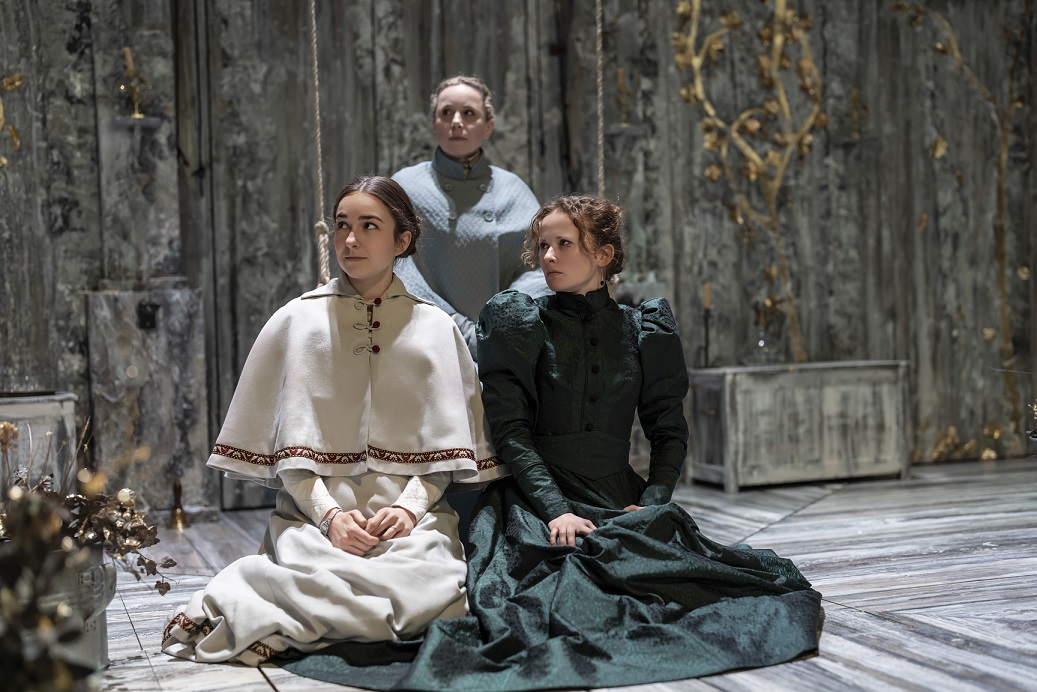
Caroline Steinbeis, the director, and set designer Oli Townsend have made superb use of the intimate space of the Sam Wannamaker Playhouse at the Globe.
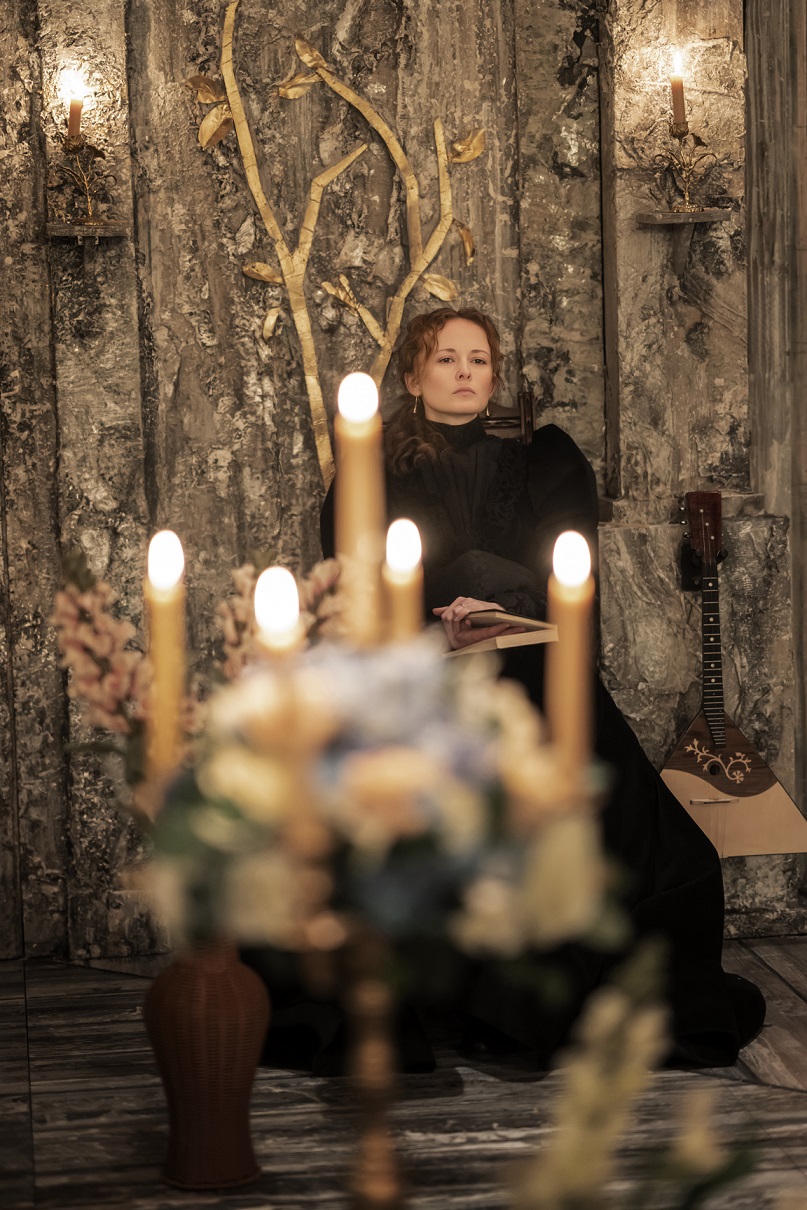
Lit only by candlelight, the first Act glows with the light from huge suspended candelabras and as the play progresses the candles are snuffed out like the hopes of the sisters. A few antique-looking chairs, period costumes and lots of noise combine to emphasise the sense of a confused but static society.
At times, the stage is almost bursting with characters whose movement spill into the audience’s space.
By the end, the curtains enclosing the theatre are pulled back, harsh lights illuminate Irina’s admission that she does not love her future husband and then even that moderately hopeful moment is dashed away in a senseless quarrel.
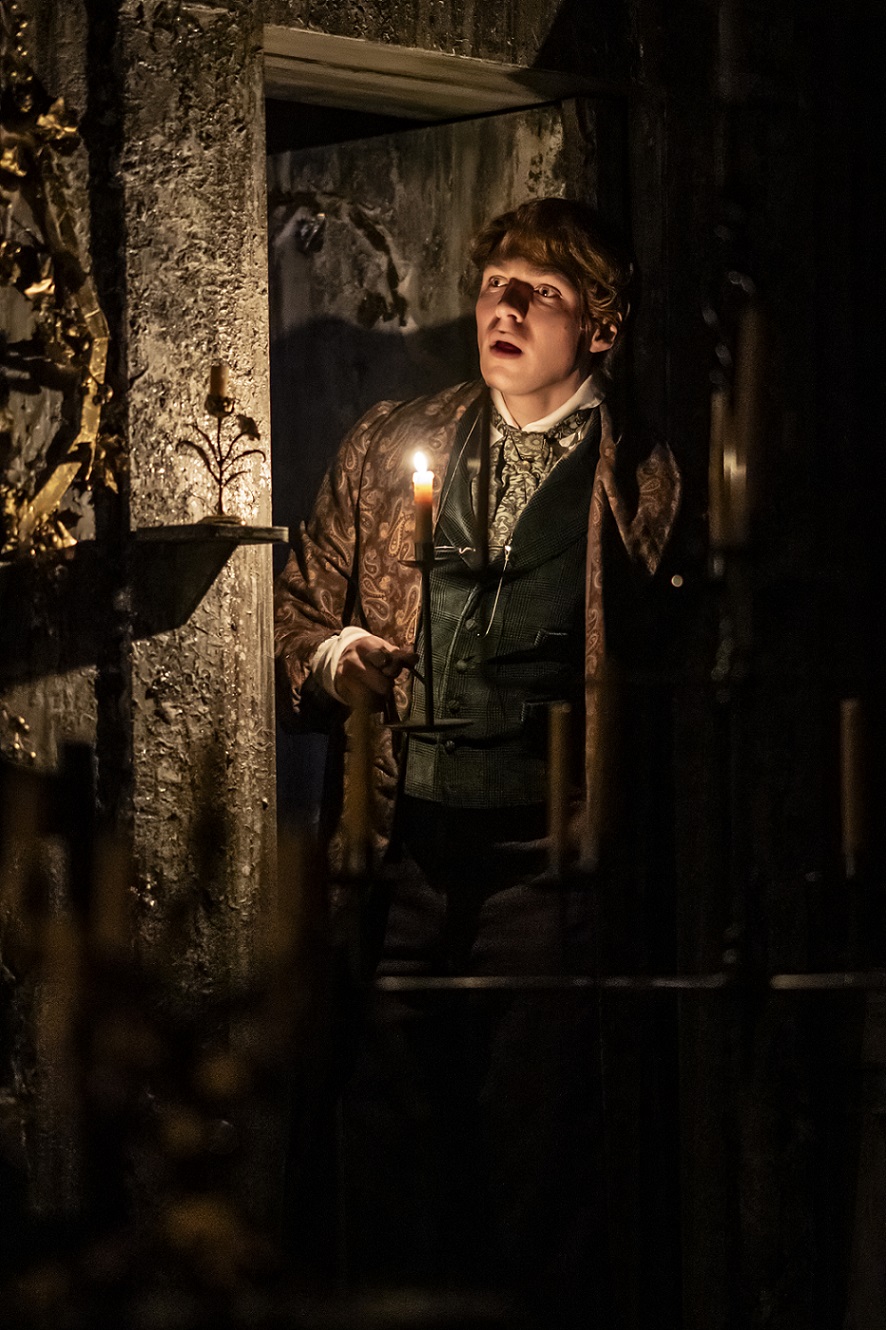
This is a spirited production of “Three Sisters” and the moments of comedy injected into it jar a little against the themes of hopelessness and despair but maybe that’s how it should be.
Grim stoicism is called for as hopes diminish but energy and determination to keep going is equally necessary and this is what enlivens Checkov’s tale of hopelessness on London’s South Bank.
“Three Sisters”, by Anton Chekov, is at the Sam Wanamker Playhouse at the Globe until 19 April.
(Photos from Sam Wanamker Playhouse at the Globe)










.jpg)












