
Recently, French courts convicted Rassemblement National (RN) leader Marine Le Pen and other RN members for embezzling European Parliament funds. They imposed unusually heavy penalties, including a five-year ban on Le Pen from running for office, affecting her status as a leading contender in the 2027 presidential elections.
 Yonatan Mosquera
Le Pen has vowed to fight “like Martin Luther King” for her right to participate in politics.
The RN is indeed a reactionary party that working-class people and the oppressed must oppose. However, it is misleading to claim that this ruling stems from an “independent” judicial system or a genuine “love for democracy” from the French capitalist courts.
Macron’s administration has a documented history of supporting police brutality against peaceful protesters. It has intensified intrusive political surveillance under his “Global Security Law” and enforced thought control by dissolving the Collective Against Islamophobia (CCIF) and other outrageous measures. Furthermore, Muslim organizations are being pressured to renounce any political agenda, denounce so-called “political Islam,” and reject claims that “state racism does not exist.” Macron is neither a protector of democracy nor a fighter against fascism.
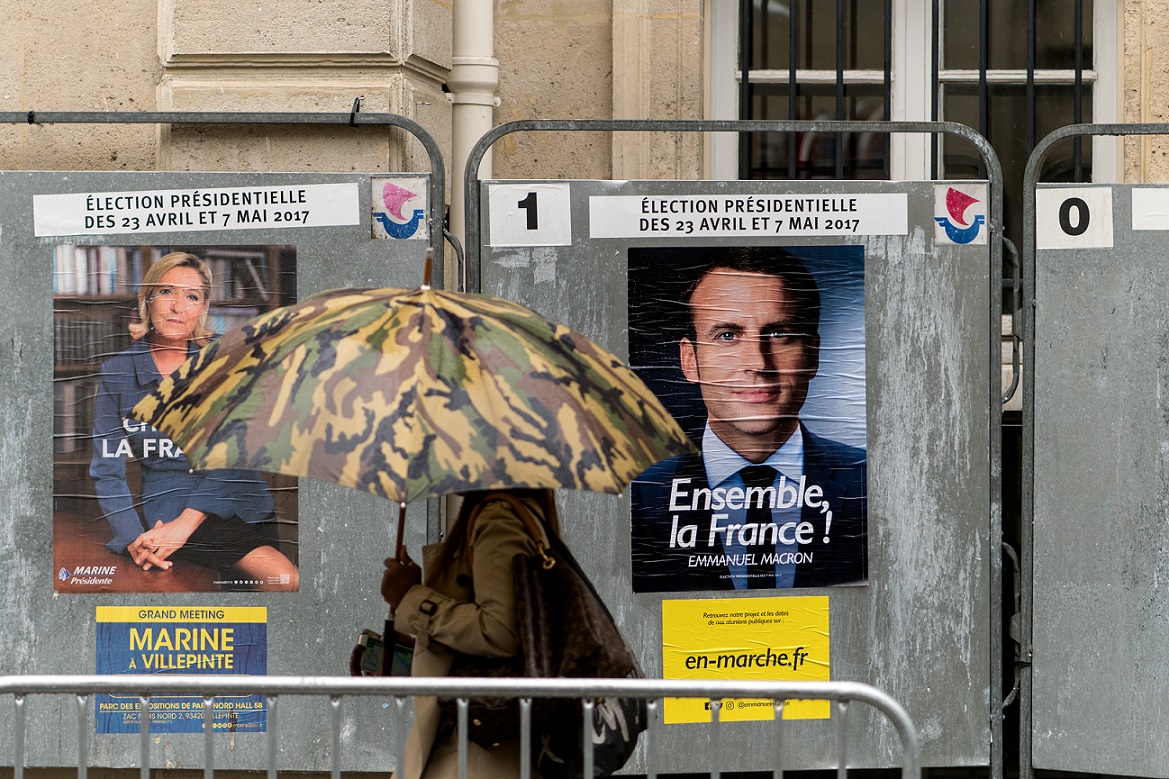
By preventing her from running in elections, the courts have transformed Le Pen’s party into a martyr in the eyes of millions of French workers who rightfully detest Emmanuel Macron’s unpopular presidency. The courts will not protect the working class from fascism. Even with Le Pen’s suspension, the RN still has a good chance of winning the 2027 presidential elections.
Bourgeois elections and fascism
The courts are not the only tools of the capitalist state that claim to “defend democracy.” Proponents of capitalist institutions often argue that bourgeois elections are the solution to “stop fascism.”
In the July 2024 elections for the 577 seats of the French Assembly, the left-wing coalition Front Populaire (FP) secured 180 seats, President Macron’s Ensemble gained 159 seats, and Le Pen’s RN obtained 142 seats. This result followed a concerted campaign by trade unions, social movement organizations, and others to “stop fascism” by voting for “whoever” could defeat RN candidates. The FP even supported Interior Minister Gérald Darmanin, a champion of some of the most racist policies implemented by the Macron regime. Darmanin has promoted the racist New Immigration Law and introduced Islamophobic legislation against an alleged “Islamist takeover.” He has also lobbied against the construction of a mosque in Strasbourg, closed the Islamic La Voie Droite, and banned “burkini” bathing suits for Muslim women in municipal pools in Grenoble.
Despite these issues, the left-wing coalition shamefully withdrew 134 candidates, voluntarily allowing candidates from Macron’s coalition to take their place in an attempt to “block the fascists.” Predictably, Macron refused to appoint a Prime Minister from the FP, which is the largest party in the Assembly, and instead named Gabriel Attal as head of government.
 The electoral manoeuvres of the “anti-fascist front” have resulted in a victory for Macron’s allies and an elevated status for Marine Le Pen’s far-right faction. The latter can now claim to be the sole legitimate “anti-establishment” option for the people of France. Simultaneously, the left has demonstrated its inability to guide workers toward a path of victory against fascism.
Lessons from history
Workers cannot effectively oppose fascism through court-imposed bans. Blood-stained historical experiences—such as the actions taken by the German state against the Nazi Party before Hitler’s rise to power in 1933—show that bans imposed by the capitalist state on the far right lead to even harsher attacks on workers’ organizations.
Moreover, history teaches us that fascism cannot be defeated by relying on the capitalist state’s electoral games. In 1932, the German Social Democrats (SDP) supported Paul Von Hindenburg’s candidacy for the presidency, presenting him as “the only hope” to “stop fascism.” However, Hindenburg went on to appoint Hitler as Chancellor of Germany, even though Hitler’s Nazi Party had secured only 37% of the votes.
 Similarly, during Mussolini’s rise, the Italian socialists made desperate and embarrassing pleas to King Emmanuel to “exert pressure” on Mussolini (a former socialist) to stop the violence against them. But these calls were in vain, as the king appointed Mussolini as head of government in October 1922.
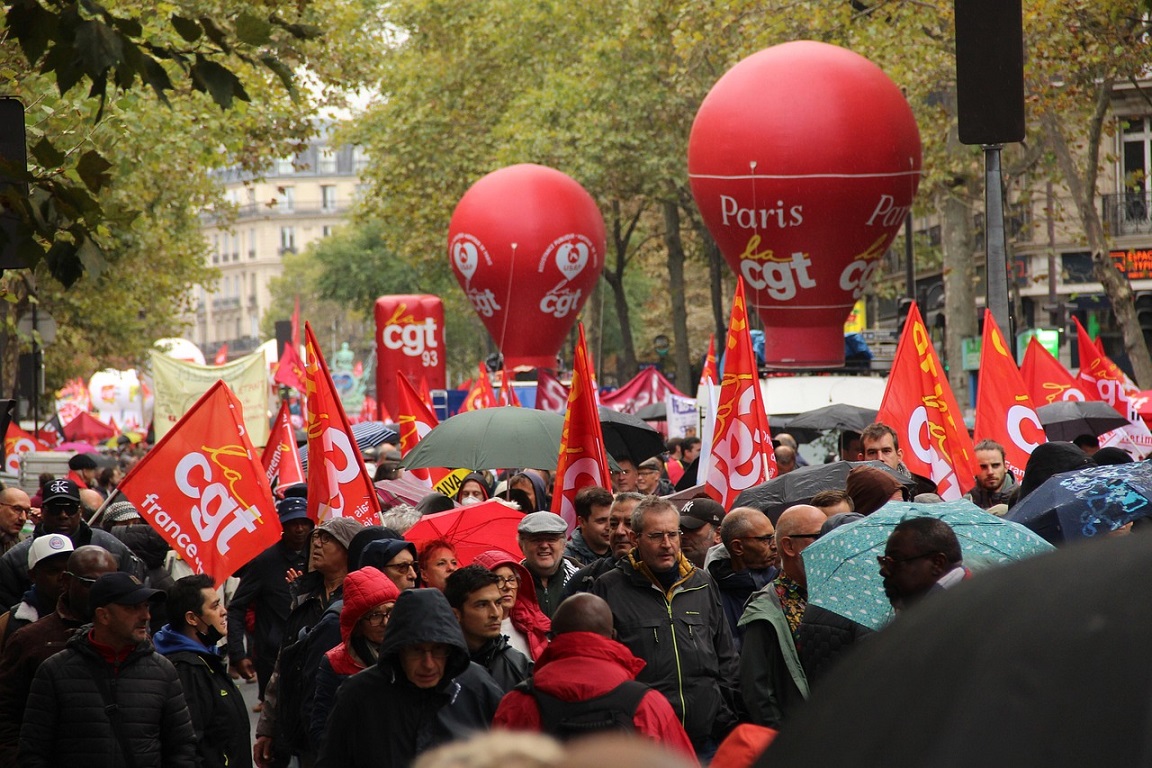
However, history also offers positive examples. On February 6, 1934, fascist thugs descended on the French National Assembly and forcibly replaced several members of parliament with their own representatives. Less than a week later, over 4 million workers responded to the French CGT union federation’s call for a general strike. Similar actions continued for the next three years throughout France, effectively halting the fascist movement.
On October 4, 1936, the British Union of Fascists, led by Sir Oswald Mosley, suffered a significant defeat from which they never recovered during The Battle of Cable Street. The workers of London’s East End demonstrated the power of independent working-class action by successfully mobilizing to confront the fascists. On the other hand it doesn’t guarantee anything, as the Spanish Civil War showed.
 Neither the courts, electoral machinations, the constitution, nor any part of the capitalist system will protect us from fascism. The only way to confront the far right is through active political mobilization.
How do we combat the rise of fascism in contemporary society? What historical examples illustrate the transition from bourgeois democracy to fascist rule? We will address these questions in the upcoming articles of this series.
(Photos: Pixabay)
The Prisma series ‘Fascism’
Defining fascism, defeating fascism
The Prisma series ‘Fascism’: Is Meloni a fascist?










.jpg)












