
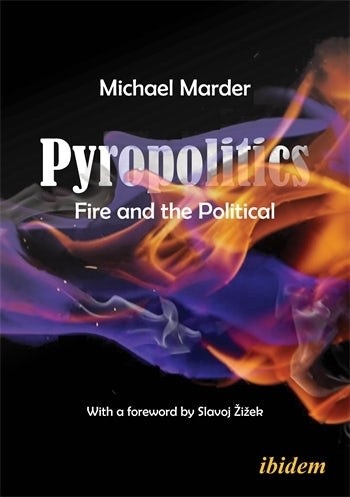
Slavoj Žižek makes the point, in his introduction to Michael Marder’s “Pyropolitics”, that always pointing to and blaming capitalism for the multifaceted antagonisms and urgencies besetting our world has the drawback of simplistically making the economy the sole culprit.
 Sean Sheehan
The complexities calling for our attention are better analysed when displayed prismatically and the image of fire, as Marder shows, ideally serves this purpose.
Pyropolitics does not supplant geopolitics but reminds us that earth’s core is fire and what can appear as solid ground is an illusion when its governing force is volatility. The logic that partitions what looks permanent is the logic of property-driven wealth making, coming together in the US plan for making Gaza the “Riviera of the Middle East” and Israel’s Nazi-like desire to violently remove people seen as inferior from their land.
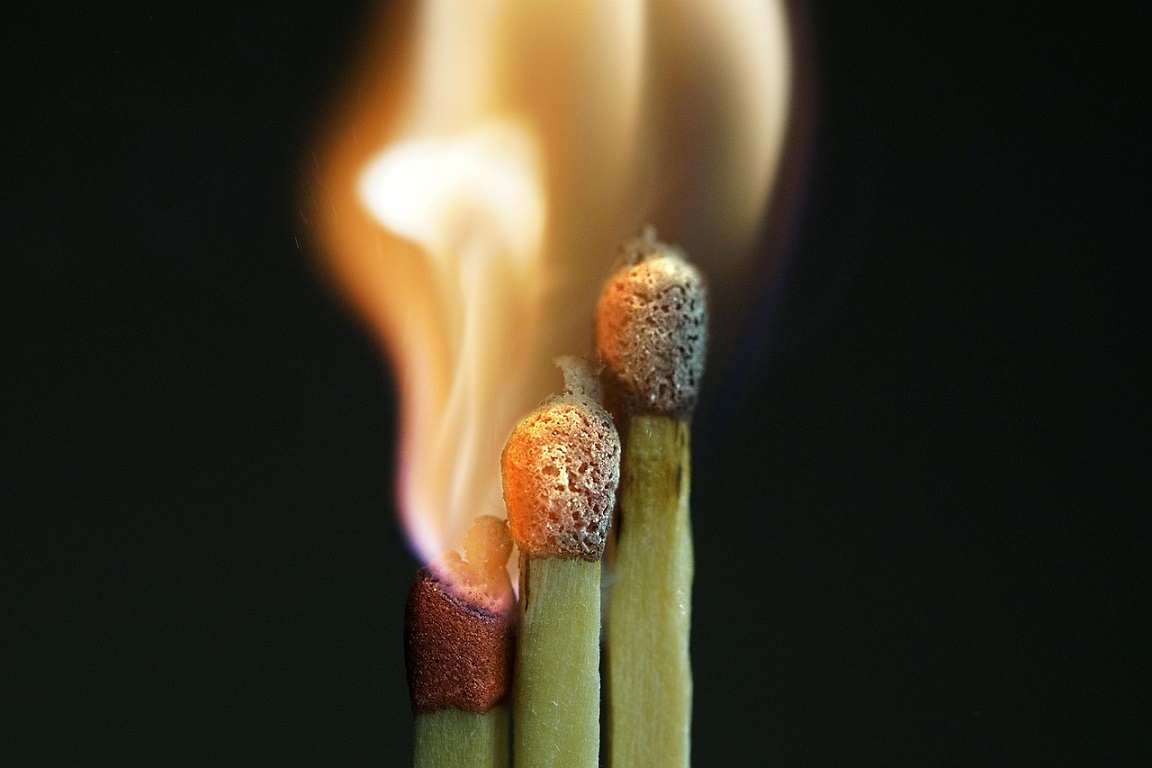
Fire as a metaphor possesses tremendous potency in fields as diverse as political theory, biology, literature and theology. Where there is supposed to be the pure white light of reason, fire as a prism splits across different areas of life and reveals shades of colours that add depth and meaning. Light has been fetishized as the source of vision, a helioptropic principle accounting for day and night, what can be seen and what stays in darkness, but this forgets that heat is an equal manifestation of the cosmos ablaze with possibilities. Lenin knew this when he drew inspiration from a line of poetry by an earlier Russian subversive – ‘A flame will flare from a spark’ – and used it as the motto for the revolutionary newspaper Iskra (‘The Spark’).
 “Pyropolitics” is a highly original study covering a lot of material. The first chapter does not draw in the reader as avidly as those that follow.
It is about Carl Schmitt, a thinker with whom I for one am not acquainted, but in the chapters that follow the range of subject matter is impressively wide: the French Revolution, Castro, the Indian Vedas, Buddhism, the Inquisition, energy consumption as summed up by Kierkegaard: “…most ridiculous of all is being busy in the world, to be a man quick to his meals and quick to his work […] For what do they achieve, these busy botchers?” What busy botchers achieve is their own consumption, burning themselves and the world to death as global heating continues unabated, matched only by the inflammatory rhetoric of racists and bigots.
“What remains of light and heat’, asks Marder, ‘when material existence as a whole is on the verge of being consumed and destroyed, without any hope for an eternal conflagration of spirit sustaining itself?”
 Plants provide an alternative model of living.
They take energy from the sun, burning nothing in the process, and Marder has discoursed eloquently and convincingly on this in books and talks.
“Pyropolitics: fire and the political”, by Michael Marder, is published by ibidem Press.
See also his talks on “Plants and philosophy or learning from plants”: Part 1 and Part 2.
(Photos: Pixabay)










.jpg)












