
Portugal is one of the countries worst affected by the loss of residential housing, yet successive governments of whatever party seem uninterested. Lisbon Council has just approved two more hotels in the centre of the city. An empty state-owned barracks in Lisbon is in the process of being sold to be made into a 5-star hotel.
Graham Douglas
Recent figures quoted in the Portuguese parliament by MP Maria Mortágua, the leader of the Left Bloc party, are that there are 47,000 empty houses in Lisbon, and over 700,000 in the whole country, not counting second homes.
In Lisbon about 3,000 were identified as in a state of degradation and Lisbon Council has stated that 1840 were re-habilitated by 2024, but did not make clear how many of these belonged to the 2,000 owned by the Council itself as of 2021. There is a housing crisis all over Europe, caused in part by governments rushing to develop tourism, at the expense of accommodation for local people. The profits go to the property owners, some of whom will be members of parliaments, and others will be multi-national investment funds.
If one function of a democratic government is to ensure affordable accommodation for its residents, then this financialization of housing amounts to democracy for sale.

Spain has seen some of the strongest popular mobilisations against touristification, and the Spanish government has begun to respond, but in Portugal the governments, whether of centre-left or centre-right have so far ignored protests. And it was recently reported that the government has dropped the previous requirement for rural land converted to urban housing to have a minimum percentage classed as affordable. Instead they have adopted a formula that in the words of one newspaper report “opens the door to speculation”. A useful report on Housing Finacialisation in Europe can be downloaded here. And a free-to-watch video prepared by the group Left Hand Rotation can be accessed here.
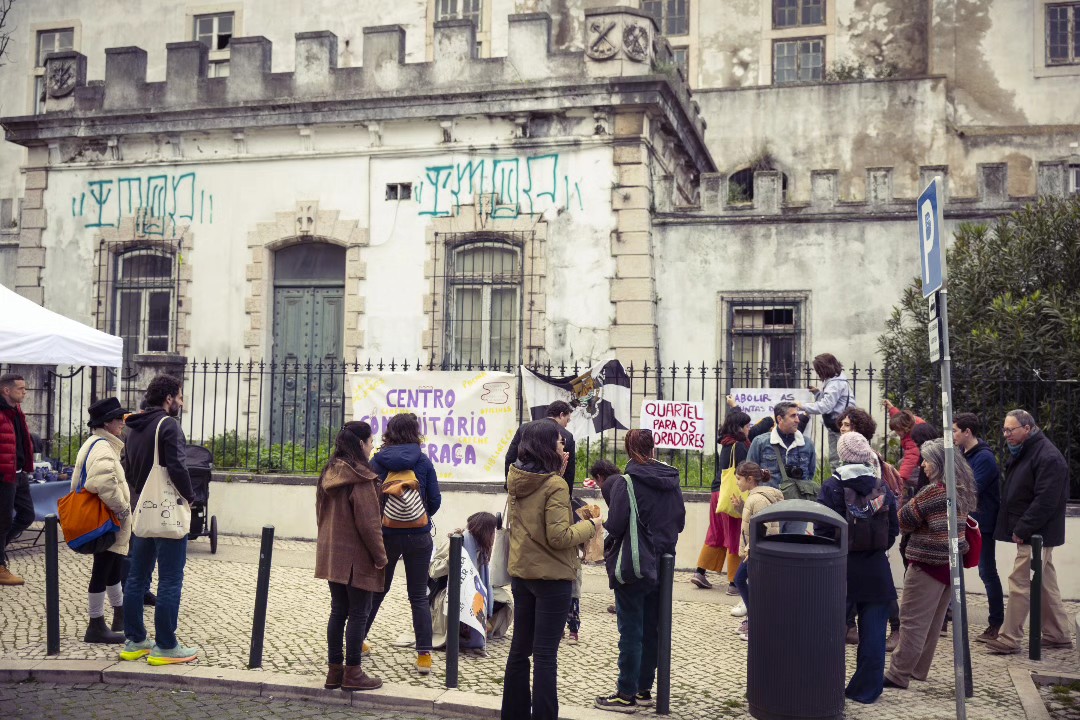
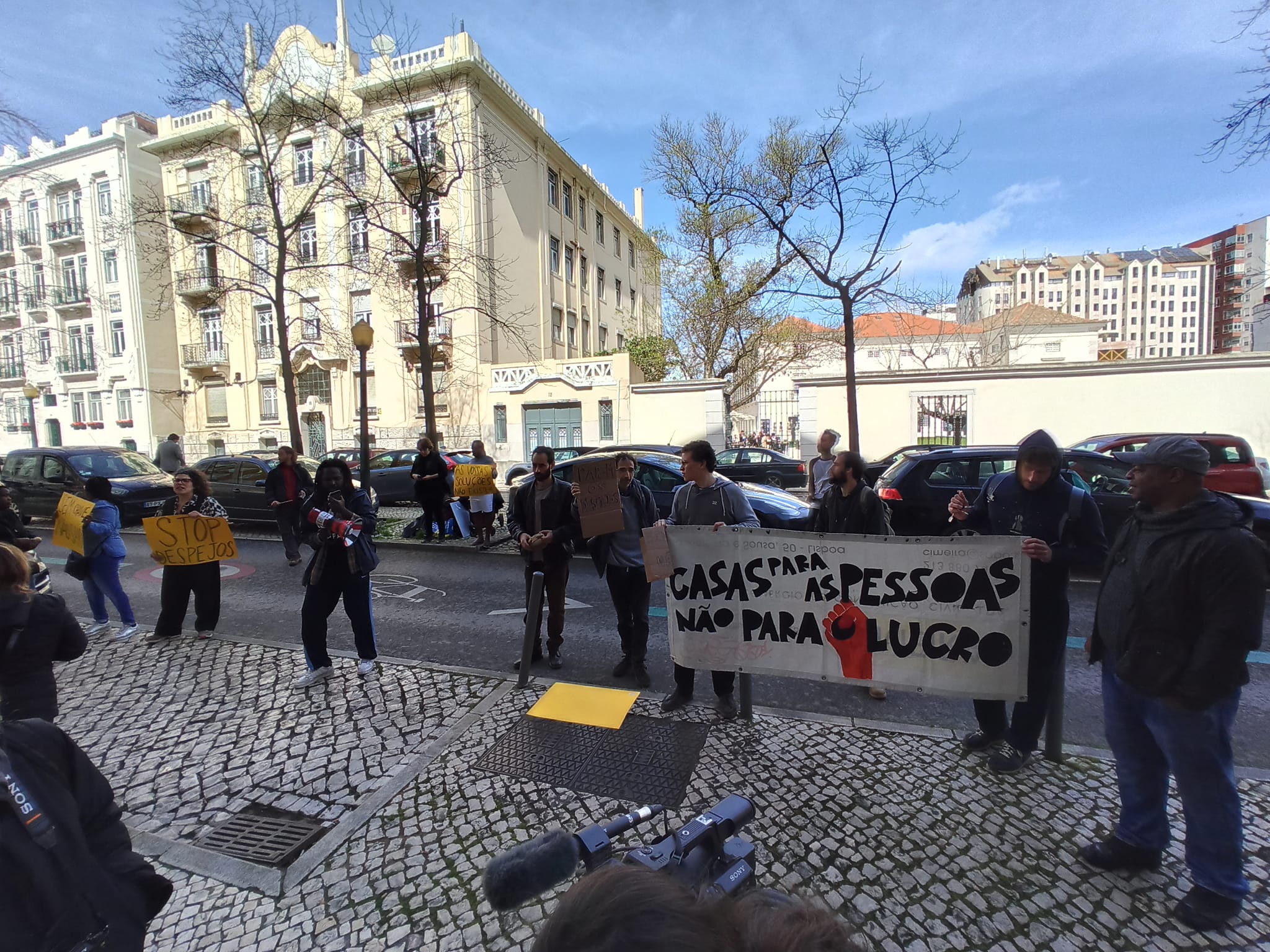
One group, Stop Despejos (stop evictions), which is part of the European Action Coalition for Housing and the Right to the City, has been coordinating protests, and recently focused on the issue of a historic building which the government plans to sell to the private sector to make into a 5-star hotel.
This mad rush to privatize also means that the tourist is also being short-changed, by high prices and the fact that a lot of development projects make every city centre look similar.
I spoke to Marco Seabra for The Prisma about this and the wider problems of housing loss in Lisbon.
You say the problem is acute in Lisbon.
In Lisbon there are more short-term rentals than in Barcelona, which is a much bigger city, but in Barcelona the local authority is already taking steps to control it.
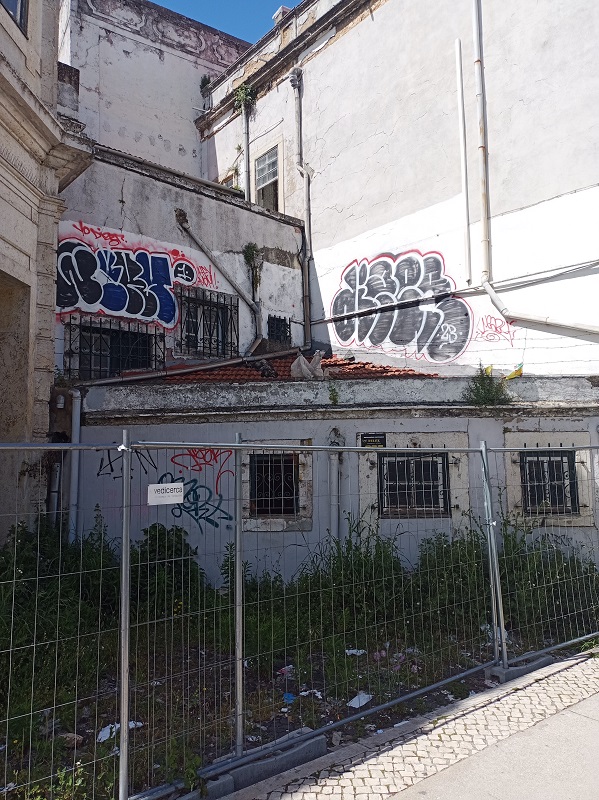
One concern in Barcelona is that some proposals that have been made are to be implemented after the next elections, so obviously there is the possibility that once again, nothing will be done. In Lisbon, they are hyping up new hotels and short-term rentals, and here in the Graça area you can see the names on the shops and cafes are aimed at tourists, not local people. And the Council has just approved two more hotels in the central Bairro Alto area of Lisbon.
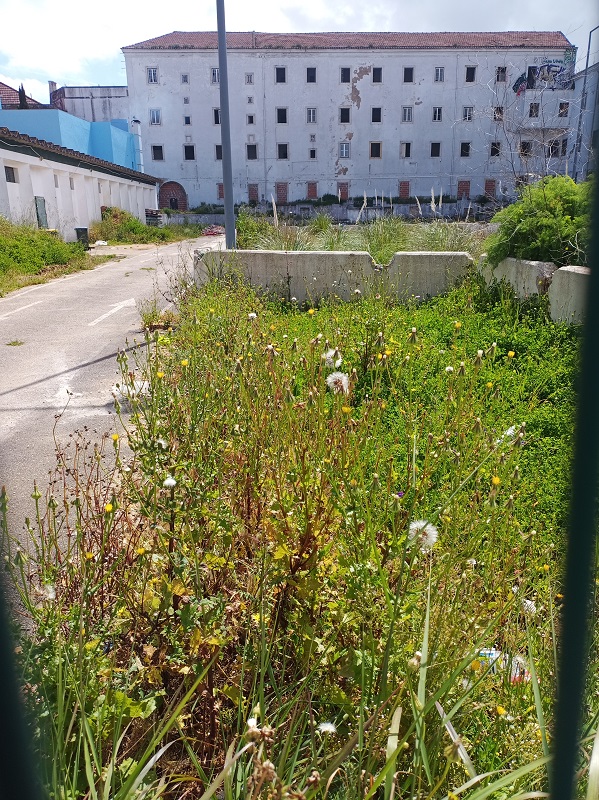
These issues have been brought to a head by the story of the barracks in Lisbon.
It was built in the 13th Century, and it has been a public building for a long time it was an army barracks until about 30 years ago when military conscription ended, and it has been vacant ever since. It’s a public building, owned by the Portuguese Tourism Agency, not the City Council.
The Revive plan has a list of historic buildings all over Portugal – the idea is that the Govt saves money by handing them to the private sector to develop as tourist sites or accommodation. In 2019 it was considered by the Ministry of the Economy, which covers tourism.
It is a National Monument, so it cannot be demolished and there are certain things, like the mosaics that have to be protected inside, so the plan had to be re-drawn, and the process was stopped in 2022. Meanwhile some of the mosaics have been stolen. The Sana Hotel group presented another plan, and it was accepted. The Central Government accepted the concession, but the planning of the works is a matter for the City Council. They stopped it once so they can stop it again and consider social uses for the building. For example, an inter-generational Centre, an Arts Centre, affordable housing, or a housing cooperative and because it was a barracks it would be easy to convert into student accommodation.
What is your experience of dealing with the government and the local authority?
We have had several contacts with the city executives and sometimes the national government, regarding evictions, and getting proper help for vulnerable people. We see that, centre-left or centre-right they have the same policies, they don’t care if people are made homeless by a building project. So, we are trying to build a mass movement before approaching the authorities again.
Could you intervene in a project before it gets handed to the private sector?
Yes, maybe but Orçamento Participativo (Participatory Budgeting) has a limited budget not enough to do a renovation. It would be even better if we could stop a project before it gets allocated. People in Graça were hoping for a community project, even though it has been stalled for 20 years, and now we are hoping to stop it. I agree we have to be more far-sighted.
Is it helpful to have demonstrations telling tourists they are not welcome?
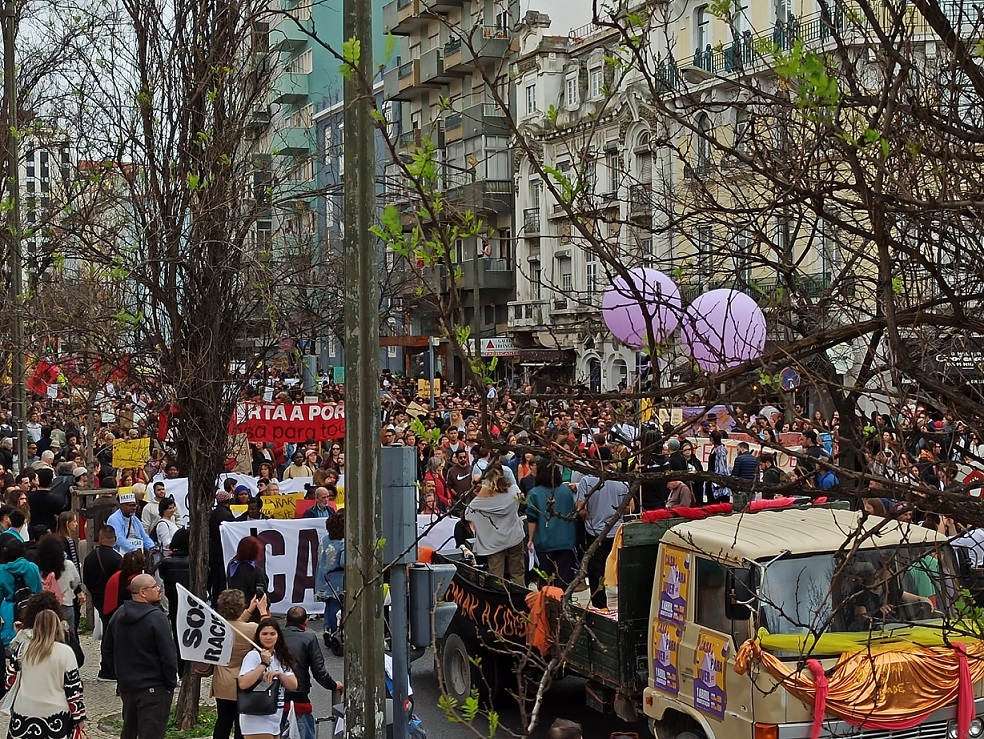
It’s not about the person who comes to visit, and I like to travel too, but we don’t want a model of the city that is mostly aimed at tourists. If nothing is done to control the loss of housing, it’s natural that resentment develops and will be expressed in this way, as in Barcelona and Amsterdam.
The idea that tourism helps the city assumes that the profits benefit the population, not just property owners.
Yes, and even if you are a small shop-owner who decides to rebrand your shop for tourists, you’re not suddenly going to get rich, and you lose your relationship with local people.
The tourist tax is now €4 a night which is for a fund that is supposed to support re-development, and it made €180 million last year, but some of it was invested in Lisbon Unicoms factory or Beato innovation hub.
These are part of a different marketing strategy, trying to get new companies and startups, they don’t benefit the city’s residents. We have yet to see how this fund benefits the city’s residents.
Have you had any support from the PCP or the Bloco?
Not yet, and we do not want our citizen’s campaign to become co-opted by any political party. We hope that our public campaign will get them interested, but without any party taking over. The people who live, work and study here should be the ones leading the movement.
Anything to add?
Self-management is a big word, and we are not trying to emulate the revolutionary process of Portugal, but we also want this project to be managed by a citizen assembly, not just hand it over to some institution or other.
And another big issue with the barracks project is that they want to build 3 floors below ground, and this means the removal of 20,000 cubic metres of earth, which means even more traffic congestion in this area.
(Photos supplied by Marco Seabra & Stop Despejos and authorised for free publication)











.jpg)












