
Not modern any more, the London buildings that Ian Na irn wrote about in the early `1960s have been eclipsed by The Shard and 22 Bishopsgate and wonkily-shaped edifices christened with names like Gherkin, Walkie Talkie and Cheesegrater.
 Sean Sheehan
Nairn would have liked the nicknames more than the buildings themselves, given his style of summing up a building’s character in laconic prose and judging its worth for a city where people live and work.
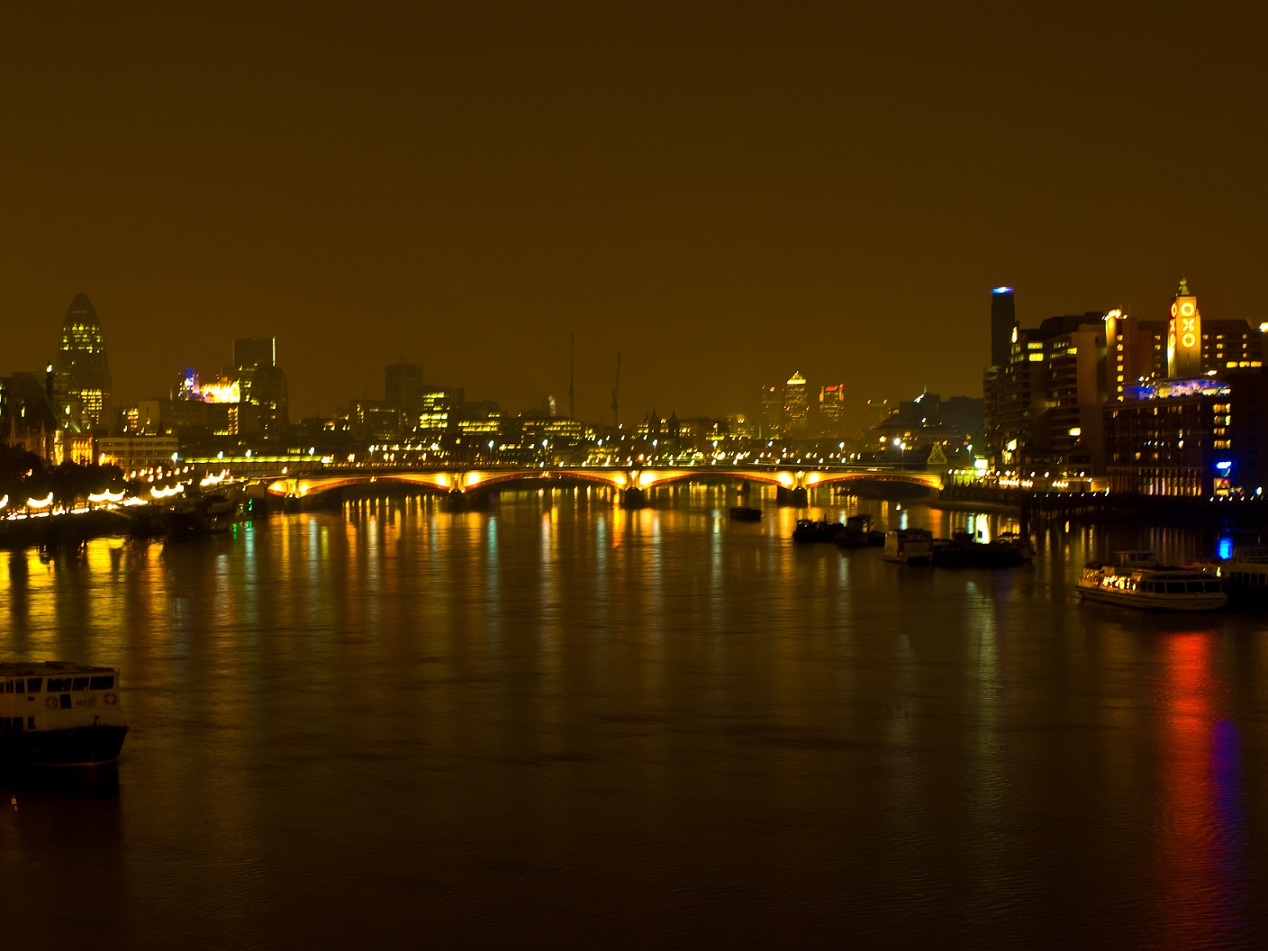
The joy of reading his pithy descriptions rests with the ability to convey admiration and respect for engineered structures. On Waterloo Bridge: “The rhythm of the five arches is like a coiled spring, catapulting you from one bank to the other’. On Stockwell Bus Garage: “Probably the noblest modern building in London”.
Nairn is astonishingly good at homing in on a building’s special appeal or, in the case of one that I visited more than once for blood tests, the loss of it. The Finsbury Health Centre in Pine Street, off Exmouth Market in Islington was designed by the great socialist architect Berthold Lubetkin in 1938. It ought to look as good as the nearby Spa Green Estate which he also designed but even by the 1960s Nairn noted how nobody would give the health centre a second look: “The saddest example in London of how démodé a style can look to the next generation”.
“Modern buildings in London” was first published by London Transport as a pocket guidebook and it is pleasing that the new sturdy edition preserves this identity. It is divided into just over twenty geographical sections, from the City of London to Crawley New Town, and each entry makes the reader want to locate and look at the building in the way he does.
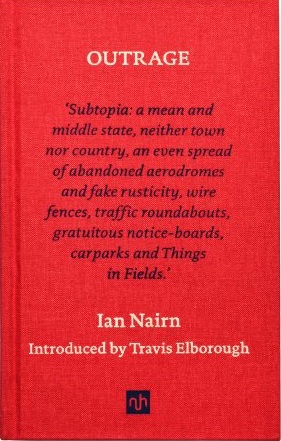
 Nairn’s “Outrage”, from the same publisher, was written for a special issue of The Architectural Review in 1955. In his early twenties, Nairn had just become an assistant production editor at the Review and he vented his spleen at the sprawling urban mess that was polluting the visual attractiveness of the countryside. Travis Elborough, who introduces the new edition on its 70th anniversary, explains how it ‘exploded like a grenade in the shabby genteel world of mid-fifties Britain’. Extraordinarily prescient considering its time – rationing from World War II had just ended – Nairn lambasted the ugliness of the new built environment that was appearing around the country and labelled it with his own word: Subtopia.
“Outrage” is structured around a series of journeys between Southampton and Carlisle and, as Elborough notes, Nairn went looking for what he knew was out there and had no difficulty finding it.
His journeys are not as easy to follow as his peregrinations around London but his anger at what was happening still comes across strongly. It does not bear thinking what he would make of the identikit shopping centres, retail parks now defining Britain’s landscape and monstrosities like 22 Bishopsgate.
“Modern buildings in London” and “Outrage”, by Ian Nairn, are published by Notting Hill Editions.










.jpg)












