
On first acquaintance, Jacques Lacan is still capable of producing an aura of enigma and obscurity and in the past this invited ridicule. In 1989, Noam Chomsky was dismissing Lacan as a charlatan producing nonsense for the sake of it but now he has taken his place alongside Freud, the two greatest thinkers and exponents of psychoanalysis.
 Sean Sheehan
There are some good general guides to Lacan, like “Jacques Lacan: The basics” by Calum Neil but sooner or later the time comes to read his own work and the place to start is with his published Seminars.
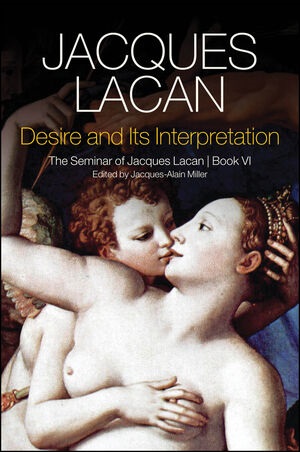
“Desire and its interpretation” (Book VI) and “Or Worse” (Book XIX) were first published in French in 2013 and 2011 respectively and are now available in English translations.
The seminars that make up “Desire and its interpretation” took place in 1958, five years after his first seminars, and as the title indicates the subject matter is desire.
Unlike the need of a hungry person for food, desire cannot be satisfied because it is trying to repair the out-of-jointness in our existence that is experienced as lack. It goes beyond need and beyond demand and first makes itself felt when the infant realizes that its mother’s love is not as total and unqualified as is its own dependence on her. The lack experienced by the infant raises uncertainties for it about what might also be lacking in others and the nature of their own desire. Out of this enigma, occasioned by the Other, there arises desire.
Not a physical or emotional need or a demand for love, desire is the posing of an urgent question apropos the Other’s desire in relation to oneself: “Che vuoi? (‘What do you want?) …. is asked ‘from the place where the subject first encounters desire’. Libido, says Lacan, is ‘the energy of desire”.
The reader should not be put off by Lacan’s complex-looking charts when introducing his topic.
They can be safely ignored when working through the idea that, never reaching its object, desire haunts speech and fuels desire. The object of desire cannot be grasped and the function of fantasy is to provide desire with what is missing.
The seminars that make up “Or worse” took place over ten years later. They are a more demanding read, not least for Lacan’s occasional deployment of mathematical language, but they also cover his important ideas about sexual difference. He is not addressing male and female as biological or culturally constructed determinants.
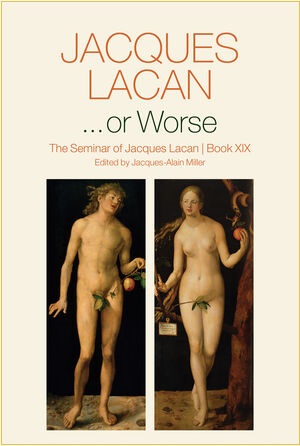 Male and female are seen instead as positions taken up in response to the failure, the impossibility, of speaking beings achieving a full sense of identity.
The lack that is desire finds compensation in different ways: the feminine ‘not-all’ does not affix itself to one position and patriarchy is a response to this, seeking to gentrify it in ways that are distressingly familiar.
“Desire and its interpretation” by Jacques
Lacan is published by Polity and “Or worse” is also published by Polity.










.jpg)













