
Under a framework that made Panama a ‘bridge’ country for repatriation, last February it received 299 undocumented migrants from various continents, extradited from the United States. Now they face the dilemma of returning to their countries, where they could lose their lives, or travelling to another country that is willing to receive them. Meanwhile, they are waiting in humanitarian shelters.
 Mario Hubert Garrido
The group arrived on three aeroplanes. 187 of them agreed to return or organise their return ‘voluntarily’, according to information from the National Migration Service.
112 other citizens refused, some fearing for their lives. At present, only 50 remain in various shelters such as the one run by the Faith and Joy organisation, Doña Luisa and a hotel, the latter supported by UNICEF, where the families with children are accommodated. Everything started in February this year with deportations from the United States to Panama on flights arranged between the two countries’ governments. A few days ago, 50 people received a six-month extension to their humanitarian permits.
This measure benefits people of African and Asian origin who are staying in shelters such as the one run by the religious organisation Faith and Joy, as well as in hotels.
The undocumented migrants still on the isthmus originate from countries like Somalia, Iran, Afghanistan, Russia and Ethiopia and received this special condition for three months which expired on 6th June.
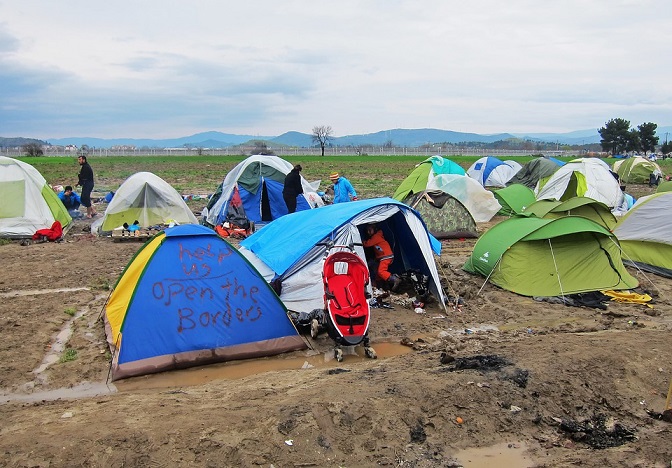 Spokespersons for humanitarian organisations indicated that the extension represents a temporary relief and emphasise the need to establish a stable solution to migration which allows migrants to rebuild their lives, access formal work and be assured their basic rights will be respected.
According to Elías Cornejo, co-ordinator of Faith and Joy, one of the catholic organisations belonging to the Clamor Network (the Latin American and Caribbean Ecclesiastical Network on Migration, Displacement, Refuge and Human Trafficking), the undocumented migrants from other continents don’t want to return to their countries of origin for various reasons.
Nor can they enter the United States, following the Trump administration’s publication of a list of nations which will now be refused any type of visa. Many of them are deciding whether to remain in Panama or go to a third country.
Marco Gómez, director of the Faith and Joy shelter, says that although the deported extra-continental migrants feel well treated, they have been trapped in a huge legal confusion since their forced return.
 The situation, according to Gómez, is a direct consequence of an agreement between the governments of Panama and the United States, the repercussions of which were not fully foreseen.
He also indicated that the executive’s help has been valuable as it shows goodwill. He added that the recent decision to extend the humanitarian permits for six months was received with relief but also with uncertainty about the future, and he stated that this type of measure must evolve into a more stable solution. In his opinion, although the extended timeframe gives temporary breathing space, a definitive solution has still not been achieved. “Ideally, instead of going from extension to extension, the door would be opened to a legalisation and regularisation of immigration,” he remarked. He also suggested that the government explores alternatives in collaboration with third countries to demonstrate not only goodwill but also commitment to resolving a crisis that affects hundreds of migrants originating mainly from Africa and Asia.
On this topic, Panama’s foreign affairs minister, Javier Martínez-Acha, highlighted that the movement of the 299 immigrants was done “respecting their dignity and their rights” in an operation supervised by the International Organisation for Migration and the UN refugee agency and that there was no financial cost to Panama.
 The diplomat gave a reminder that the management of migration is a “success story” in his country as in the almost 11 months since the start of José Raúl Mulino’s administration, there has been a 99% drop in illegal crossings through the Darien jungle, on the Colombian border, a route which is currently closed. PL
(Translated by Philip Walker – Email: philipwalkertranslation@gmail.com) – Photos: Pixabay










.jpg)












