
Recognition is about dignity, rights and representation. And this was precisely what Haringey Council in London recently granted, by making official the category “Latin American” in its internal and external monitoring forms for municipal statistics. A historic event that, together with the reopening of the Seven Sisters Market, reinforces the historical presence of the community in the borough.
 Augusto Pizurno
Haringey (10,012) is the third borough with the most Latin Americans in London, after Lambeth (14,917) and Southwark, where at least 13,000 people speak Spanish or Portuguese, with Spanish being the most widely spoken language in the district. In addition to these three, Islington and the Greater London Authority (GLA) in 2015, Hackney in 2016, and Newham in 2021, have also officially recognised the category “Latin American”.
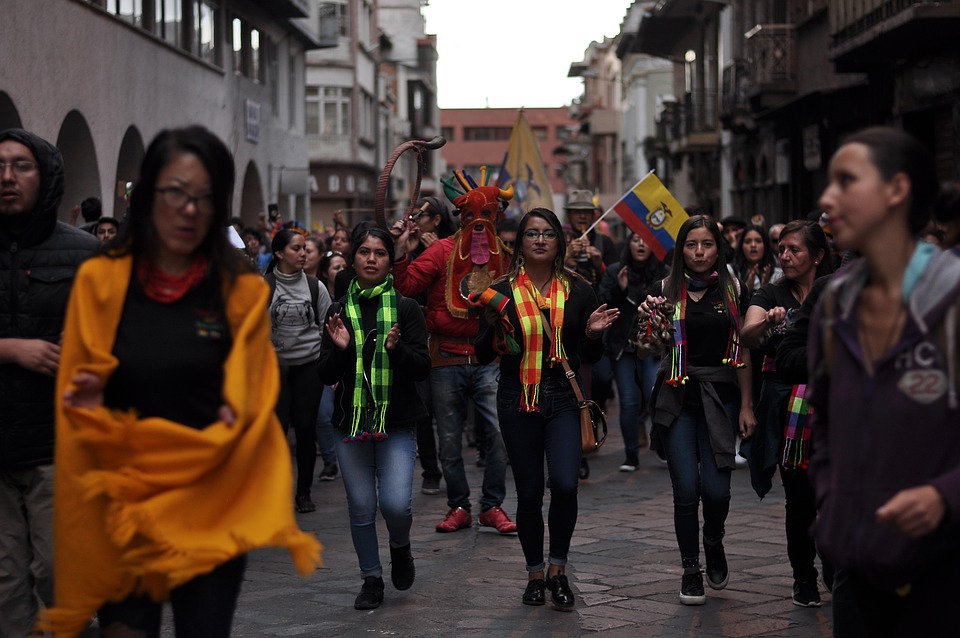
The Seven Sisters Market in Haringey has been one of the places with the greatest Latin presence in the last two decades. This cultural space of the community generates a sense of belonging and identity, and has given rise to various entertainment events that unite and strengthen the ties between different nationalities and cultures, especially Latin ones. Its reopening is an affirmation of the resistance of the community and also, a reason for members of other ethnic groups to become familiar with Latin traditions.
These two achievements are among the most important in the last decade for Latin Americans in Haringey. They also represent a great boost for the goal of the Coalition of Latin Americans in the United Kingdom (CLAUK) and of the whole Latin American community to obtain national recognition in the next United Kingdom Census in 2031.
 In context
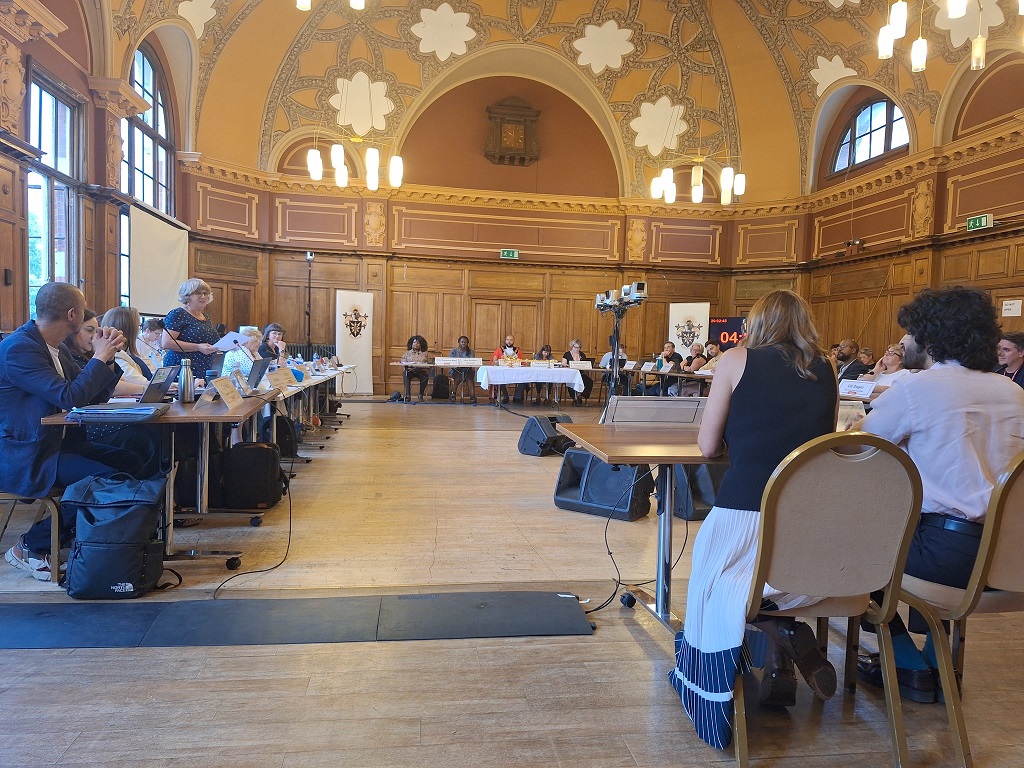
At the first meeting of a delegation with Haringey Council in 2014, CLAUK requested recognition for the community. But the request was not successful. However, after several other boroughs recognised the community during the following years, last 21 July Haringey Council legally welcomed the community, in cooperation with the Wards Corner Community Plan.
In fact, it expressed its admiration for the persistence and resilience of Latin American activists in achieving recognition.
Latin Village (as the Seven Sisters Market is known) was closed during Covid-19 and subsequently remained shut for failing to meet health and infrastructure requirements. Today, with the reopening, all traders will once again be part of this traditional cultural space for the community.
According to information sources, the market will only open partially, because parts of the building are still not prepared, but several Latin organisations have already contacted Transport for London, the landowner, to speed up the full reopening as soon as possible.ey
 Current national panorama
The fact that the community is legally recognised makes it easier to measure and assess the conditions in which Latin Americans live.
Haringey Council will now be able to manage data accurately to respond to the needs of the community, share the statistics with internal representatives in accordance with the UK’s data protection principles, and even work with other communities that are or feel excluded by the council to find ways to better reflect their identity.
This is crucial given that the Latin American community is one of the fastest-growing in the last 25 years, during which its population practically quadrupled. According to data from the Labour Force Survey, at least 450,000 Latin Americans live in the United Kingdom, most of them in London.
Nevertheless, “Latin American” is a term that is not officially recognised as an ethnic category for the national Census, meaning that the “Other” option is the only one available. This results in statistical invisibility.
This lack of national monitoring makes it difficult to recognise and assess the needs of the community that public services should address. For example, during Covid-19, Latin Americans were excluded from national monitoring. This increased and made more visible the social, economic, and health inequalities that Latin Americans were already experiencing before the pandemic due to the UK’s hostile immigration policy, such as lack of access to translated information, communication barriers, and limitations in the use of public services. These severe harms are primarily caused by the lack of legal recognition by the authorities, and specifically by the Office for National Statistics.
 The Latin opportunity
Despite high levels of education and employment, Latin Americans face low wages and labour exploitation. Seventy per cent earn less than the London living wage and are concentrated in poorly paid sectors, particularly cleaning, hospitality, and care work. These conditions of exploitation contribute to the obstacles Latin Americans face, such as child poverty, housing insecurity, poor mental and physical health, and barriers to accessing public services, especially for families and domestic workers.
The vast dispersal and growth of the Latin American population across the country over the past two decades, and their current condition of exploitation and inequality, which CLAUK has been able to measure through various studies, are the main motivations for achieving this recognition and transforming a community “in itself” into a community “for itself.”
The Office for National Statistics (ONS) has confirmed that the next UK Census will take place in 2031, despite proposals to abolish it. This Census will, for the first time, be digital and will be conducted partly using artificial intelligence.
If ‘Latin American’ achieves category recognition by the ONS, it will mark another historic moment for the community, perhaps the most important in a long time, and finally provide an accurate understanding of what it means to be a Latin American in the United Kingdom.
 For Jacobo Belilty, coordinator of CLAUK, “with nearly half a million Latin Americans in the United Kingdom, this is an opportunity for the ONS to do the right thing: to officially recognise our community and an entire generation of Latin Americans born in the United Kingdom who are also absent from the data.”
For all these reasons, recognition is not only about numbers, but about dignity, rights, and representation, and it is the duty of the entire Latin movement to demand them. This is the moment to make it a reality.
(Translated by Rene Phelvin – Email: renephelvin@gmail.com) – Photos: CLAUK, Pexels and Pixabay










.jpg)












