
At the end of August, activists smashed windows and sprayed red paint at the offices of the right-wing think-tank, Policy Exchange, on Old Queen Street in Westminster. They did so “in recognition of the role they have played in making the UK the less tolerant, more unequal, increasingly authoritarian and poorly governed nation it is today.”
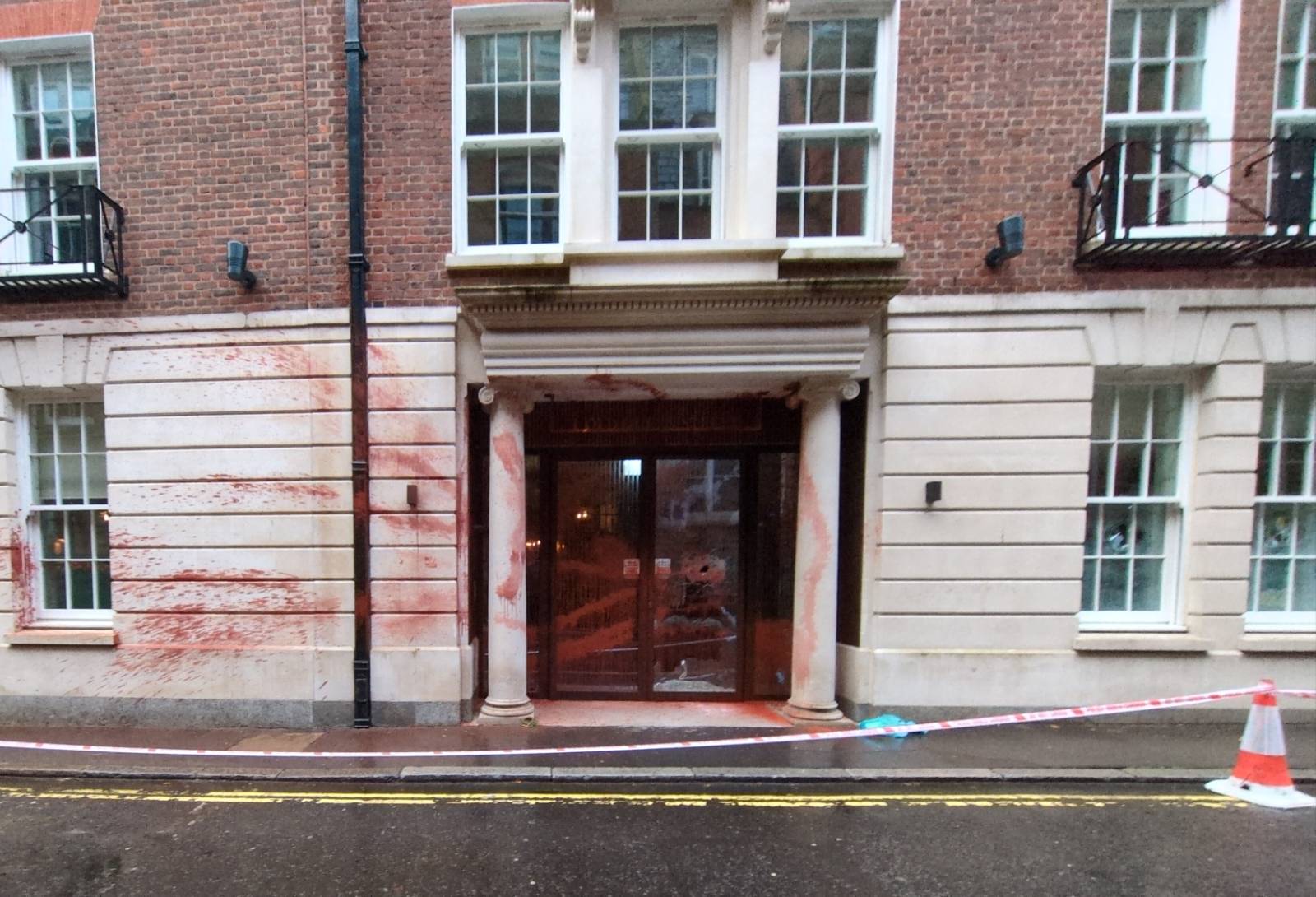 Text and photos: Action Network
They are members of Shut The System (STS), which describes itself as “an underground sabotage and direct action campaign targeting the financial powers that underpin the climate and ecological emergency”.
The activists oppose Policy Exchange’s advocacy for increasingly authoritarian restrictions on human rights such as the right to free speech and the right to assemble. These include new laws to clamp down on legitimate climate protest and the proscription of Palestine Action, a direct action organisation proscribed by the UK government in July 2025 and which, the group says, has no convictions for violent offences.
A spokesperson from the Palestine faction of STS said: “Policy Exchange’s malign influence suppressing effective protest is unsurprising considering the reported $30k donation to Policy Exchange by ExxonMobil. We have targeted Policy Exchange today not in response to any particular action, but in recognition of the role they have played in making the UK the less tolerant, more unequal, increasingly authoritarian and poorly governed nation it is today.”
Policy Exchange has advocated for and assisted the Government to draft legislation, in particular, elements seeking to restrict the effectiveness of climate-related protest, a role admitted publicly by Rishi Sunak in 2023 when serving as Prime Minister.
 The spokesperson said: “Policy Exchange’s corrupt entanglement with governments and elites directly suppresses the proud tradition that champions women’s suffrage, the end to apartheid in South Africa, toppled the injust Poll Tax and held the government accountable for prosecuting illegal wars.”
Policy Exchange lobbied for additional anti-protest laws in the Public Order Act 2023, which created new offences enabling easier prosecution for protest tactics such as locking-on, tunnelling and even peaceful protest marches.
In the Public Order Act, the Home Secretary attempted to introduce a vague definition of ‘serious disruption’ as anything that is ‘more than minor’. When this attempt was blocked by Parliament, the Home Secretary used statutory instruments to introduce this definition by the back door, a move subsequently found unlawful by the courts in a case brought by Liberty.
The spokesperson explained: “The authoritarian agenda advocated by Policy Exchange and its attempt to equate protest with extremism has emboldened multiple governments to adopt policies which would have been unthinkable in the UK only a decade ago, not least labelling Palestine Action as terrorists. Protest and direct action are not extremist activities, they are an essential aspect of any functioning democracy.”
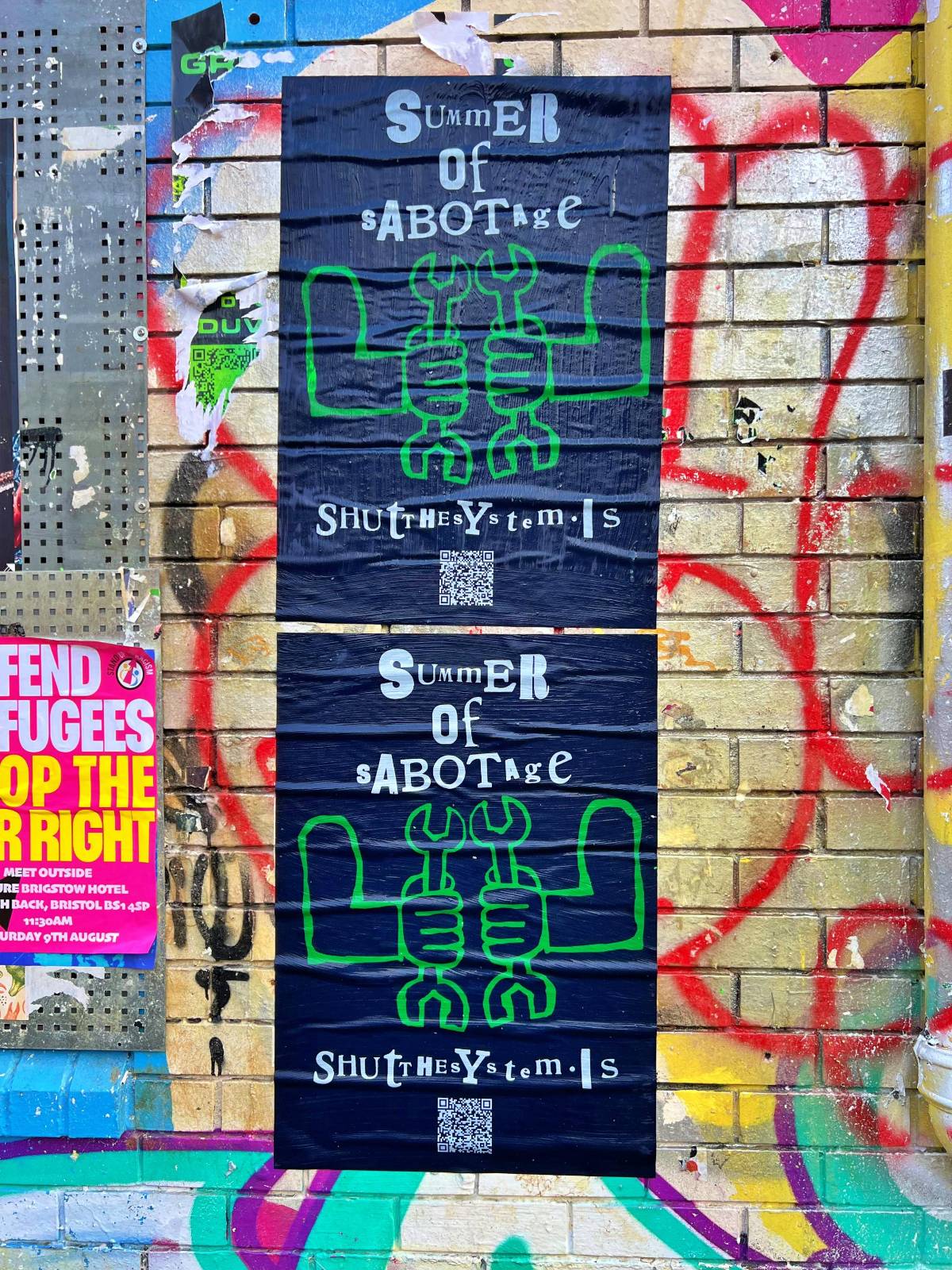
The action contributes to an escalating ‘Summer of sabotage’ declared by Shut The System on Monday 18th August when activists cut electric cables and communications at offices of JPMorgan Chase, Barclays and Allianz, “three of the world’s worst financial backers of fossil fuel expansion and arms used in the genocide in Gaza.”
 Further action was taken at a Barclays branch in Oxford, where activists smashed windows on Saturday.
Among the demands made by STS are that the banks and insurance companies align their financing and underwriting practices with 1.5°C pathways and enable a fair and just transition.
They demand that banks and insurance companies prohibit all finance and insurance for fossil fuel expansion immediately, adopt absolute financed emissions reduction targets for oil, gas, and coal aligned with a rigorous 1.5C scenario, demand robust 1.5C-aligned transition plans for all existing fossil fuel clients; protect Indigenous Peoples and human rights, and scale up financing for a just and fair transition.










.jpg)












