
Merlin Daleman comes from England but he left it for a new life in the Netherlands. He returned to the land of his childhood to photograph, between 2017 and 2024, the post-Brexit, “economic north” of Britain.
Sean Sheehan
He finds a country where The Trussell Trust, a charity managing many food banks, has found the number of food parcels it distributes grow, in the twelve years after 2010, from about 40,000 to more than two million.
The “economic north” of England includes parts of the area called the West Midlands and together they make up the bricks in the ‘red wall’, the term now used to describe constituencies that traditionally supported the Labour Party but whose political allegiance swung first to the Conservatives and now to Reform. The vote to leave the EU was strongly supported in many of these areas. The photographs are of places that look every bit as depressing as the politics of its citizens.
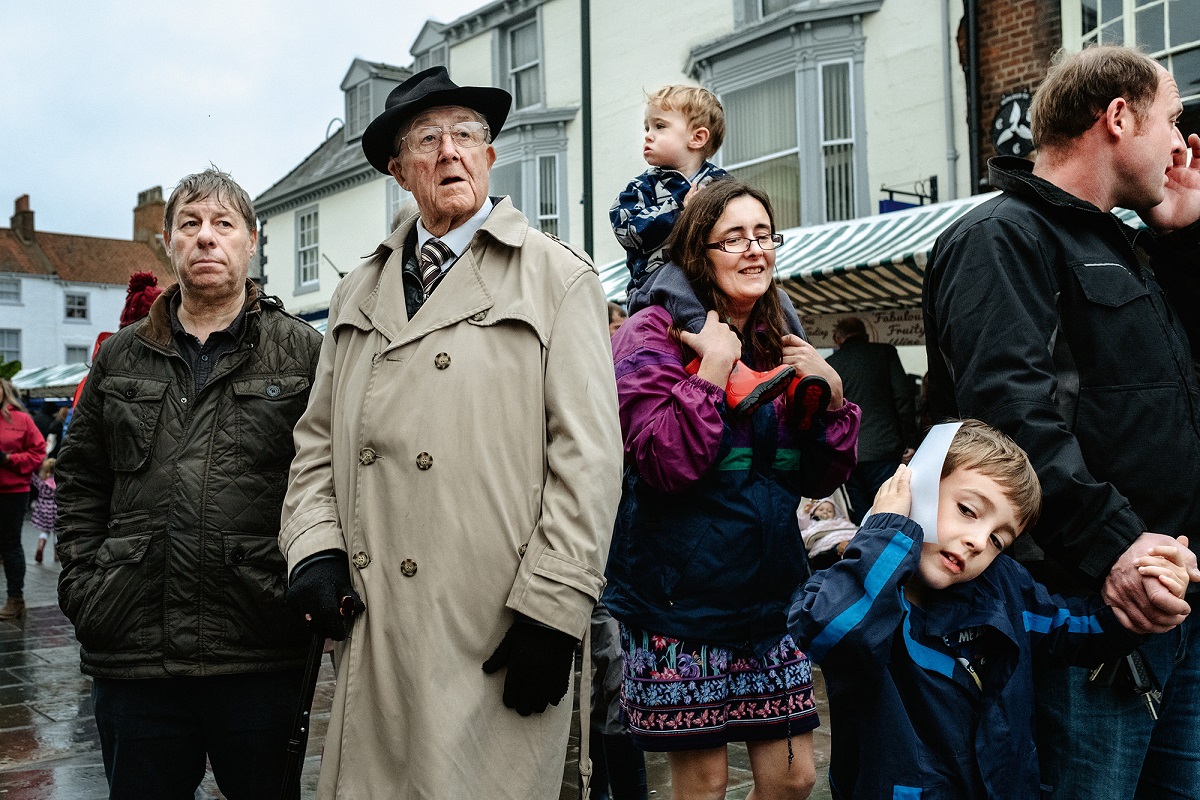
He shows us overweight children, bored-looking adolescents, frail elderly adults, flags of a red cross on a white background – England’s national flag – that in Essex toxically proclaim the demand to expel refugees.

There is a tendency in the images that brings to mind the early work of Martin Parr in Signs of the times where people were ridiculed by showing them and their domestic décor.
To be fair, Daleman is not doing this and he shows the material poverty and deprivation that blights parts of the “economic north”; it comes as no surprise that people there vent their frustration by abandoning a Labour party and embrace a rebranded face of the Conservatives called Reform.
The best photographs – but there are not enough of them – are those that go beyond the stereotypes and remind the viewer that living on a small income means juggling tight budgets. The antidote to the condescension of Parr’s “Sign of the times” is the photography of Tom Wood in his wonderful Women’s market.
At his best, Daleman captures scenes that draw in the viewer but not by being explicit. Two churches, looking as if they closed down long ago, on a street that a woman walks alone down in windy weather is not carrying a ‘message’. It is not a sociological observation about the decline in religion and the woman is photographed from behind, her face is not visible, obviating a humanist interpretation. It is up to the viewer to look and reflect on the picture.
A man on a bus scratches his chin and looks upwards, a child on a beach looks questioningly at the photographer who has invaded their private space, a group of women play a board game, young women set off for a night out.
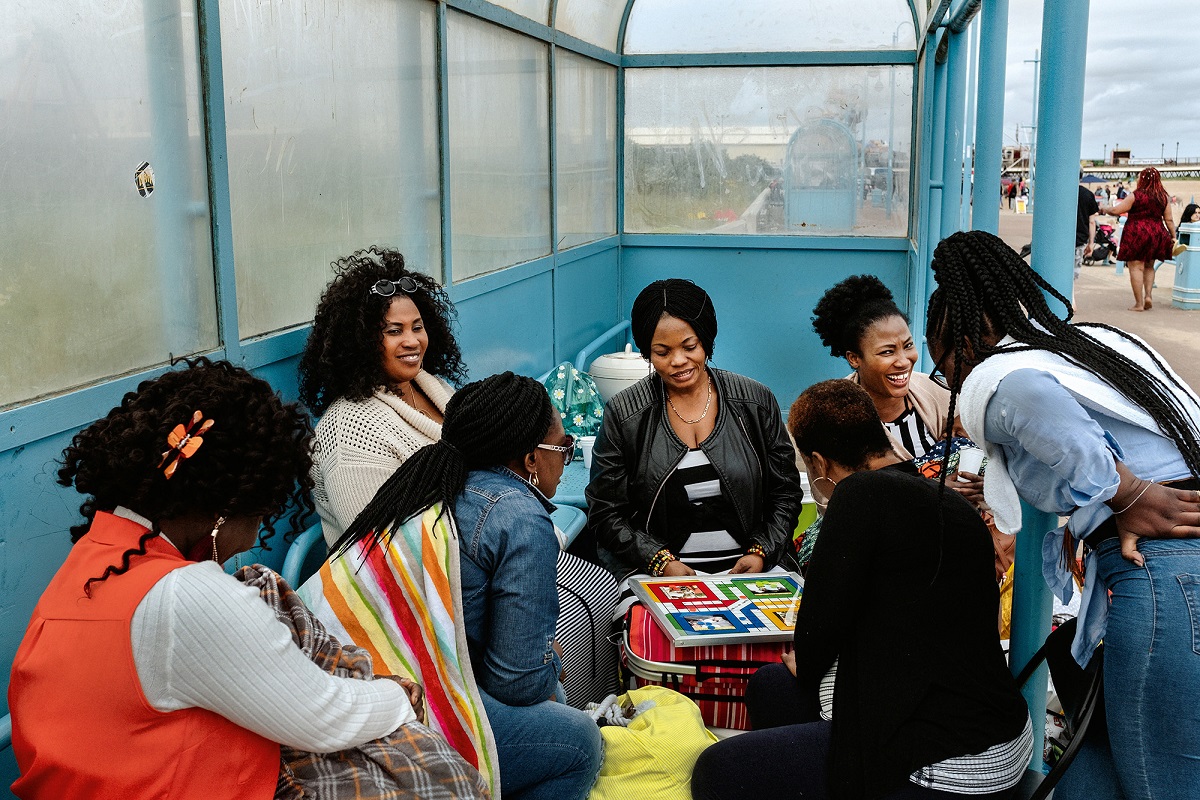
In scenes like these, the fragility of the self is disarmingly conveyed in faces contingently captured in moments of their being.
There are some photos of affluent-looking people in ‘nice’ neighbourhoods but it is the damage being inflicted on working-class lives that gives value to this photobook.
“Mutiny”, by Merlin Daleman, is published by GOST.
(Photos supplied by the publisher)










.jpg)












