
The journey of an activist migrant from north to south in Europe following her dream of putting adult education to a radical use in the tradition of Paulo Freire. Collaborating to set up a centre with the community in the impoverished area of Cova da Moura consolidated its community development, but now it faces a threat from housing speculation.
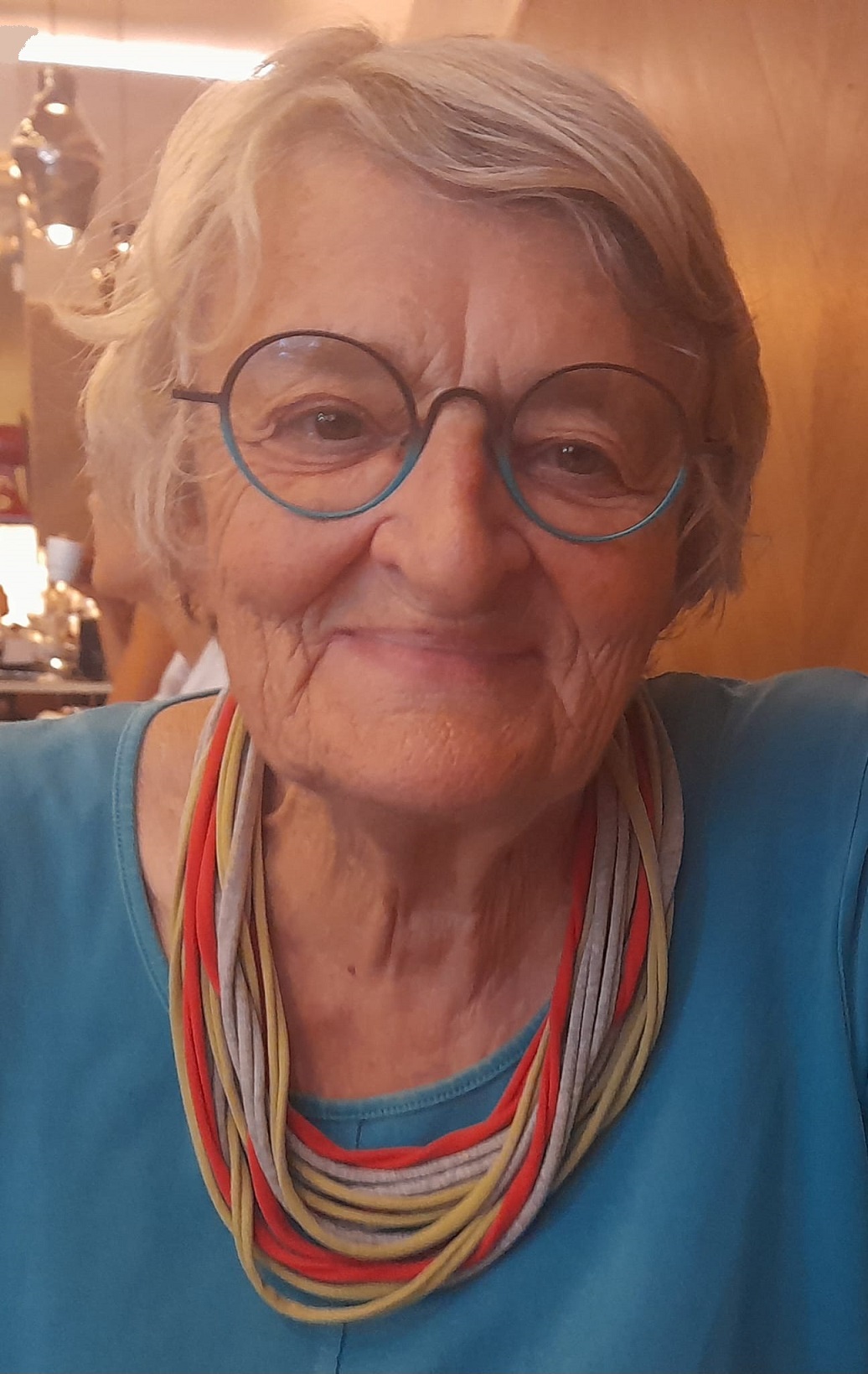
Interview and photos: Graham Douglas
Godelieve Meersschaert, now an active 80-year-old, came to Portugal in 1978 through a series of connections that happened after training in psychology and activist work in Belgium.
She was influenced by the work of the Brazilian educator Paulo Freire and originally only came to learn Portuguese before following him to Brazil, but life took her on a different path.
Lieve has always been an activist and found plenty of scope to use her training to engage politically in Portugal.
This was in the period following the Carnation Revolution of 1974 and the subsequent decolonization process which brought over 500,000 people back from the African countries that had been Portuguese colonies in a period of a few months.
She had been working in Belgium and in the Netherlands in Adult Education as a psychologist and she moved to Portugal through international connections between trade unions. Portugal in those days was still a place where social activism was relatively unchained. Another connection led to being involved in a cooperative for domestic workers. Later on, she participated, as a volunteer, in the setting up of a cultural community centre in the bairro of Cova da Moura, near Lisbon. She worked full time a Software Developer in the Portuguese Ministry of Finance (from 1985 until her retirement).
I visited her for The Prisma there at her home.
Tell us about how you came to be here, your previous work and training.
I am a psychologist, graduated at the University of Louvain in Belgium and worked especially in adult education including with women farmers in rural areas of Belgium and the Netherlands. I learned a lot, working in the VOLKSHOGESCHOLEN in the Netherlands and attended a course with Paulo Freire in Paris for a week, where I met Maria Mies who founded the first university course in feminism in Frankfurt, and Michael F.D. Young, author of “The rise of meritocracy”. I was strongly influenced by Freire and worked with a project for working class youths in Belgium that used Freire’s teaching and the method of: Diagnose, Reflect, Act.
 We introduced this to the workers in a clothing factory that had been set up as an alternative source of work after the coal mines were closed in Limburg (the Netherlands).
It was half-owned by the governments of the Low Countries and half by a Dutch family, and it used very advanced technology for that time. The family expanded it to Belgium where salaries were lower, and later to northern Portugal for the same reason. But after the Portuguese Revolution in 1974 the unions protested about the working conditions which led to them being locked out of the factory for 3 months, although the owner claimed it was a strike. But since the local trade unions knew me, we were able to get the story publicised on TV and alert MPs in the Netherlands. Because the factories in the Low Countries and in Portugal were partly owned by the governments of the Low Countries we were able to go to the parliaments and denounce this as an illegal exploitation in a public enterprise.
How were you able to work with Freire’s ideas in the factories?
We worked with the trade unions and with a researcher from the University of Tilburg in the Netherlands, who was studying the effects of globalization in which a Dutch factory owner could go to India, Macau or Tunisia to exploit cheap labour and as a result damage the local industries in those countries. We had meetings and ran courses after work and at weekends.
And then I met a group of domestic cleaners who had formed a cooperative in Portugal. The book I just published “Empregadas domesticas e mulheres-a-dias em Portugal” (Female domestic and daily workers in Portugal) is a series of interviews I recorded back in 1984 with these women, plus my introduction and comments. I worked full time in the cooperative and the trade union for three years. They had coops in Lisbon, Evora and Porto and I worked in their canteen in Lisbon. Because of my training I was also able to help with the accounting.
 They worked with the ideas of JOC (a left-wing Young Workers organization) and Freire, and it seemed absurd for these domestic workers to continue working for the rich people; they formed cooperatives where they shared childcare, cooking, cleaning and washing clothes for the workers’ class.
You were very activist. Did you have any connection with political parties?
Yes, I was always working it was crazy, possibly because we lived and laughed a lot! But I never wanted to be involved in political parties because they are always more interested in power than in collaborating with the workers. At this time, I met a domestic worker, Rosa, a woman who built her house together with her husband here in Cova da Moura.
Did you think of returning to Belgium?
I did think about it. From my training in psychology, I knew there was a need to think together with the domestic women about the traumas they experienced in the hierarchical relationship, cleaning the houses of the rich people and changing to a horizontal power relationship in the cooperative where the workers plan and build together. But I met Rosa and here I am.
How did things develop here in Cova da Moura?
I arrived in Lisbon in 1978 and moved here with Eduardo, my husband in 1983, after living a year in Rosa and Jacinto’s house. The bairro had at that time 3000 inhabitants, but for 900 people there was no running water, except two taps, and while we were talking in the queues for water we thought of starting some little theatrical activities on the theme of hygiene with the children and we signed a letter to the municipality about the lack of water. This was when the IMF was in Portugal and there was a lot of unemployment. We ran drawing and painting activities for children in our loft and held meetings with domestic workers.
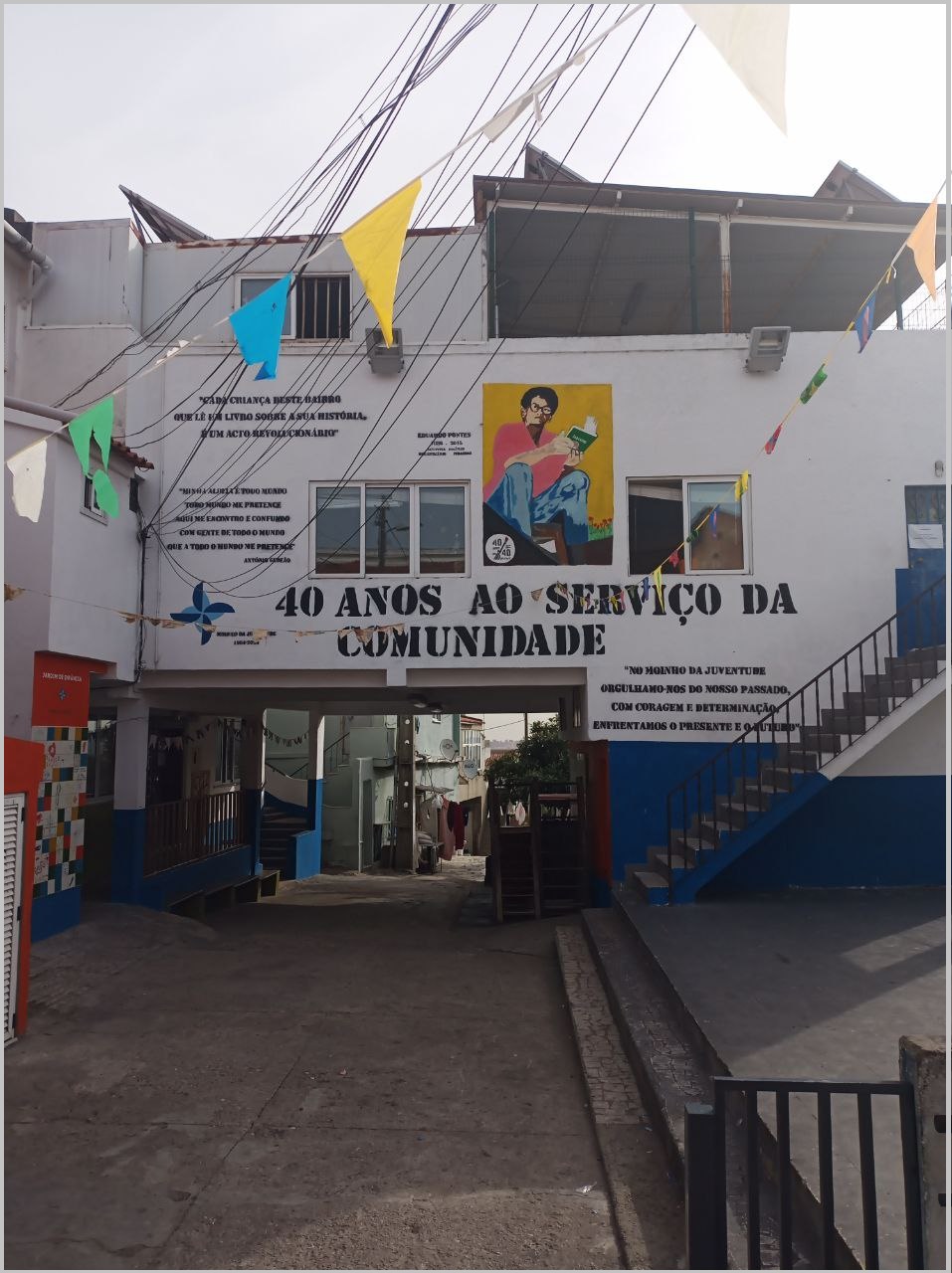
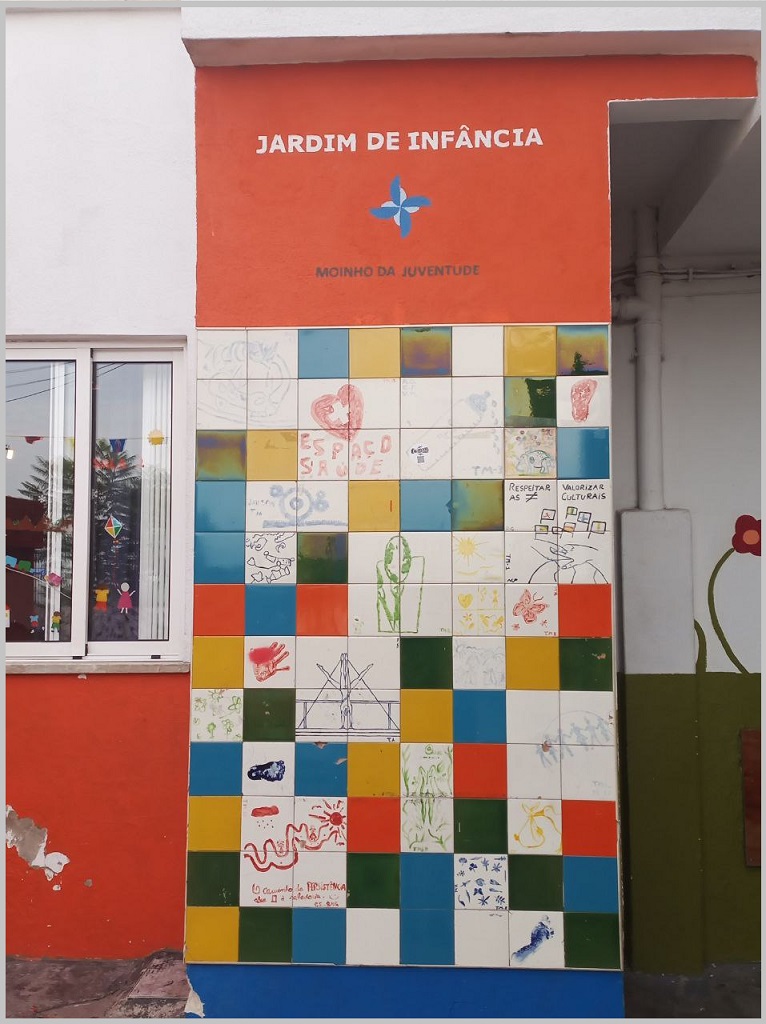
 We started a library for the children to borrow books and there was another association here for the youngsters to play football, where they could go but they were not allowed to be members because it was only for whites; Portuguese people who had returned from Africa after the decolonization. So, Augusta, a young Cape Verdean women from the neighbourhood, Eduardo and I went to a notary in 1987 and set up the official statute of our Associaçao Cultural Moinho da Juventude. Cape Verdean students from the neighbourhood ran courses in literacy and Dina, a Cabe Verdean dressmaker from Cova da Moura taught dressmaking in the association.
Has the composition of the bairro changed since those days?
The majority now are of Cape Verdean descent, but at that time there were many Portuguese ‘retornados’ from Angola. They had an association before we set up the Moinho, and they got water and electricity installed for a big part of the neighbourhood.
You can see on the map that 3/4 of the land is owned by the Portuguese Canas family, and a part of it was state property, which was sold to the charity Casa da Misericordia for a very low price to set up an old peoples’ home, a creche and a Continuing Care Centre (Centro de Cuidados Continuidas). But it was done for political reasons, for the PSD to get votes – politics came to us, a small-scale version of how it works in Portugal.
I thought that people here didn’t have legal title to the land.
Yes, it isn’t ours, but as workers, we pay taxes to the state and for our houses we pay taxes to the local government. They get taxes from us and from the Canas family, and for that they do much less than they do everywhere else, it’s a scandal.
*Next week: Migrant activism: daily life and struggle in the ‘bairro’










.jpg)













It’s inspiring to see how Freire’s philosophy and hands-on education shaped such impactful work in adult learning and social empowerment.Telkom University Jakarta