
An interest in photography is being challenged by a steady diet of photobooks devoted to a photographer’s pet project that do little to provoke reflection beyond wondering how such banal work ever finds a publisher.
 Sean Sheehan
A welcome relief is a new book devoted to the work of Helga Paris (1938 – 2004), a photographer who worked in the German Democratic Republic (GDR), the eastern part of Germany before the reunification of Germany in 1990.
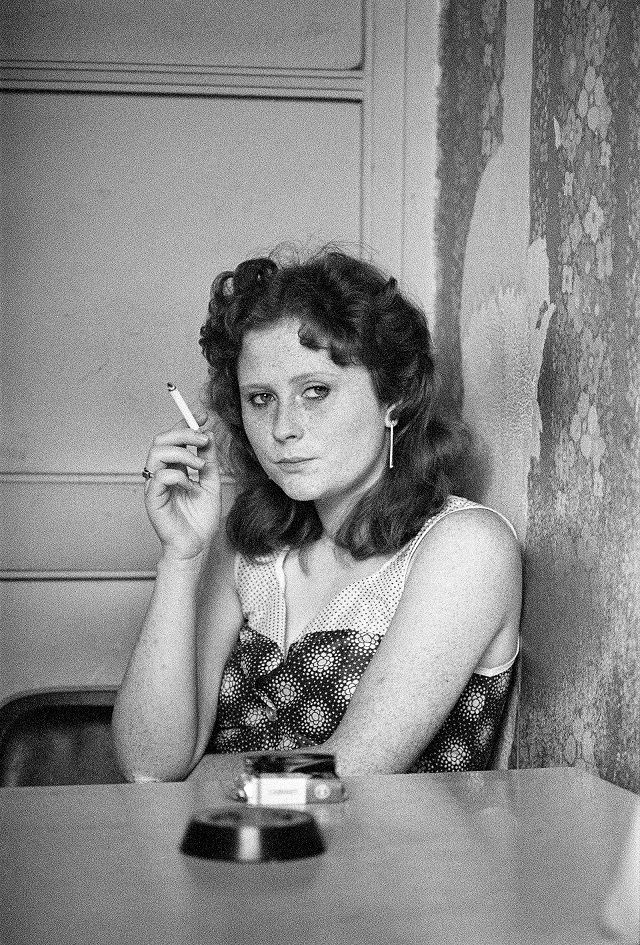
Returning to a textile factory where she had been employed during an internship, she described how she worked: “I asked them to stand or sit somewhere, told them I didn’t expect anything special; they should be as they saw fit. It just had to be quick so they didn’t pose for the camera. Before they thought about how do I look, the shutter was already pressed”.
The result, a remarkable series of pictures, conveys their sense of self-identity, creating a space for their being in the industrial system structuring the women’s working lives.
They might not own the means of production but Marx would be pleased to see that they have 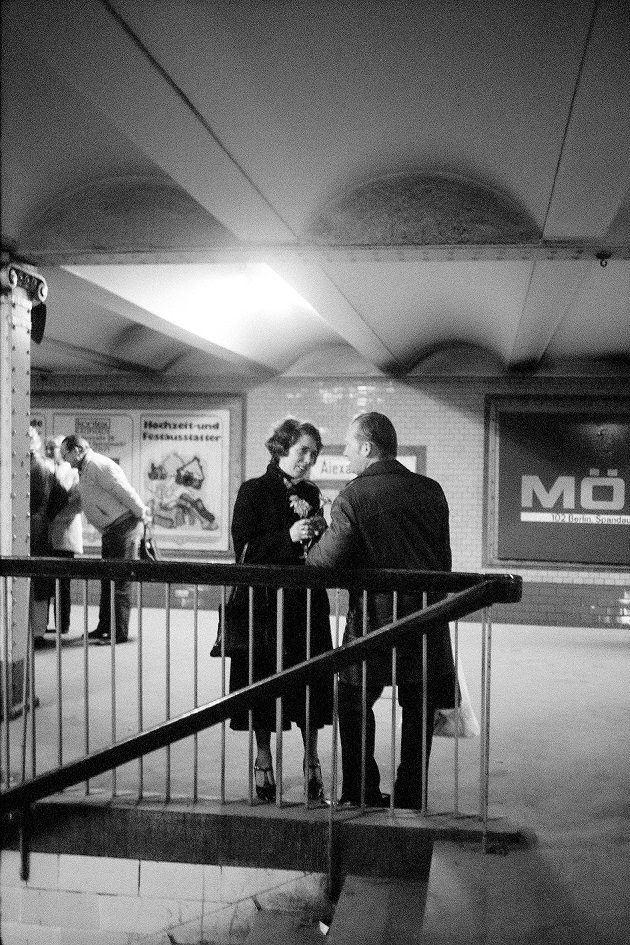 loosened their chain. Her photos are a visual riposte to the faux romanticism of the song by the Rolling Stones, “Factory girl”.
In that song the woman’s attributes are itemized with devil-may-care nonchalance while those who pose before Helga Paris’s camera are sufficient unto themselves.
They present themselves to Paris and ask nothing in return: in the face, writes Levinas, “the other appears to me not as an obstacle, not as a menace I evaluate, but as what measures me.”
Her marriage to an artist opened a window into the bohemian aspect of GDR culture and she photographed artists who had to juggle their artistic commitments with the demands of interfering officials. Without wrapping herself up in the authorized tenets of socialist realism, Paris found a direction that was not in open conflict with officialdom: “I’ve always been drawn to the everyday, the unspectacular. But I didn’t photograph it clinically, aseptically; rather, I tried to reproduce it as realistically and as hauntingly as possible.”
Her photographs are infused with a sense of melancholy which cannot be explained away with platitudes about material austerity in the GDR and nor can it be attributed to ostalgie.
 Sorrow is softened with an attentive tenderness that is accented by her decision to use black-and-white film (it wasn’t because colour film was too expensive in the GDR).
With colour, she says, “the eye can get lost in the contrasts’ while with black-and-white ‘the composition seems clearer, so you can abstract more of what you see”.
This book relates to a Berlin Fotografiska exhibition that ends on 25 January 2026.
As far as I am aware, there has not yet been an exhibition of her work in the UK, but surely it is only a matter of time before this is rectified.
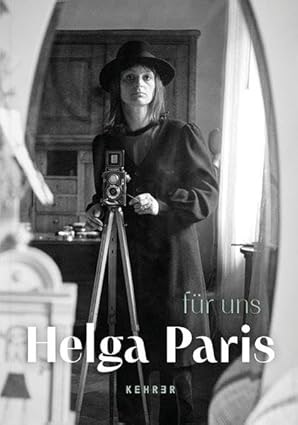
“Helga Paris für uns”, edited by Udo Kittelmann and Marina Paulenka, is published by Kehrer.
(Photos supplied by the publisher)










.jpg)












