
The University of Salford refuses to confirm or deny whether a rape allegation was reported, citing data protection. The claimant argues this legal opacity compounds his trauma and contradicts the institution’s public transparency policies regarding sexual misconduct cases.
 Philippa Fisher*
The claimant in a related disability discrimination case climbed onto a roof and poured petrol over himself. Not as theatre, he says, but as a last available language: a furious demand for the records that should have kept him safe.
What he wanted was simple in form: What are you hiding? The student then took legal action and continued to push for transparency. Did a student report a rape she declared to peers to the University of Salford? Were non-disclosure agreements used to silence anyone? Could the institution confirm whether internal records existed or had been withheld? In reply, he met a wall of legalese: blanket objections, claims of disproportionate intrusion, and warnings about data-protection and victim anonymity. The replies from Hill Dickinson LLP, acting for the university, were not answers. They were a refusal to confirm or deny. And for the person who says he was failed by the system, that refusal felt like another injury.
The cost of silence
The dispute is lodged in Wigan County Court (claim no L00WN554). The claimant — acting in person — served a series of CPR Part 18 questions, which help parties clarify matters in dispute, between July and September 2025, seeking straightforward clarifications.
 He says he even offered pragmatic safeguards: anonymised answers, redaction, or sealed inspection by the court. All were rejected.
Why does a refusal to confirm/deny matter? Because it is a hinge between two realities. If an institution responsible for young, vulnerable adults is hiding whether serious allegations were ever made or related to a sexual misconduct allegation that went missing mid-process, that concealment may compound harm. If records are missing or redacted to the point of meaninglessness, survivors and those pursuing accountability cannot test whether safeguarding failed. For this claimant, the withheld answers are not abstract legal niceties — he says restricted access to support and information precipitated an acute clinical decline in his health and hospitalisation. Where transparency is a roadmap to care, opacity becomes a dead end.
Legal fog: Part 18, PD18, and the data protection shield
Hill Dickinson’s position is procedural: many questions are “disproportionate,” risk identifying third parties, or stray into the realm of disclosure rather than clarification. They point to data-protection obligations, the Sexual Offences (Amendment) Act, and the proper mechanisms for document disclosure under Part 31 of this Act.
 Practice Direction 18 does require particularized, proportionate objections — but critics reading on social media say the defendant’s letters read like a blanket refusal dressed in case law.
The claimant says that the university declined even the narrowest practical remedies he proposed — a sealed court inspection or redaction to protect identities — and that the objection letters amount to procedural barricades that prevent the court from weighing whether anonymity concerns genuinely preclude the most basic factual admissions.
If a court is prevented from seeing what, exactly, is being withheld, it cannot decide whether institutional secrecy is justified or whether it serves to protect reputation rather than people.
NDAs, policy and the public gaze
This row is not taking place in a vacuum. Since 1 September 2024 the higher education regulator the Office for Students has explicitly barred the use of non-disclosure agreements to silence survivors of sexual misconduct in higher education. Government moves and legal commentaries since then have tightened scrutiny on NDAs in universities and workplaces. The policy shift was hailed by campaigners as a restoration of survivors’ right to speak and institutions’ duty to be answerable.
Publicly, the University of Salford’s policy documents state a commitment not to use NDAs in harassment or sexual-misconduct cases and note the voluntary “Can’t buy my silence” pledge. Yet in private court correspondencen the university and its lawyers declined to confirm or deny whether a specific allegation of rape had been reported, or whether confidentiality measures had been used — citing data-protection and victim anonymity even as a reason for silence to the court in terms of court only inspection. A practice often used by courts to balance anonymity with transparency.
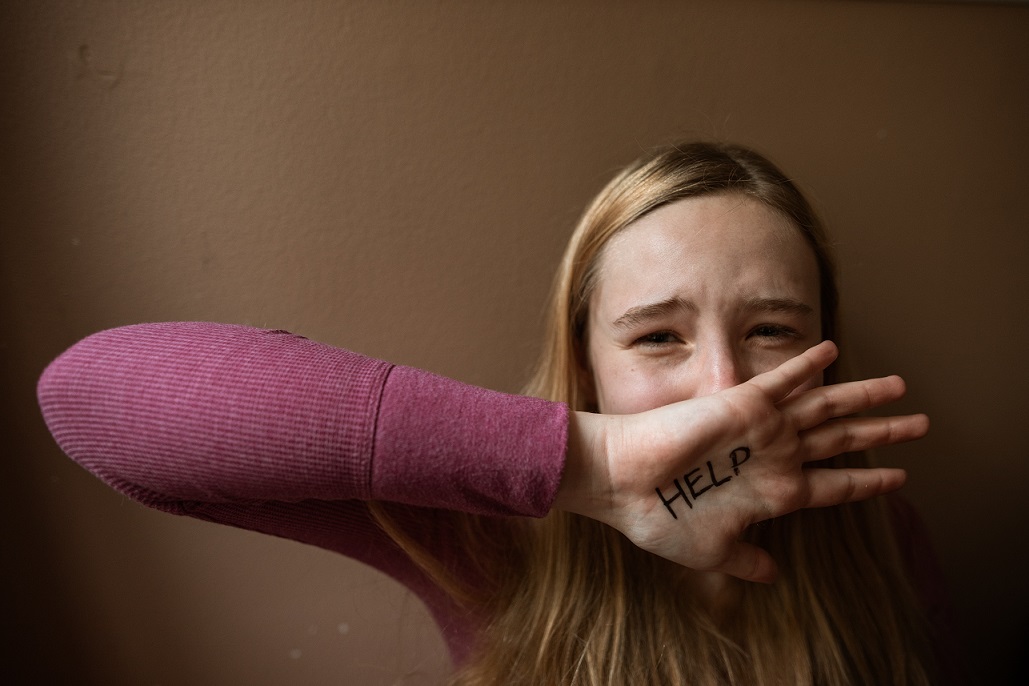 That dissonance — professed policy on the website, litigated silence in private — is the heart of the complaint. If institutions pledge survivor-centred policies while litigating behind a curtain, the pledge risks becoming performative.
Missing files, late counter-allegations, and institutional entanglement
The claimant points to what he describes as documentary gaps: absent Report & Support files, incomplete Subject Access Request exports, case notes he says were withheld, and a counter-allegation that allegedly only emerged after a later incident — the roof protest — in which he refused to come down until data was released. He believes this sequence suggests institutional manoeuvres to contain reputational risk.
He further alleges the claim was struck out after procedural manoeuvres that, in his view, shielded Greater Manchester Police from being added as an interested party — a concern he frames as evidence of institutional entanglement between the university and law enforcement. The case is awaiting appeal.
These are serious allegations. And they are, crucially, allegations — and must be tested in open court.
Yet the procedural posture of the defendant (Salford University) has so far prevented the narrow, question-by-question scrutiny the claimant says would allow the court to decide whether safeguarding failed.
 What true accountability looks like
For campaigners and survivors’ advocates, the stakes are clear. If universities can point to privacy laws and decline to confirm even whether allegations were reported, then policy reforms that outlaw NDAs risk being hollow. Real accountability requires more than declarations; it demands mechanisms that allow truth to surface without re-traumatising survivors.
Practical steps could include court-managed redaction, sealed inspection with judicial oversight, or judicial directions that balance anonymity with the public interest. Where institutions claim privacy or safety concerns, those claims ought to be tested in a transparent judicial process rather than accepted as carte blanche for silence.
A plea for clarity
“Until the university ceases its long-held pattern of deflection,” the claimant writes, “there are reasonable grounds to suspect something is being concealed.” It is a bitter, raw sentence — and it comes from someone who says the university’s evasions worsened his health.
 This is not simply a legal skirmish over technicalities. It is a question about what universities are for: protection and education, or preservation of reputation at any cost? Regulators and courts will have to decide whether policy reforms and public pledges are reflected in practice, and whether basic confirm/deny answers can be provided without compromising victim anonymity.
Until that judicial scrutiny happens, the rooftop protest remains a potent symbol: a desperate, visible demand for documents and for accountability. If institutions are serious about safety, they must answer the simplest questions first — not with obfuscation, but with clarity. Silence is not a neutral stance; it is a choice. And someone, somewhere, pays for that choice.
*Philippa Fisher is a fictitious name, used at the author’s request, who has chosen to remain anonymous. The views and statements expressed in this article are solely those of the author and not of The Prisma – The Multicultural Newspaper.
(Photos: Pixabay)










.jpg)












