A Spanish filmmaker and sound engineer, immersed himself in Ethiopia’s diverse music scene. His documentary ‘Roaring Abyss’ emerged from spontaneous travels, capturing rural sounds distinct from urban jazz. Despite language barriers and challenging expeditions, he built a production team and discovered Ethiopia’s welcoming musical community. (The Prisma memories)
 Yi ZOU
Can you imagine yourself going to a different country on your own, starting from zero, learning the local language, finding a job with almost no money but at the same time firmly pursuing your dream?
This is exactly what the director of “Roaring abyss” did for his documentary feature in Ethiopia. “I instantly loved it”, he mentions that to The Prisma when talking about his first acquaintance with an Ethiopian record. Being raised in Sevilla with a family from Cadiz, Quino Piñero has been facing Africa since the very beginning of his life. By its imperceptible influence, he was somehow continuously attracted by the music genres of that continent.
For example, his debut feature, “Le message du Issa Ber”, was an unintentionally produced film made up of the footages from his handy carry-on camera during his trips to Mali exploring original blues.
He sees “Roaring Abyss” as a progression of the previous film, since both use recordings of local bands and musicians as the main scene. Except that this time he was adopting professional shooting and recording equipment with a total intention of making a film from the beginning.
 However, even this documentary is a “by-product” of his journey. At first, Ethio-jazz brought him there, which is the theme of another movie “New voices in an o ld flower”, which he produced in that region.
The album he discovered first was from a compilation named Ethiopique which is a music collection capturing the unique Ethio- sound in its golden age.
During that time, the 50s to the 70s, through aligning with some liberal changes and new music form brought by Haile Selassie, this country was experiencing an explosion in terms of culture and music.
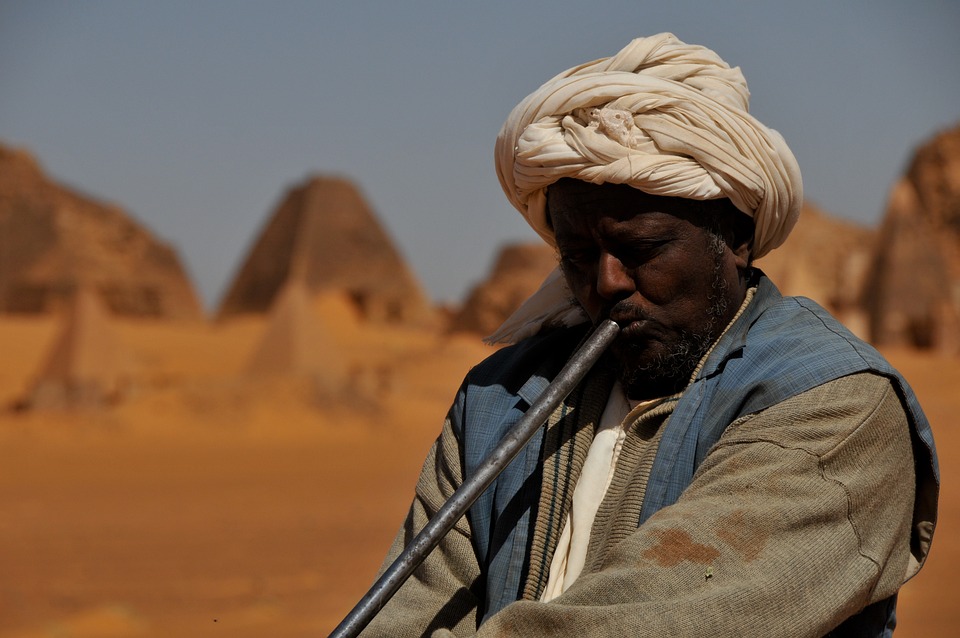
Unlike the jazz in the urbanized capital city Addis Ababa which is influenced by the funk and soul brought by the US army, it uses Armenian brass instruments from the orphan group brought by Haile Selassie and the Ethiopian scale differs from stave. This film is based in the countryside of Ethiopia where it reflects its initial music style.
Since moving there without speaking a single word of Amharic, Oromiffa or any other widely spoken native language, Piñero stayed in Addis Ababa, a cosmopolitan city that allowed him to communicate and work in English while picking up Amharic.
At the same time, he took full advantage of his music-related job, made friends that share his interests, looked for inspiration for his work and developed his own film producing team.
 Thanks to his work, which requires him to be in various kinds of venues and lives, he had opportunities to go outside Addis Ababa and to appreciate the rural Ethio-sound that vastly distinct from the urban one.
During this time of exploring the whole country while adapting the life in Addis Ababa, his social network spread and his blueprint of filming gradually took shape through the spontaneous inspirational experience. Starting from bringing simply camera and sound equipment he graduated to bringing full movie production team on the casual trips with his friends, which he made once in a while throughout the two years he was based in Addis Ababa. Little by little, he acquired sufficient video material for making another documentary feature. This is how “Roaring abyss” came into being. Occasionally, he needed to deal with some difficulties during the process of shooting. To complete this sound collecting project, he has to be extraordinarily flexible and determined.
One time, he and his team had to walk for three days through a forested mountain area carrying all the equipment, heading to a small village merely because that was the only available option for them to shoot without disturbance.
But this does not even diminish his passion for this nation. Quino thinks Ethiopia is “an amazing and very welcoming country” and he also describes most of the locals that are engaging in the music project there as very responsive and cooperative.
 To him, the unique visual impact generated through the arduous filming process has brought him an unexpectedly satisfying result, which provides him a compelling emotional compensation.
While bureaucracy and other difficulties eliminated the easy option, they contributed to the final project by endowing it further symbolic meaning in a different way. The network of cultural centres also helped his team a lot in finding musicians and building connections. These cultural offices are state-owned and well-organized ensuring that all the culture from the region is well represented. Through the regional cultural office, he is able to meet more music performers in a more effective way.
When we asked him if he is going to continue the sound journey discovery in the future, he answered without hesitation: “Yes, of course.” It seems that nothing can block his enthusiasm for the music. However, where will be his next destination? What will be his next movie topic? Only time can reveal the answer. (The Prisma memories)
(Photos from Quino Piñero)









.jpg)