
The political situation that the narrative of Mikhail Bulgakov’s “The white guard” is rooted in was as volatile as it was exciting.
 Sean Sheehan
There were two revolutions in Russia in 1917 but it is the second one that earns its capital letters.
The October Revolution brought the Bolsheviks to power and unleashed a civil war that wreaked havoc across the lands of the Tsar’s former empire.
Bulgakov’s novel is set in Ukraine, one of those lands, in the month of December 1918. It is a time when there is everything to play for and to die for.
The story concerns the middle-class Turbin family who know next to nothing about the Bolsheviks and their aspirations. The family sees them as just one of the hostile forces hoping to wrest control of the country.
The two Turbin brothers, Alexi and Nikolka, volunteer for an anti-Bolshevik, White Army regiment stationed in Kiev. They are equally opposed to Petlyura (Petliura) and his army of Ukrainian nationalists who are advancing on Kiev and conducting anti-Semitic pogroms. Elena Turbin frets over what is to happen to her family; her husband’s allegiance lies with the anti-Russian German Army who had been occupying the land in the course of the First World War.
Written in serial form in 1925, when Ukraine had become part of the Soviet Union, “The white guard” is less a political novel and more a story about a family under extreme stress as it struggles to keep together amidst traumatic uncertainty about their future; nothing is certain and wildly different rumours stoke their fears.
The reader, warming to their situation and sharing their apprehensions, starts to care for them because of the way Bulgakov draws out their capacity for love.
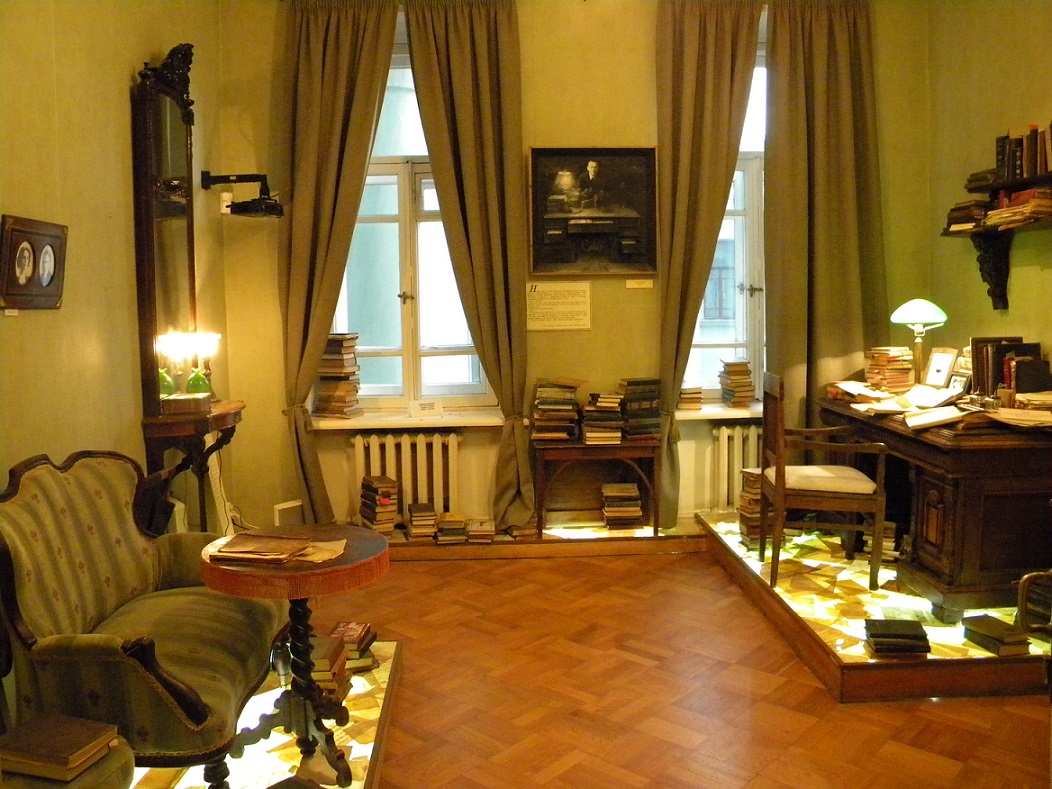
The house where they live is described in ways that make it obvious it is closely modelled on his own home in Kiev.
Alexi and Nikolka find themselves in different parts of the city but face the same challenge of trying to return to their house without falling victim to the violence that is descending on Kiev.
Alexi, forced to fight his way back, is wounded and the kindness of a stranger proves crucial to his survival and the tale of their time together is narrated in a way that makes it emotionally central to the book. A friend of the Turbin family also has to escape the enemy and he makes it back to the snow-covered window of their kitchen where he is recognised by his eyes: “The right one flecked with green sparks, like a Urals gemstone”.
As befits an endearing story of enduring value and historical significance, this is a valuable new title in the handsome Everyman’s Library.
It was Bulgakov’s favourite novel, one that waited some forty years before it was fully published in the Soviet Union.
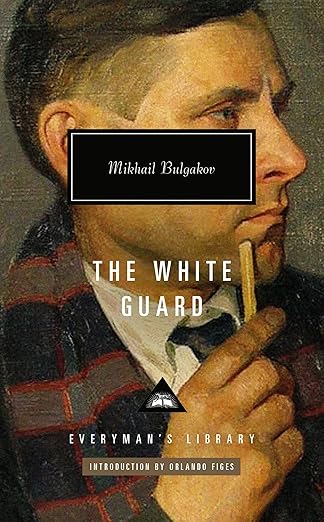
“The white guard” is one of two novels by Mikhail Bulgakov in the Everyman’s Library.










.jpg)













