
It is true but simplistic to say the Irish Great Famine (1845-1851) was caused by a potato blight that struck Europe. The reaction of the governing colonial power, Britain, allows for asking whether the famine was an act of genocide.
 Sean Sheehan
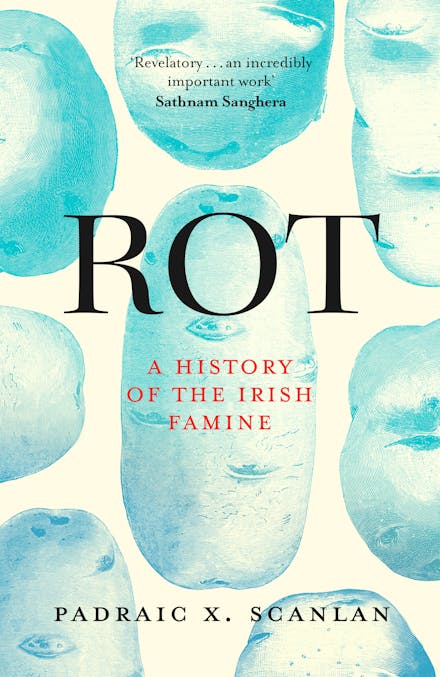
A new book by Padraic X. Scanlon examines the history of the event and answers questions about its genocidal nature.
The potato blight had a more devastating impact in Ireland than in other parts of Europe because no other country’s working poor depended so completely on potatoes for their subsistence.
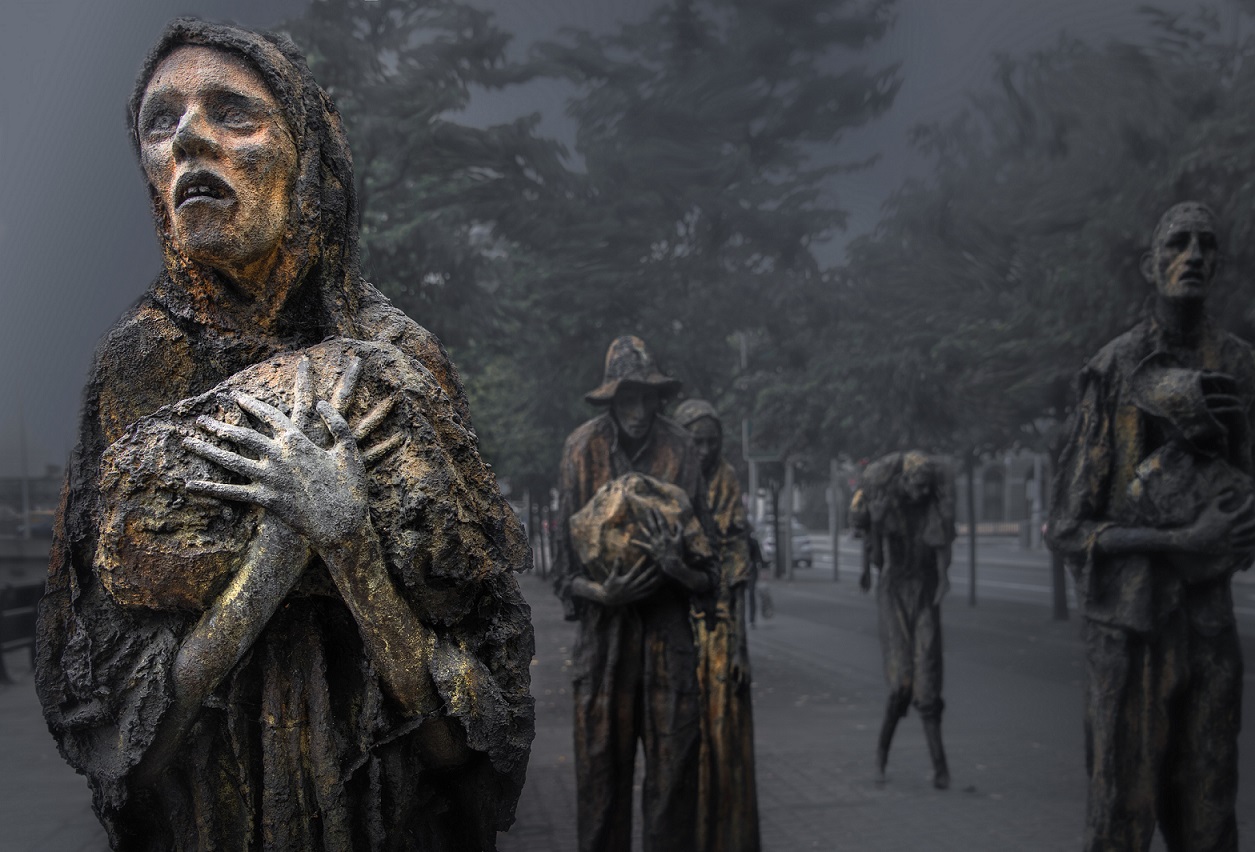
It led to more than a million Irish people dying and another 1.5 to 2 million emigrating (mainly to Britain and the United States). Between starvation, emigration and falling birth rates, Ireland lost one in five of its population. What happened is seared into the Irish psyche, a wound playing its part in the country’s detestation of Israel for inflicting mass starvation on the people of Gaza.
The difference between the famine in Gaza and the Irish Great Famine is one of intent. Israel has deliberately pursued a policy of starvation as part of its genocidal campaign. The intention is to gain control of more territory and extend its colonial settlements; removing Palestinians is seen as a prerequisite for this to succeed. In Ireland, “there was no plan”, Scanlan writes, “to destroy the potato crop and successive Conservative and Whig governments spent millions of pounds on famine relief”.
Where the two tragedies of starvation do overlap is to found in the mentality and practice of colonialism and the ruthless capitalist logic that goes with it.
Colonialism in Ireland, extracting maximum rental income for Anglo-Irish and absentee British landlords – who between them owned 80% of the land – immiserated the Irish poor and rendered them dependent on a monocrop. Like the Palestinians, they were regarded as an inferior race and the British middle class saw them as primitive shysters unwilling to embrace the industrial work ethic that ensured economic prosperity.
Scanlan charts the changes in the UK government’s response to the crisis in Ireland, from public works schemes and soup kitchens to, in 1847, a shifting of responsibility onto the landlords. In order to reduce their tax bill, landlords began evicting their tenant farmers, as well as financing emigration. While cattle and food continued to be exported to Britain, people died in tens of thousands from starvation and disease.
In a field in front of my house, cobbled stones by the side of a stone wall, mark the burial of Biddy (Bridget) Daly who died of typhus and wasn’t removed to the church cemetery for fear of contagion.

A slight hollow in the field where she lived, still known as Biddy’s, indicates where her cottage stood before its stones were removed to build a wall.
Scanlon writes: “And so, blame matters. The suffering of so many people, subjects of what was certainly the most powerful country on earth at the time, calls out for moral judgement.”
“Rot”, by Padriac X. Scanlan, is published by Robinson.










.jpg)












