
Rejections beset the British novelist Barbara Pym but reading two of her later novels confirms a talent that was not appreciated at the time.
 Sean Sheehan
Pym wrote six novels in the 1950s and early ‘60s until her publisher unexpectedly rejected her seventh and she consequentially disappeared from the literary scene for sixteen years.
It must have been a terrible blow to her self-esteem and, while it did not stop her from continuing to write, she became a forgotten figure until the unfairness of it all was recognised by influential admirers. Then, to great acclaim, “The sweet dove died” and “Quartet in autumn” were published in the 1970s.
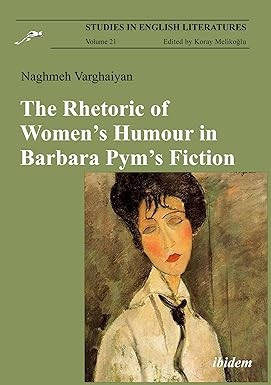
Three of the earlier novels and their subtle artfulness are the subject of “The rhetoric of women’s humour in Barbara Pym’s fiction”. Its author rightly sees Pym’s humour as questioning platitudes about gender through the clever portrayal of heroines who undermine traditional, masculine humour. Three of her novels are studied with this in mind: “Some Tame Gazelle” (1950), “Excellent women” (1952) and “Jane and prudence” (1953). Irony and ambivalence are at work, unobtrusively subverting patriarchal conventions while extolling self-sufficient, middle-aged women coping with life’s mundaneness.
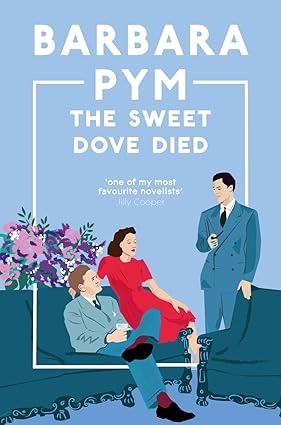 It is plausible that the male publishers –is the assumption they were men wildly speculative?– who repeatedly turned down her work in the 1960s were not attuned to this and found instead what they judged to be tweeness. Her steadfast admirers were not so tone-deaf and enjoyed a critical and sharp undercurrent in her comedic tales about church-attending spinsters. Pym’s quiet acerbity matured and developed into the caustic wit and intelligence that makes “The sweet dove died” and “Quartet in autumn” so remarkable.
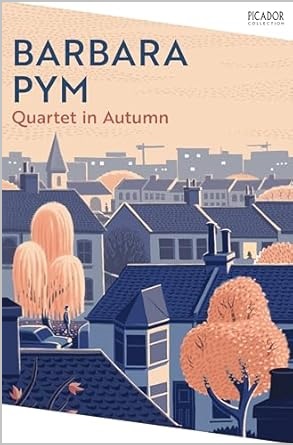
“Quartet in autumn”, perhaps her finest achievement, concerns the lives of four characters who share an office workplace. They are all approaching retirement age and for two of them, Marcia and Letty, this is imminent. Marcia is eccentric but has kept it to herself until retirement accentuates her dotage and sheer battiness. Letty is the most likeable of the four and the reader comes to admire her fortitude. Like her three work colleagues, Letty is unmarried and has acquaintances but no close family or friends. All four of them are alone in life but not lonely and, like everyone, have their silly little ways of distracting themselves from finitude and a meaningless universe.
 “The sweet dove died” is the darkest of her novels, superbly well constructed, and its story about possessiveness and selfishness is finely tuned. The title comes from lines of poetry that one of the characters quotes:
I had a dove and the sweet dove died;
and I have thought it died of grieving
O, what could it grieve for? Its feet were tied
With a single thread of my own hand’s weaving
“The rhetoric of women’s humour in Barbara Pym’s fiction” is published by ibidem Press, “The sweet dove died” by Pan Macmillan and “Quartet in autumn” is also published by Pan Macmillan.










.jpg)













Thank you for your review off my book.