
Over 1,200 executions this year. Rising espionage charges targeting journalists, activists, and citizens. Deaths in custody. Prison protests. UN Special Rapporteur Mai Sato exposes Iran’s escalating human-rights crisis, where surveillance tightens, legal protections collapse, and fear becomes a tool of social control.
 *Rola Zamzameh*
Executions in Iran have climbed to at least 1,200 between January and October 2025, according to the latest HRC-SR report, alongside rising disappearances, expanding espionage charges, and mounting deaths in custody.
The scale and speed of these violations signal a human-rights landscape entering one of its most volatile phases in years.
Mai Sato is professor and director of the Institute for Crime and Justice Policy Research at Birkbeck University of London.
Mai Sato’s recent report to the United Nations General Assembly provides an unflinching account of Iran’s human-rights crisis, underscoring why speaking with her is essential to understand current trends and their far-reaching consequences.
Following the Iran–Israel war, executions sharply increased. What concrete indicators show this surge is the result of state policy rather than isolated judicial actions?

Maybe I should start by clarifying that the 1,200 executions are obviously figures collected by civil society; these are not state figures, it’s between January and October this year. We cannot say after Israel–Iran military escalation, executions have dramatically increased. The executions had already been rising since last year. Last year, figures were over 1,000, and this year, by October, they had already reached at least 1,200. So, it’s inaccurate to say that after the twelve-day war there was a massive surge in executions.
In January — this is again collected by civil society — there were around 80 executions. In March, it was a bit lower, about 60. Then in April, it went up to over 120. In May, nearly 160. During July and August, it went down a bit to around 100. And now we’re seeing around 160 again for the last couple of months.
So, yes, the executions have increased, but I wouldn’t pinpoint the causality solely to the military escalation. But one thing I would see a correlation with is the number of executions for espionage charges. There have been 12 executions between January and October this year for espionage; 10 of those were carried out after the 13th of June.
If you want to compare those figures with previous years: in 2023, we know of six executions for espionage; in 2024, five executions. So, there’s been a rise in the number of espionage-related executions, and a rapid rise after the 13th of June.
 What, in your view, explains the Iranian government’s post-war intensification of espionage accusations, now applied so readily to journalists, activists, and even ordinary citizens?
I should clarify that espionage was already a capital offence, and as of the first of October there is a new law on espionage that expands counter-espionage. And—as you rightly point out—it now includes, for example, giving information to foreign media and so forth. So yes, the concern is that more people could be executed under broadly defined national-security offenses, with the definition of espionage expanding. This is definitely a kind of knock-on effect of the military escalation, because the new law was introduced and passed immediately after the military escalation had started.
What evidence points to the use of executions as a tool of social control and intimidation, rather than legitimate judicial outcomes?
That’s a very interesting question. Not just Iran, but in any country that has the death penalty, I would say that a death sentence or execution is probably never a fully legitimate judicial outcome. As you know, under international human rights law, one could argue that it still permits the use of the death penalty in limited circumstances, but the UN’s position now is that it should be applied only in a way that does not violate international standards.
I take the view that most executions are probably not legitimate judicially. If you apply that to Iran, for example, of the 1,200 executions we have seen so far, almost half were related to ordinary crimes such as murder, and the other half to security-related charges, sexual offenses, and so forth, which clearly violate international human rights standards.
 This is further compounded by a lack of transparency, due process, and fair judgments. That covers the international human rights law aspect, but also, academically speaking there is no real consensus that the death penalty is more effective than other forms of punishment. So, any country that is currently carrying out executions, including Iran, is doing so primarily for retributive reasons or as a tool of social control.
Given your account of the transfer of political prisoners and the dire conditions of women in Qarchak prison, what more can you tell us about the situation in other prisons that receives less media attention?
You’ve mentioned a few points about the treatment of prisoners. I think the first part of your question was about the transfer of prisoners from Evin to Qarchak and Greater Tehran prisons, particularly for political prisoners. During that time, many of them have since been moved back. What was really revealing to me is that once the women political prisoners were moved to Qarchak prison, we heard news of several women prisoners’ death in custody.
I rarely hear about death cases in custody in other prisons, though there are many stories of medical neglect in Evin prison. That really highlights how little we know about what happens beyond Evin prison.
 They also have ways to communicate with those outside the prison and with the wider community, and have access to international media, which I found very telling. This also raises concerns about the treatment in other prisons that we don’t know about.
What do the coordinated prison protests—such as “No Execution Tuesdays” and the recent hunger strike by Reza Khandan and others—reveal about the treatment, vulnerability, and communication limits of political prisoners, and about their resilience under tightly controlled conditions?
It is remarkable that, despite tightly controlled in detention conditions, there are protests happening inside those prisons. You mentioned a couple of recent cases, but there has been ongoing coordinated resistance within the prisons, with prisoners resisting moves to solitary confinement cells.
Since, I believe, the beginning of 2024, prisoners participating in the “No Execution Tuesdays” campaign have been going on hunger strikes to protest executions.
You also mentioned coordinated protests: since October in Qarchak prison following a death of women prisoners, as well as another coordinated protest involving 1,500 prisoners in Qezel Hesar prison to protest the surge in executions.
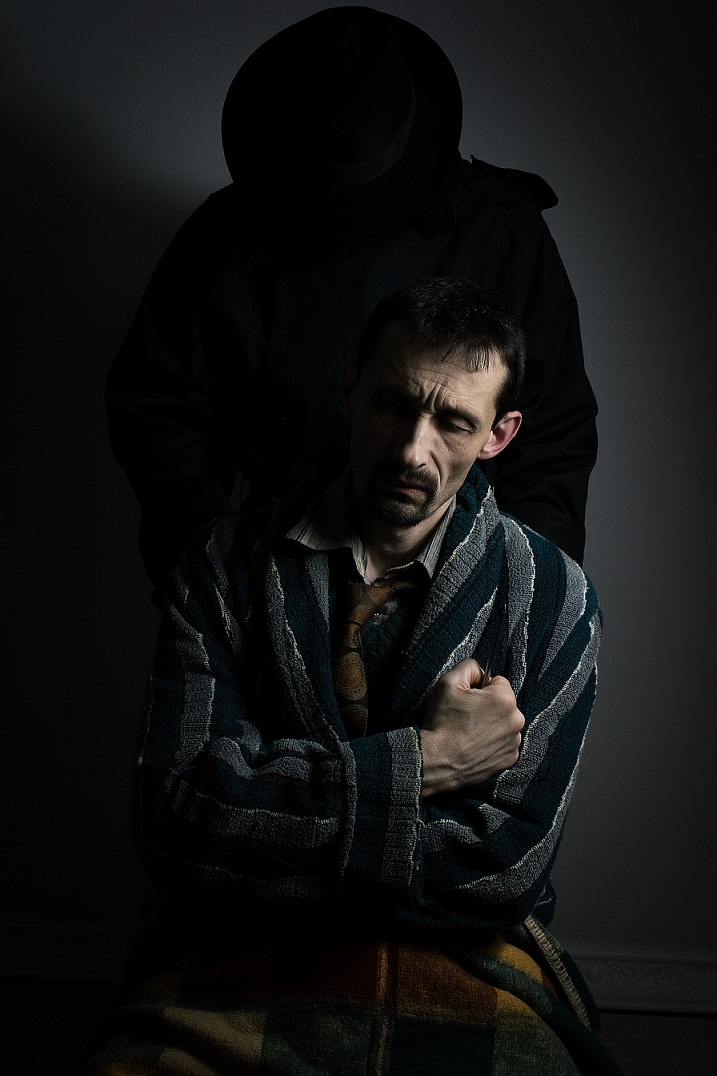 These protests reveal not only the daily realities inside the prisons but also the remarkable strength and resilience of those prisoners inside an extremely controlled environment.
Some reports suggest that new restrictive measures have been introduced for prisoners who protest or speak out in Iran. Do you consider these restrictions to be new, and how have such measures been applied historically?
I wouldn’t call them new restrictions. These measures have been used for some time. There is also a regulation, from 2021, that outlines the consequences prisoners may face if they organize a strike, which can include temporary bans on visitation or furlough, transfers to other prisons, and, in some cases, loss of eligibility for pardon. But even before this regulation, those who protested or spoke the truth against the authorities were met with similar consequences. So, I wouldn’t necessarily describe these as new restrictive measures; these repercussions and tactics have always existed.
*Rola Zamzameh: Senior journalist at the European Commission and Parliament.
(Photos: Pixabay and ChatGPT AI generated)










.jpg)












