
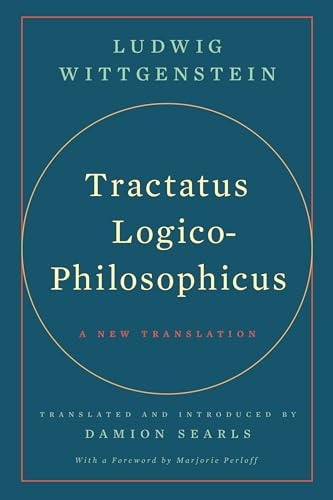
The beginning is Wittgenstein’s “Tractatus logico-philosophicus”, in 1922, and the end comes with his final notes, written between 1949 and 27 April, 1951, two days before his death.
 Sean Sheehan
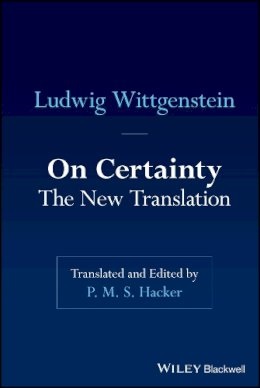
These last notes were brought together in book form and given the title “On Certainty”. New translations of both books and a study of Wittgenstein by Sandra Laugier offer fresh ways of approaching one of the major philosophers (the major?) of the twentieth century.
The forbiddingly titled “Tractatus logico-philosophicus” should not deter readers from switching on to some of its central ideas, like the claim that what can be shown cannot be said. A person shows their dignity or their love for another person more by what they do than by speaking or proclaiming it; is this not the deficiency in the practice that some have of saying ‘love you’ at the end of a phone call? The radical idea is that what is shown does not arise from a person’s interiority and a decision made within; it is there in what is done, outside.
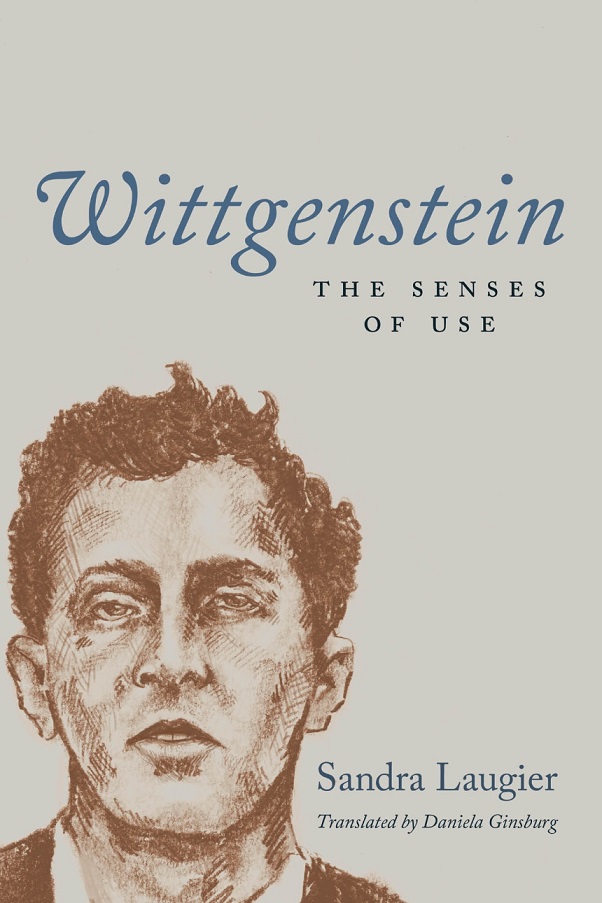
Laugier’s book helps the reader gets to grips with the Tractatus and its account of how form in language shows what it says, placing it before our eyes “without the remainder of anything hidden”. Language is de-psychologized and meaning becomes situational, leading to Wittgenstein’s later admission that he was wrong in thinking ‘that logical analysis had to bring to light what was hidden (as chemical and physical analysis does)’.
 As Laugier says, Wittgenstein’s later philosophy is about defining meaning without recourse to intentions or psychology.
Mental processes are not denied but what becomes crucial is how language use does not eulogise an inner life that is private.
Sense and meaning arise within what he calls ‘language games’ and our ‘forms of life’.
Questions of knowledge, belief and certainty take on an anthropological value that outweighs explorations of a person’s interiority and Hacker’s new edition of “On certainty” brings this to the fore.
In one of the remarks missing from previous editions, Wittgenstein notes that while sorrow is expressed in facial expression it can only be described by the word ‘sorrowful’, giving primacy to the picture of a private feeling; but, as Laugier puts it, “Inner means nothing…without outer”. The interrelationship is bound up Wittgenstein’s later talk of the ‘grammar’ of a language.
 Knowledge is usually judged to be justified true belief but when, for example, we believe or know that the world existed before we were born in what sense is this knowledge or a certainty? We are certain about our belief but not because, after considering the matter, we have reached a state of knowledge. What, after all, would be the grounds for doubting it: ‘There are cases where doubt is unreasonable, but others where it seems logically impossible’ (“On certainty”).
“Tractatus logico-philosophicus”, translated and introduced by Damion Searls, is published by Liveright; “On certainty: The new translation”, translated and edited by P.M.S. Hacker, is published by Wiley Blackwell; “Wittgenstein: The senses of use”, by Sandra Laugier, is published by The University of Chicago Press.
f










.jpg)












