
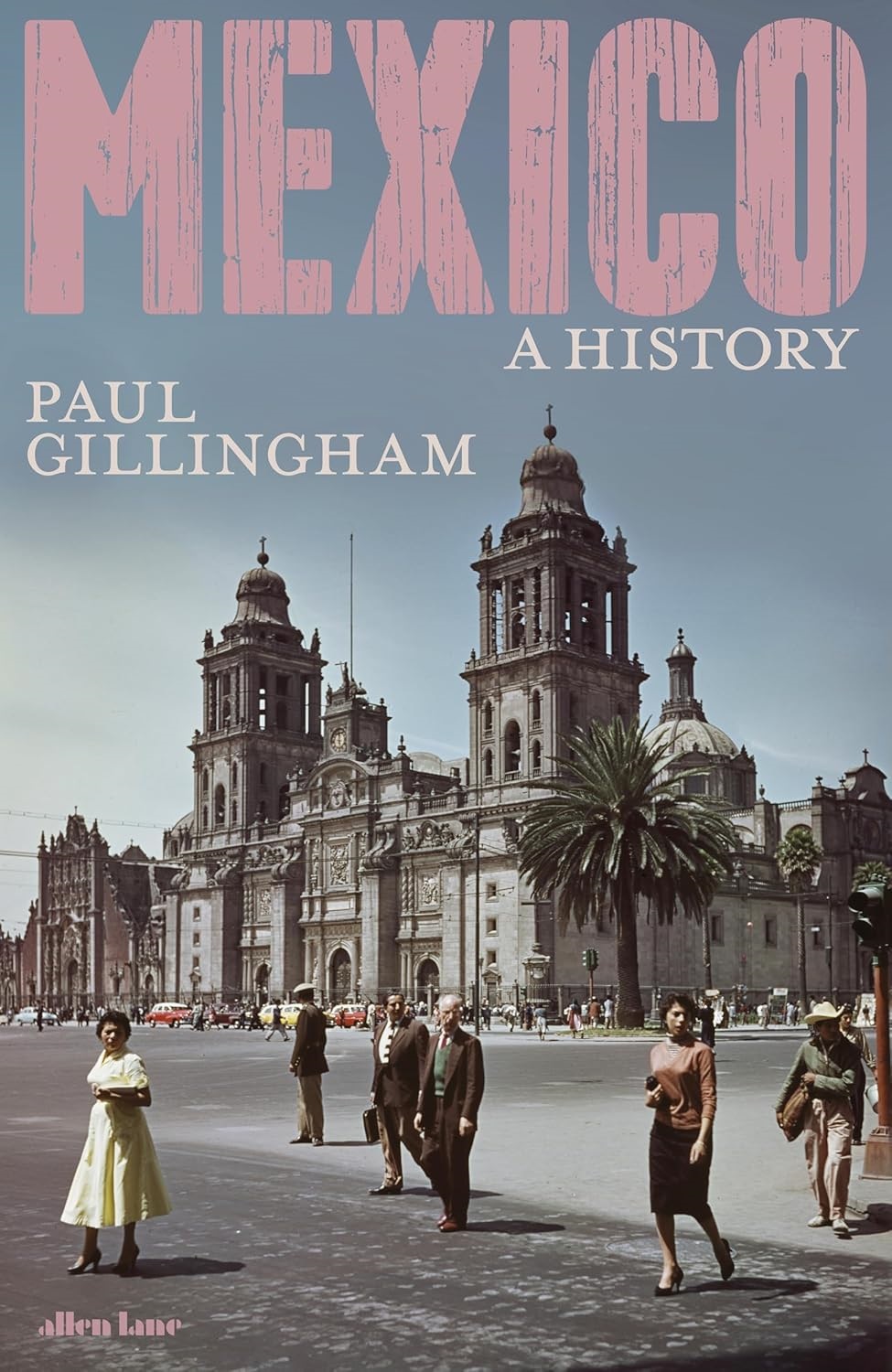
History books used to be boring, “one damn fact after another” as someone said, but not “Mexico: A history”.
 Sean Sheehan
Written with verve, it will surprise anyone not familiar with the story of the country that had the first black and, later, the first indigenous president in North America.
The book begins with a body found in Honduras in the 1530s, pierced and tattooed. He had led the Maya people against the Spanish for twenty years but he was himself Spanish. Gonzalo Guerrero was his name, from a poverty-stricken region of Andalusia, one of two survivors washed up on the coast of Yucatán from a shipwreck in 1511.
The other survivor never embraced a Mayan identity and, eight years later, joined the conquistadors when they arrived. Guerrero, very unlike him, had married a Maya woman and his three children, the author writes, “might be seen as the first Mexicans”.
Essentially colonists in Mexico, the Spanish connected two worlds that had something in common. They were both patchworks of different societies. There were as many West Africans – escaped and freed slaves – as there were Iberians in Mexico until the early seventeenth century. Spain, like the Aztec Empire, was a recent creation and España first appears on a map long after the conquest of the country.
The War of Independence (1810-21) literally decimated Mexico’s population but the nineteenth century saw the country’s population increase from thirteen to a hundred million.
It was not until the Mexican Revolution (1910-20) that a genuine social revolution brought a redistribution of land. The human stories behind the demographics are told in the ‘Sex, Death, and Leaving Home’ chapter.
The one-party rule of PRI (Partido Revolucionario Institucional) was finally relinquished in 2000 but was followed by the disastrous War on Drugs and the violent deaths of over 200,000 individuals, mostly civilians; by 2020 Iraq was a safer place than Mexico for journalists and perhaps as many as half of those killed for reporting on what was happening died from the orders of politicians, not narcos.
Supplying the drug needs of Americans, whose use of illegal drugs increased by 50% in the decade before 2020, was big business and criminality extended into human trafficking and sex work. Gillingham’s chapter on this, ‘Rupture’, is compelling reading. Violent acts in the country get the headlines but, he points out, the levels of homicide are not remarkable when set alongside American or European history.
Contemporary Mexico, he concludes, is subject to three empires: “One of domestic criminal bosses, one of American drug warriors and their tame politicians, and one of American drug consumers who regale dinner party companions with happy memories of child soldiers selling them whatever they wanted on Pacific beaches”.
 The fourth empire, the US one, is not mentioned but it is also a threat to Mexico’s well-being; the current pressure to stop the country supplying oil to Cuba demonstrates this.
“Mexico: A history”, by Paul Gillingham, is published by Allen Lane (Penguin).










.jpg)












