
For years, the communities surrounding the open-air landfill site at Duquesa in the Dominican Republic have lived with toxic gases, contaminated soil and precarious means of subsistence tied to waste recycling. A new state endeavour, supported by international organisations, seeks to close and transform the site, impacting almost four million inhabitants of Greater Santo Domingo.
 Mariela Pérez Valenzuela
Duquesa is a place where two realities coexist: thousands of people survive among waste while the state promises to turn one of the biggest symbols of urban contamination into a model of environmental recovery.
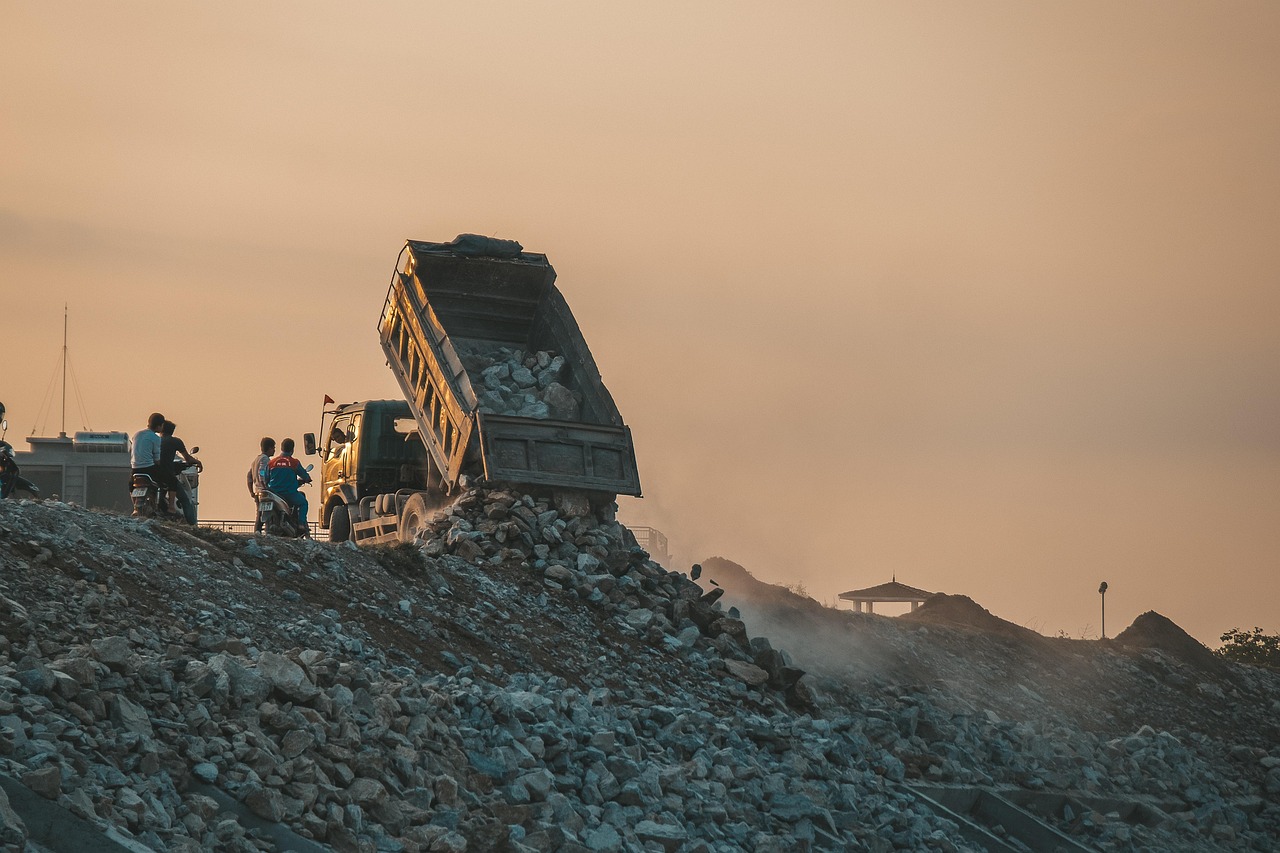
Duquesa lies around 30 minutes from the centre of the Dominican capital, in the municipality of Santo Domingo Norte. Thousands of people have lived there for years alongside one of the country’s largest environmental blights: the dump named Duquesa. Here, where tons of waste from Greater Santo Domingo and other areas are dumped every day, rubbish is not just a health risk. For many families, it also constitutes their only source of sustenance.
Duquesa is much more than a place to deposit solid refuse. Entire generations have grown up in the shadow of the dump in nearby communities such as Los Casabes, Jacagua, Barrio Norte and Profesor Juan Bosch.
For its inhabitants, proximity to the mountains of waste is not a mere circumstance, it is a permanent condition defining everyday life and the surroundings thousands of families live in.
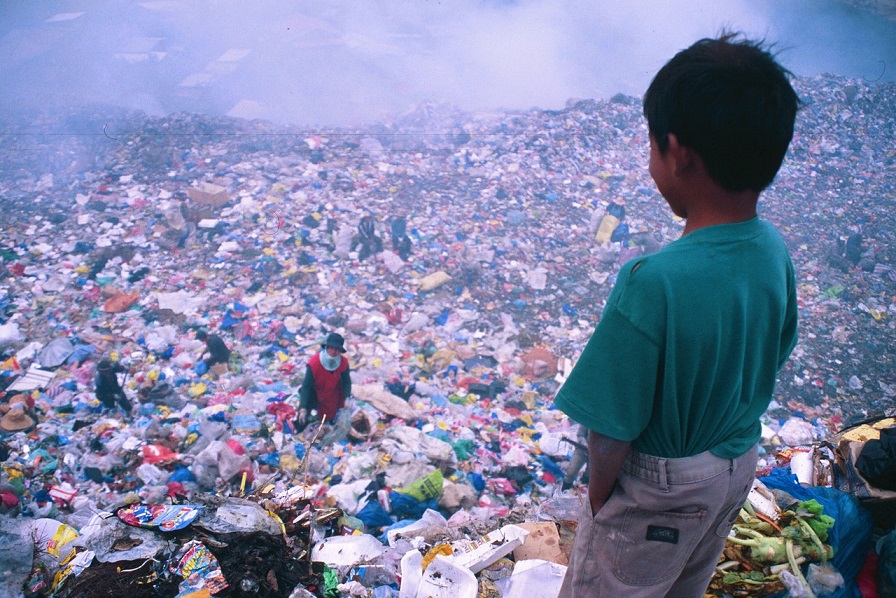 In these areas, the penetrating and unpleasant smell mixes with smoke from occasional fires while soil contamination and the constant traffic of lorries laden with waste form part of the landscape.
What for the rest of the city is a distant problem, for those who live in Duquesa is a daily reality with environmental, health and social consequences built up over decades.
The survival economy
At the dump, ‘divers’ (as the scavengers are known) throw themselves in amongst the waste as soon as a lorry unloads. They search for plastic, cardboard, metal and used clothing which they later either sell to intermediaries or reuse themselves.
Many work without protection, using their bare hands among the flies, animals and mountains of compressed refuse.
“For us this isn’t just rubbish, it’s how we survive. We come here every day to see what we can find. It’s not an easy job, but it’s all many of us have. We live from what other people chuck out”, a resident of the area explained to the media organisation Prensa Latina.
 The precariousness is not limited to work. The dwellings in the area often lack adequate infrastructure and have unstable basic services and, in many cases, unpaved roads.
On top of this is a severe social stigma: living in Duquesa is, for many Dominicans, synonymous with exclusion.
Environmental and health risks
The dump’s effects have been highlighted for years by experts and authorities. Duquesa has affected the nearby Ozama and Isabela river basins as leachates – contaminating liquids – percolate into the soil. In addition, the decomposition of waste generates toxic gases and fires create clouds of smoke.
The consequences can be seen in the communities’ health: respiratory diseases, skin complaints and a proliferation of insects and rodents are some of the everyday risks, especially for children and the elderly.
The environment and public health ministries have warned that inadequate management of solid waste at Duquesa contaminates soil, water and the air, affecting health and quality of life.
 History and conflicts
Prior to becoming Greater Santo Domingo’s main landfill site, the area where Duquesa is now located was state-owned land linked to the State Sugar Council in the 1990s.
In 1997, it was officially designated to receive solid waste generated in the capital and nearby municipalities.
Between 2002 and 2004, its administration was under the responsibility of the Santo Domingo Norte mayoralty. In that last year a contract was signed for 20 years with a Dominican-Brazilian consortium to manage the site, in an attempt to modernise its operation. In 2007, the agreement was transferred to the private company Lajun Corporation who retained control for around ten years.
This period was marked by conflicts with municipal authorities and inquiries into contractual breaches and environmental deficiencies. In 2017, the Administrative High Court ordered the company to withdraw due to its effects on collective rights related to health and the environment.

Since then, Duquesa has been administered by a public commission composed of the state and the mayor’s office with a focus on controlled management and a progressive technical closure.
According to official sources and press reports, from 2020 plans for reform have been put forward and in 2023 the Ministry of Environment began the process of technical closure by areas.
As part of that endeavour, 3,500 trees were planted on the dump site, a step that marked the official start of its environmental transformation. In February this year the Dominican president, Luis Abinader, presented the first phase of the clean-up and recovery plan for the site, with the backing of international organisations.
Transformation
On 10th February, Abinader announced the beginning of the first stage of an ambitious clean-up and environmental transformation project for Duquesa.
The initiative foresees an investment estimated at 110 million dollars with financial backing from the Inter-American Development Bank, the Japan International Cooperation Agency and the Spanish Agency for International Development Cooperation.
 The authorities say the plan will benefit some 3.8 million inhabitants of Greater Santo Domingo and includes, in the first phase, the stabilisation of the soil, leachate management, control of gases, slope reprofiling and the sealing of critical areas. PL
(Translated by Philip Walker – Email: philipwalkertranslation@gmail.com) – Photos: Pixabay










.jpg)












