
The rise in homelessness in Montevideo reflects a combination of poverty, daily substance use and mental health histories. Legislation allowing involuntary hospitalisation faces the challenge of addressing a long-standing structural phenomenon.
 Orlando Oramas León
En Uruguay, according to a report by the National Institute of Statistics (INE), four out of every thousand citizens survive in conditions of extreme poverty. Breakdown of family ties, addiction, estrangement after time in prison, lack of income, and mental health issues are some of the triggers.
According to the National Institute of Statistics and Census (INE), poverty in Uruguay during the first half of 2025 stood at 17.7% of the population (approximately 177 out of every 1,000 people) under a new methodology, with 1.4% of households living in extreme poverty. According to the legislation, anyone living outdoors may be subject to involuntary hospitalisation if their lives are at imminent risk and they have mental health issues which could also pose a danger to others. This law can be implemented by officials from the Ministry of Social Development (Mides) and a doctor from the State Health Services Administration (ASSE), who would assess the person’s condition.
For Civila, current secretary general of the Socialist Party, there needs to be a change in perspective on how to deal with such a long-standing scourge that has various causes and, therefore, requires different approaches.
 Growing figures
The latest official figures show that at the close of the first semester of 2024, 6.4% of households and 9.1% of the population live under the poverty line. According to the National Institute of Statistics’ report (INE), four out of every thousand Uruguayans live in extreme poverty.
By 2023 it was already clear that homelessness was a growing phenomenon. On the cold morning of August 1st 2023 (the middle of southern winter), Mides deployed 274 officials and coordination teams in 90 zones in Montevideo. 2,756 homeless citizens were registered at that time, a figure 24% greater than that of a similar 2021 survey, which had included people housed in night shelters and contingency shelters set up under the Plan Calle (Street Plan). Programa Calle?
The report shows that half of the people who are homeless have been on the streets for at least 12 months and three out of every four had not been contacted in previous records.
The remaining quarter of the interviewed homeless population had already been registered on one of the studies done in 2016, 2019, 2020 or 2021, so they were no longer homeless.
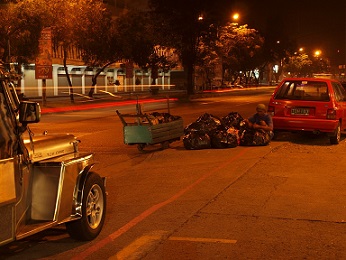 The faces of homelessness
The homeless population is made up primarily by young or adult men of whom were born in Uruguay.
A large portion of homeless people are on their own and they receive help from neighbours, followed by family and institutions.
According to the Mides survey homeless people resort to bin lorries and rubbish bins, and turn to soup kitchens. More than half of them had their first experience of homelessness in their childhood, adolescence or youth. In terms of employment status, three out of four claimed to be working or looking for work, usually precarious jobs which do not allow them to contribute to the Banco de Previsión Social (Social Security).
With regard to employment, the vast majority of jobs are characterised by precariousness and the inability to contribute to the Social Security Bank.
One in every five rough sleepers presents with vision impairments and a similar proportion reports having been at one point admitted to a mental health institution.
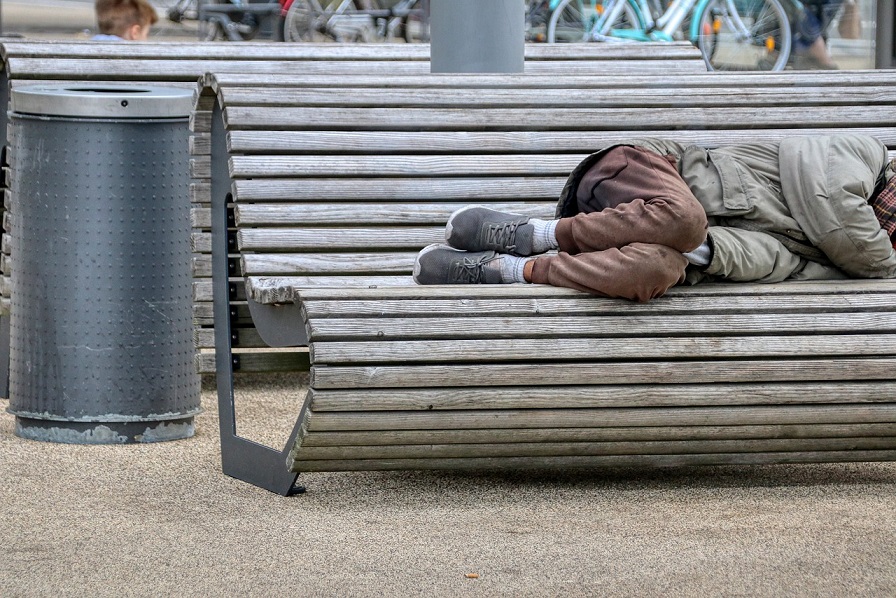 They also have difficulty or are unable to walk or take the stairs, and have problems with memory and concentration. But perhaps the most serious problem detected was drug use. The majority of interviewees admitted to using psychoactive substances on a daily basis, a growing number. PL
(Translated by Natasha Greenidge – Email natashagreenidge1@gmail.com) – Photos: Pixabay










.jpg)












