
Research conducted by LAWRS with young Latin American women living in London reveals how sexualised stereotypes circulating on TikTok and Instagram influence identity and self-esteem, and how they can lead to eating disorders and make them feel that their participation in public life is delegitimised. The Prisma Series: “Fetishisation of Latinas in the UK”.
 Sara Piquer Martí
Daily exposure to videos and posts on TikTok and Instagram that reduce Latina women to a sexual and temperamental stereotype is having devastating consequences for young Latin American women.
This is revealed by a study conducted by the Young Women’s Advisory Board (YWAB) of the Latin American Women’s Rights Service (LAWRS), the results of which were made public on 3 March.
The study is entitled “Voices of young Latinas: Peer research on online abuse and the impact of fetishisation”. Its findings show that constant exposure to content on TikTok and Instagram in which Latina women are fetishised — both physically and temperamentally — reinforces a reductive stereotype that has highly harmful consequences for the identity and self-esteem of these women. In some cases, it can lead to mental health problems or a negative relationship with their own bodies.
The research was conducted between May 2025 and February 2026 by members of the YWAB, a group of Latin American women aged between 18 and 25 who study or live in London. They acted as researchers and carried out focus groups among themselves, where they shared their lived experiences. From there, they formulated their research question: What is the impact of the fetishisation on TikTok and Instagram of the ‘Latina’ image on the identities of young Latin American women aged 18 to 25 living in London?
 To answer this question, the study used a mixed-methods approach that included semi-structured interviews, online questionnaires and content analysis of social media.
The young members of the board themselves acted as peer researchers — that is, people who have experienced the issue first-hand and critically examine the reality of their peers.
In total, 15 interviews were conducted with other Latin American women aged between 18 and 25 living in London, in addition to 36 online questionnaires collecting both qualitative and quantitative data. The researchers also carried out an analysis of posts on TikTok and Instagram to identify patterns of racial fetishisation and sexualised representations of Latina women.
Among the most significant findings, the study notes that stereotypes are not one-dimensional: they portray Latina women as “angry” or “combative”, but also as “submissive” and “controllable”. This duality, combined with hypersexualisation, generates feelings of personal detachment and alienation from their own communities among some young women.
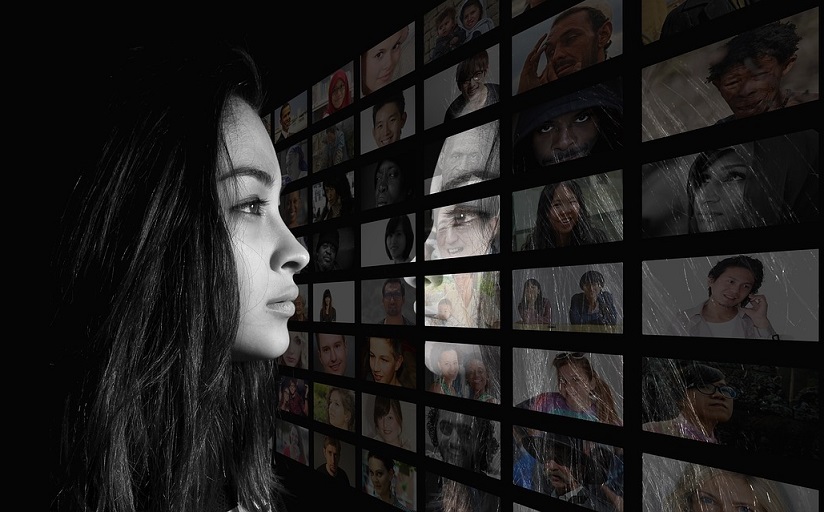 Other findings highlighted by the study, in addition to an unhealthy relationship with one’s own body and its consequences for the mental health of Latina women, relate to the limited social and political participation of these young women.
By reducing women to a set of sexual traits and cultural stereotypes, these narratives ultimately delegitimise their voices in the public sphere. As a result, some young women feel discouraged from participating in debates or social initiatives, as they perceive that their identity is trivialised or not taken seriously.
Another key risk stems from the normalisation of this fetishised image. Constant exposure on social media, often through videos presented as humour, contributes to the normalisation of these stereotypes to the point where they become difficult to identify or denounce as a form of discrimination or symbolic violence.
 Through this study, the Young Women’s Advisory Board of LAWRS calls on digital platforms to improve the systems that allow this type of content to be identified and effectively blocked.
It also proposes that public authorities develop legislative frameworks that better protect women against this form of digital violence.
Building on this research and other journalistic work, The Prisma will publish a series titled “Fetishisation of Latinas in the UK”.
Next week, the first instalment will explore the issue in greater depth through an extensive interview with two members of LAWRS.
Next week: “Being a Latina on social media: from stereotypes to abuse”
(Translated by Rene Phelvin) – Photos: Pixabay
The Prisma Series: “Fetishisation of Latinas in the UK”
The symbolic violence of social media against Latinas
Being a Latina on social media: from stereotypes to abuse
From algorithms to real life: stereotypes of Latinas
Dating, stereotypes and prejudice: being a Latina in the UK
Body, accent and outside views: Latinas in the UK










.jpg)












