
Jaya, a Sri Lankan Tamil mother living in the London, reflects on war, displacement and rebuilding a life after leaving during the civil conflict. Her story, told to her daughter Evie, a British Tamil writer, reveals how survival shaped everyday decisions, from what women wore to how families moved. The Prisma Series.
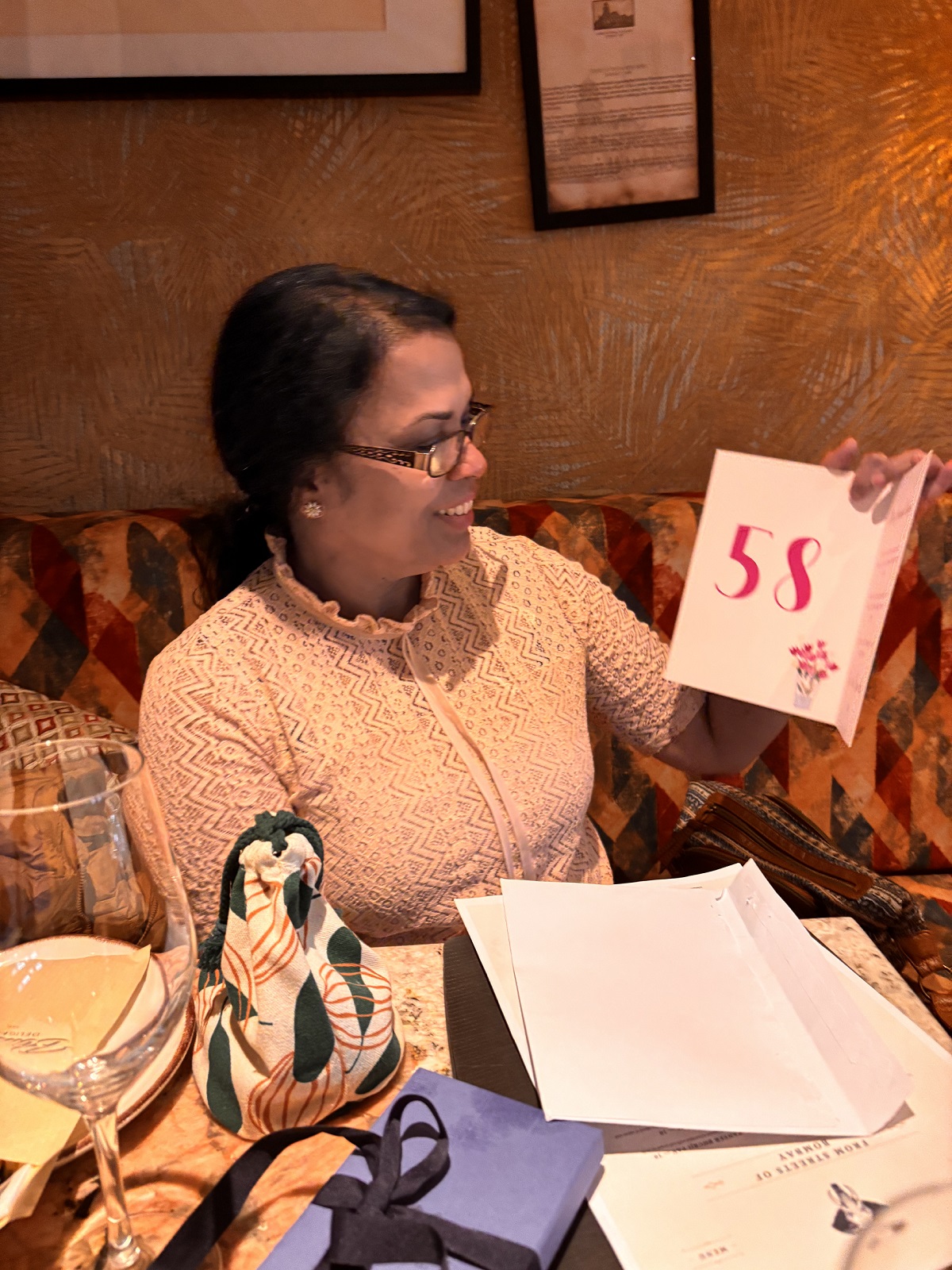
Interview and photos: Evie Ratnaventhan
Britain is home to a large Sri Lankan diaspora, yet Tamil stories are often reduced to broad ideas of migration or conflict. The numbers tell part of the story, but the life inside them is harder to hold.
Behind every census category is a family that left because staying had become impossible. Behind every “community” is someone who remembers a place before it was reshaped by fear.
Jaya, 58, has lived in the UK for around 30 years. She left Sri Lanka during the long inter-ethnic civil war between minority Tamils and majority Sinhalese, that lasted from 23 July 1983 – 18 May 2009 and rebuilt her life in Britain.
When she speaks about Sri Lanka, she does not begin with violence. She begins with abundance.
“We had a good life,” she says. “Family was all together. We had a big field and house, coconut trees, mango trees, curry leaves trees. We drank coconut water fresh from the fruit.” Her memories are vivid and ordinary. Women brought vegetables to the house balanced on their heads, and children rode bikes to visit friends. When the fields flooded after rain, fallen coconut trunks drifted in the water. Children climbed onto them and used them as makeshift boats.
Stories about war often begin only when danger appears. Jaya’s account makes clear that what was lost was not abstract stability, but a whole way of life.
She was around 12 when that world began to shift. She remembers it not as a single event, but as a growing sense of instability.
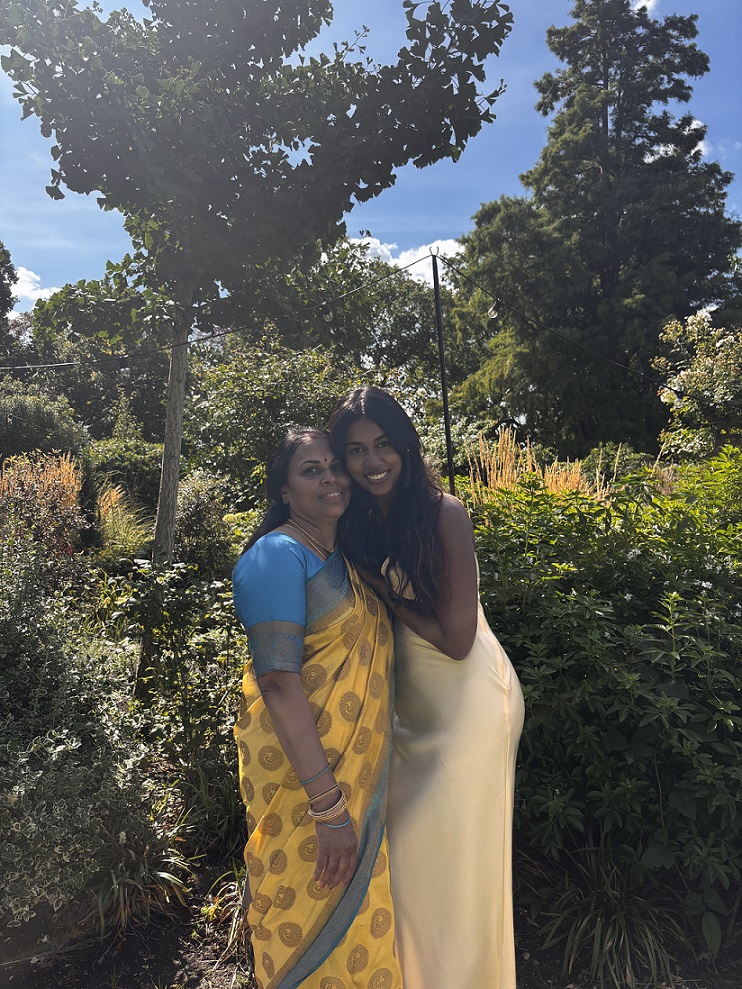
“There was a feeling anything could happen,” she says. “We would maybe have to pack our lives up and go at any point.”
Her brothers left the country first. “The boys were not as safe, so they went first,” she says.
But being a Tamil minority woman also carried risk. Everyday markers of identity could expose you.
“It was scary to even wear a pottu,” she says. “As Tamil women, it gave it away.”
Jaya describes women in her community as teachers, nurses and housewives. Many remained within the home, and the challenges they faced were rarely spoken about openly.
“When the army came, my elder sisters would wear sarees to avoid them getting their hands on us,” she says. “They thought married women would be left alone. They were scared.”
Clothing became more than tradition. It became a form of protection. Fear was not limited to what happened on the ground. It extended to the sky. “Scared of shell bombs mainly,” she says. “So, the sky, which was once a beautiful thing to look at, became a fear zone.” The conflict lasted for decades and devastated civilian life, particularly in the north and east of Sri Lanka. Communities were displaced, and everyday routes became dangerous.
After she married, Jaya lived for a time in Negombo. Travelling back to Jaffna her hometown, the northernmost tip of Sri Lanka was risky, with many routes blocked.
“People died in the sea as that was the route home,” she says. “Bombs from helicopters”. Silence became part of survival. Even within communities, people spoke cautiously.
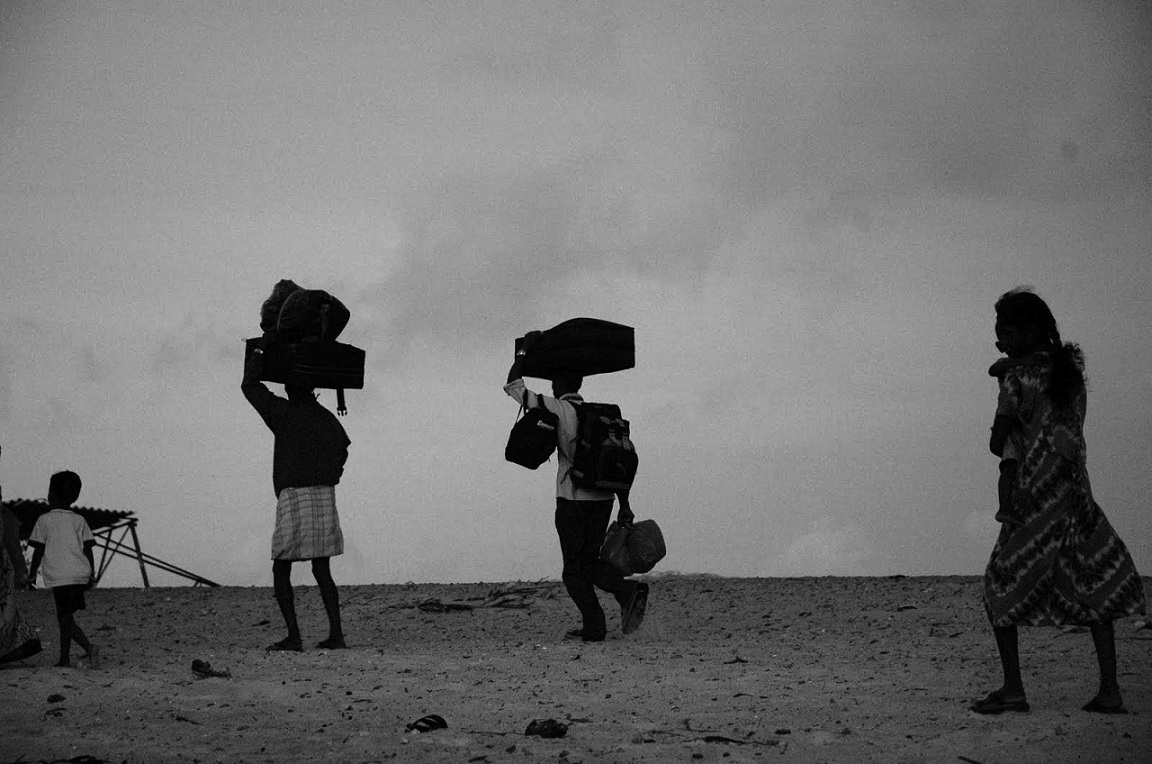
“They couldn’t speak about anything,” she says. “Tamil people were very silent even with each other. All we spoke about was the army and the trauma. So many bodies in wells.”
Jaya decided to leave after having her child in 1997. The decision was shaped by fear as well as responsibility.
“It wasn’t safe, and after I had my child, I wanted to flee,” she says. “Small issues were blamed on Tamil people, so we were scared to be caught for something we didn’t do.”
“I didn’t feel like I had a choice,” she adds. “We were so oppressed. We had almost no rights to live there.”
Migration stories are often retold as clear transitions. Jaya remembers something more uncertain. She had never been on a plane before and was travelling with a two-year-old. Her daughter cried throughout the journey because she did not want to leave her father.
At one point, while changing her child, Jaya accidentally left her passport behind. “I was really scared,” she says.
She eventually did find her passport, the small document that guaranteed her freedom. At the same time, she felt relief. “My brothers and sisters were abroad, so I was happy to be reunited with them.”
She first arrived in Scotland. The environment was unfamiliar and harsh. “It was cold and the wind was crazy,” she says. But so was the sense of freedom.
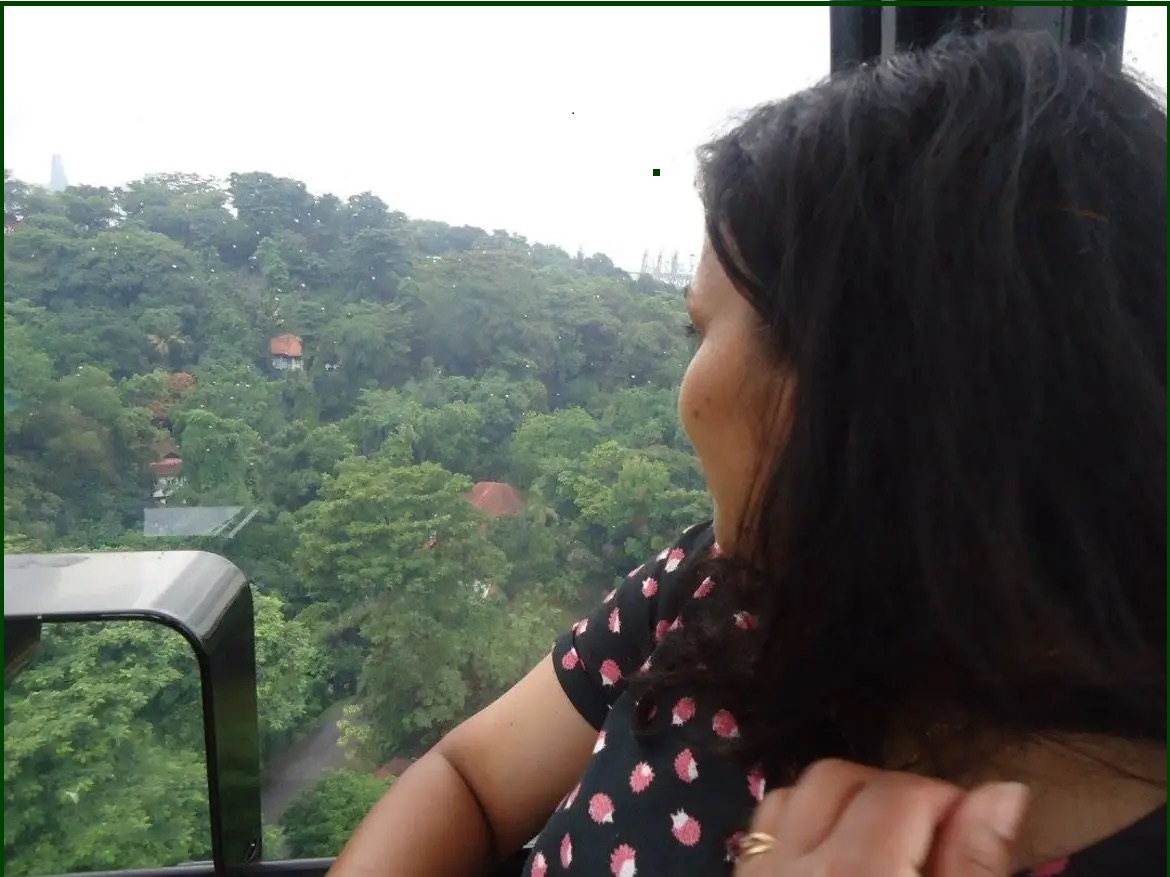 “I could wear my pottu in Scotland and say I was Tamil,” she says.
“I was not sad that I had left my home country. I liked the schools here, so I was happy for my child.”
She describes feeling safe almost immediately in comparison to life during the war. Migration did not erase everything, but it changed the scale of danger.
“I finally started wearing trousers,” she says. “I never wore them in Sri Lanka.”
She also learned to drive in the UK. “I love driving now. It’s my peace.”
For Jaya, peace is found in everyday autonomy. It is not dramatic, but it is deeply felt. Motherhood in Britain brought a different kind of concern. The context changed, but vigilance remained. “I wasn’t scared when my daughter was young,” she says. “But after she reached 12 I was scared when she started to go out alone, especially sleepovers.”
Her instinct to protect extended beyond her own family. In the UK, she built a career as a nursery nurse, working with children for nearly two decades. She now leads a team in a nursery. The same instinct that once centred on her own child became part of her daily work.
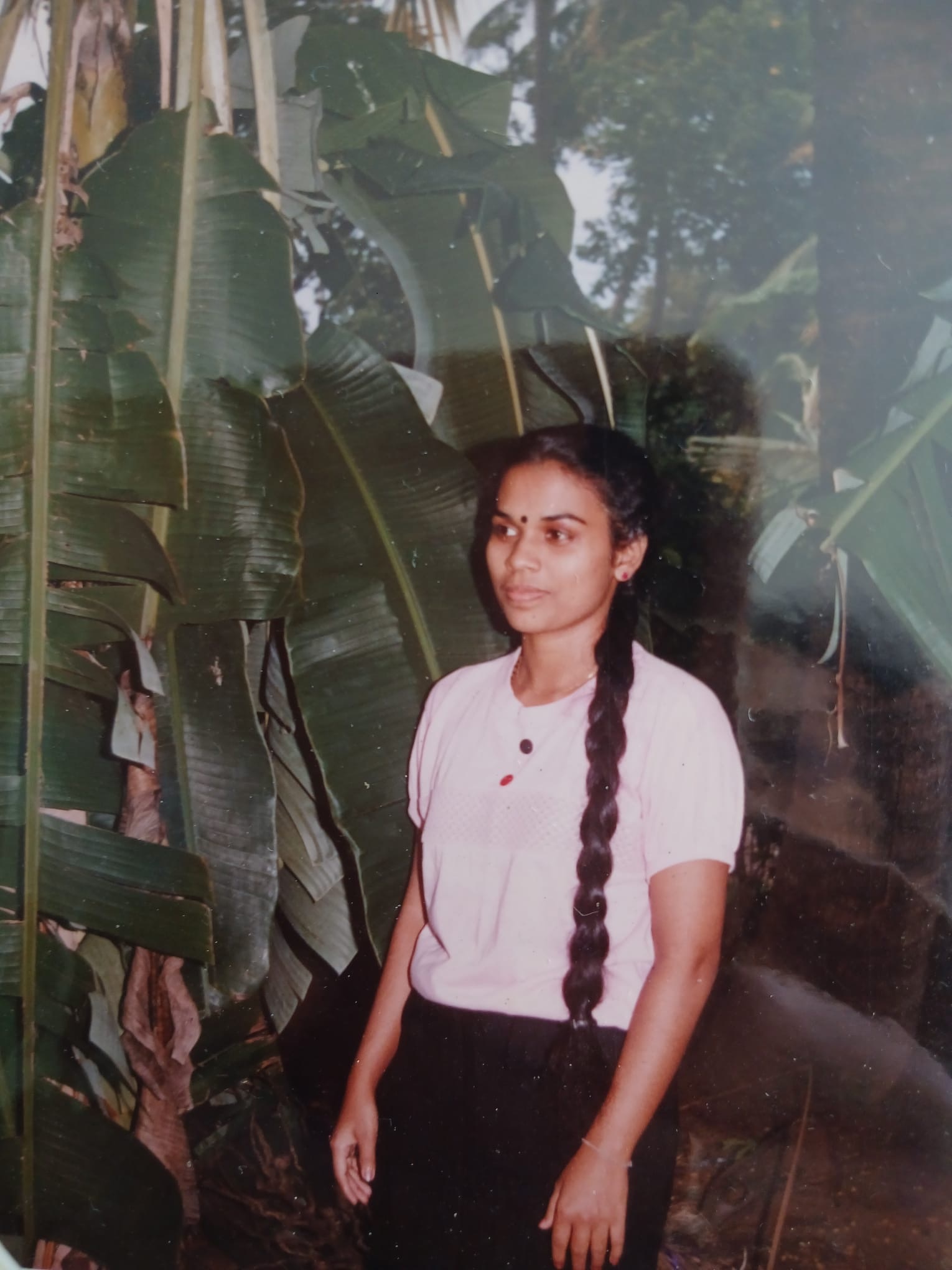 Her story reflects not a simple contrast between “unsafe” and “safe,” but a shift in the nature of risk. Both contexts required awareness, but in different ways.
For many years, Jaya did not speak about her experiences. She minimised her own trauma in comparison to others.
“I thought other people had worse trauma, so I didn’t share mine,” she says. “Only now am I realising how bad everything was.”
When asked whether people in Britain understand what she experienced, her response is direct. “Not at all,” she says.
“They have no idea. Even our kids don’t know.”
Children often inherit outcomes without understanding the conditions that shaped them. The past becomes distant, even when it continues to shape the present.
When asked what was lost, Jaya answers without hesitation. “My cousin passed away from a bomb in the ground,” she says. “He was riding a cycle. Houses were destroyed. So much bad, it would be hard to go into what’s lost.”
“We did lose a happy life.” When asked what was gained, she pauses. “Nothing,” she says at first. Then she adds, “But people’s kids that have migrated got a good education. And I guess that’s okay.” Her answer resists a simple narrative of progress. What was gained does not cancel out what was lost.
At the end of the conversation, she reflects on what she would say to her younger self: “You’ll be okay.”
For many Tamil families in Britain, the story begins long before arrival. It begins in fear, in adaptation, and in the quiet decisions people made to survive. These histories are not distant. They continue in memory, in silence, and in the everyday lives of those who carry them.
(Photos supplied by Evie Ratnaventhan and authorized for free publication)










.jpg)












