
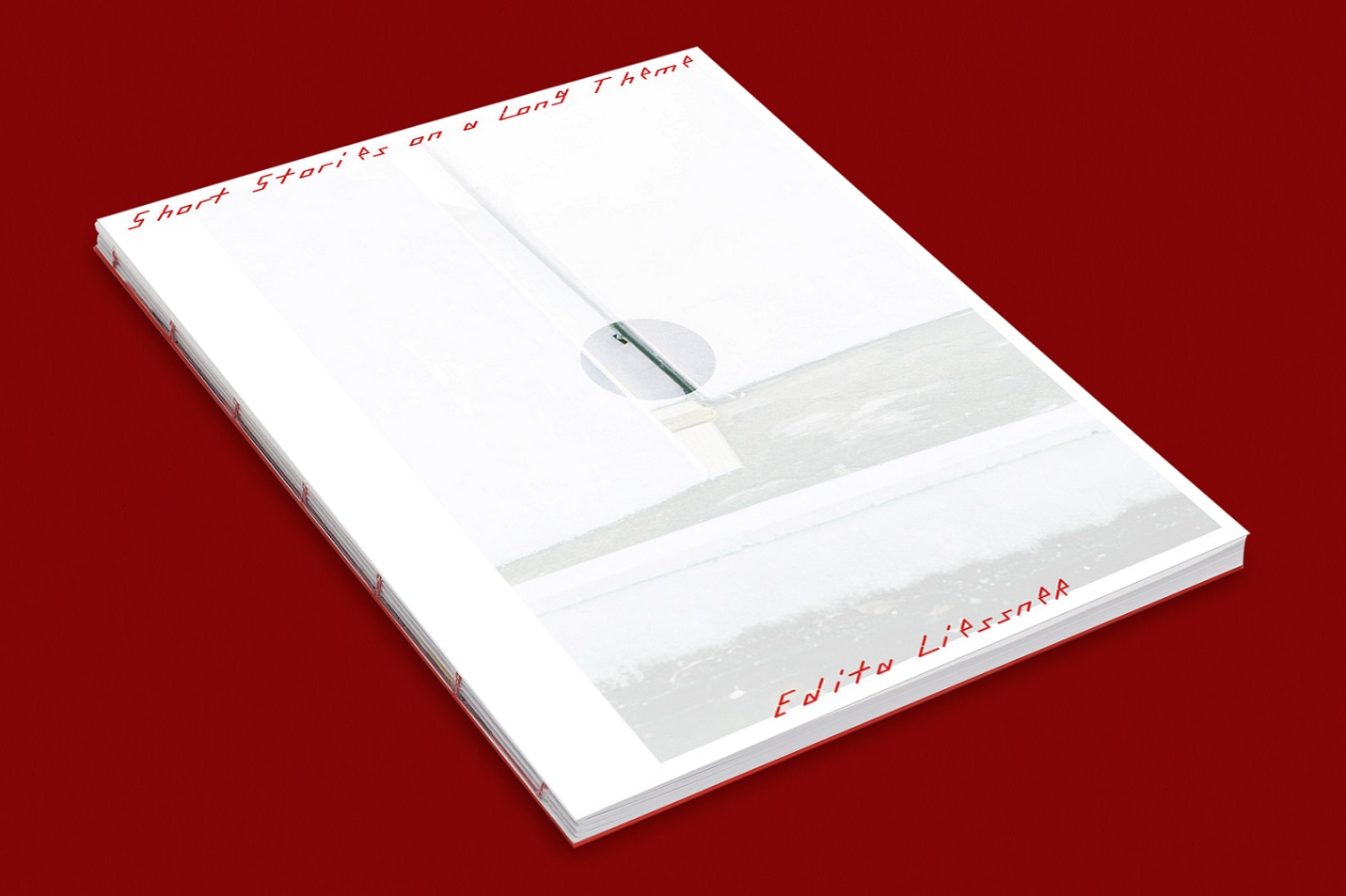
Edita Liessner’s “Short stories on a long theme” is a pleasurable photobook to open and the pleasing playfulness of its title adds to its attractiveness.
 Sean Sheehan
Her photos are of two very different kinds: geometric, colourful arrangements and scenes of everyday life. It is not immediately obvious why they have been brought together in one book.
A photograph can be judged as a very short story: one instant in time, made open for interpretation.
The ultimate short story in this sense would be pictures of atoms, particles about one-millionth the thickness of a human hair, interacting in their own quantum space. Such pictures now exist, as seen in this one from Science Blog, showing sub-atomic particles, called fermions, that tend to avoid each other, and another type (bosons) that tend to cluster together.
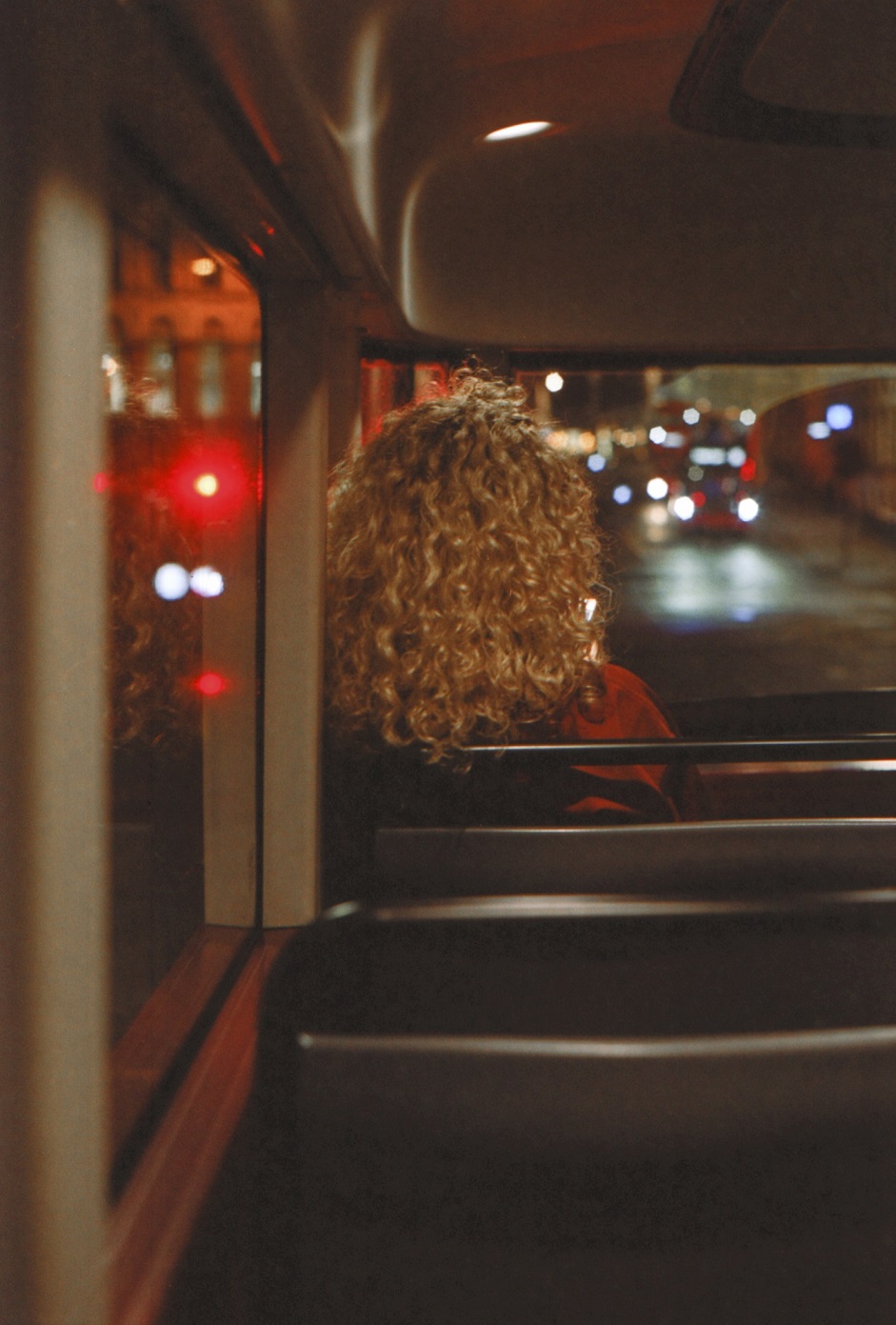 Fermions look uncannily like some of the geometric patterns that Liessner photographs while her scenes of human behaviour are like bosons because of how they suggest a receptiveness towards coming together: two people in an eatery, a woman dressed to go out or in a group with others, a child and adult walking along a pavement, their hands grasped together.
If these very different types of images are ‘short stories’, the ‘long theme’ is what such a confluence of opposites might indicate.
Is it the dialectic of sociality and separateness that informs both our human existence and the non-human world of quantum mechanics?
Characteristic of both worlds is the realisation that what is known is affected by the position of knowing.
In quantum physics, it is impossible for a particle’s position and velocity to be simultaneously known; in human behaviour, we are drawn towards some people and repelled by others.
The pure geometry that configures objects in space coexists with the necessity of including the observer in what is observed. This entanglement of meaning and matter, when considered by philosophers, is given the special name of phenomenology. Liessner pictures the way one phenomenon is given meaning by another phenomenon, a strange grammar that brings them together but only by way of chance and circumstance.
 Her photographs show pure difference in a geometric dimension but one where meaning and connections emerge. This is not abstraction or conceptual art for its own sake – currently the alpha and omega of art photography — but more the evocation of contingency and happenstance.
It is as right as it is important that no words are used in “Short stories on a long theme”. There are no captions for the individual images, no labels indicating how they should be understood: the stories being captured and the long theme they give expression to only exist photographically. A verbal caption cannot account for the grammar. There is an excess to every photo, a potential for interpretation that cannot be announced in advance.
“Short stories on a long theme”, by Edita Liessner, is published by Lost Light Books.
(Photos supplied by the publisher)










.jpg)












