
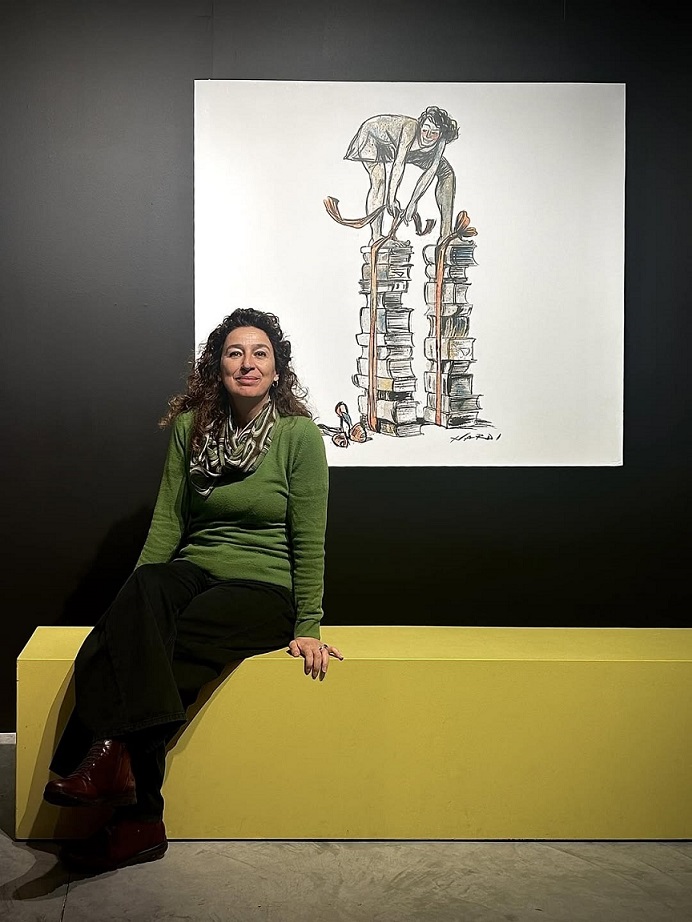
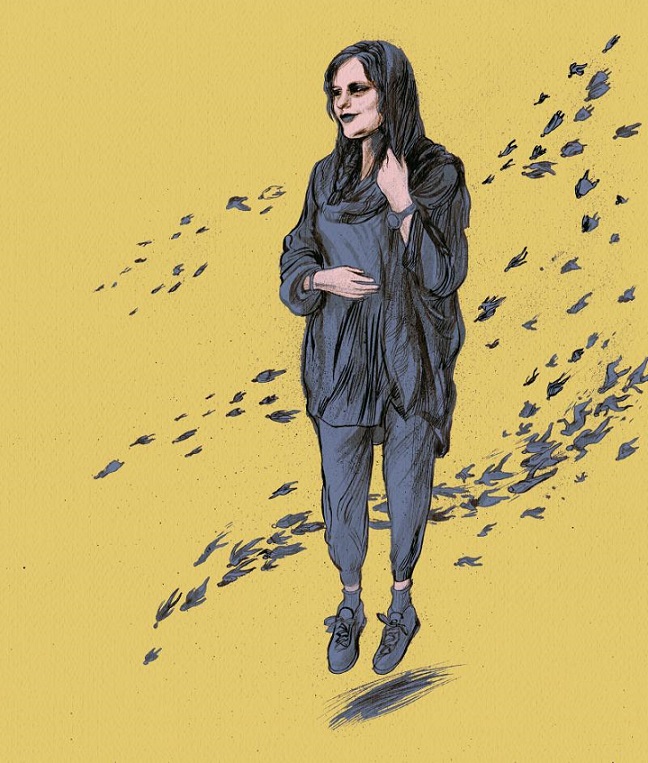
Marilena Nardi discusses her independent approach to caricature and the importance of addressing global issues, such as “Women, Life, Freedom” movement in Iran. As an artist, she goes beyond national boundaries to tackle global problems, using her art to raise questions and challenge significant issues.
Rola Zamzameh*
Marilena Nardi remains unwavering in her artistic integrity, refusing to seek visibility at any cost or cater to audience approval. She avoids moulding her work to fit the preferences of social media users or festival judges, instead staying ahead of trends and expectations.
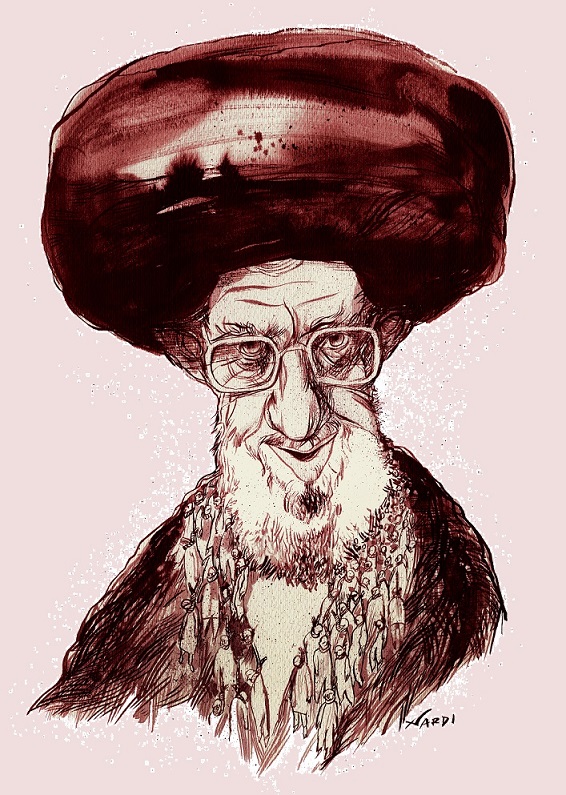
In 2023, when the Iranian government-affiliated House of Caricature invited prominent caricaturists, including Ares from Cuba, to participate in political rallies, Nardi openly criticized their decision to attend, despite her long-standing friendships with them, questioning their motives for accepting such invitations. This principled stance, combined with the originality and creativity of her work, solidifies her reputation as one of the most exceptional and authentic caricaturists of our time.
Your dedication to human rights and democracy is evident in your work. How do you see art as a tool for fostering freedom and democratic values?
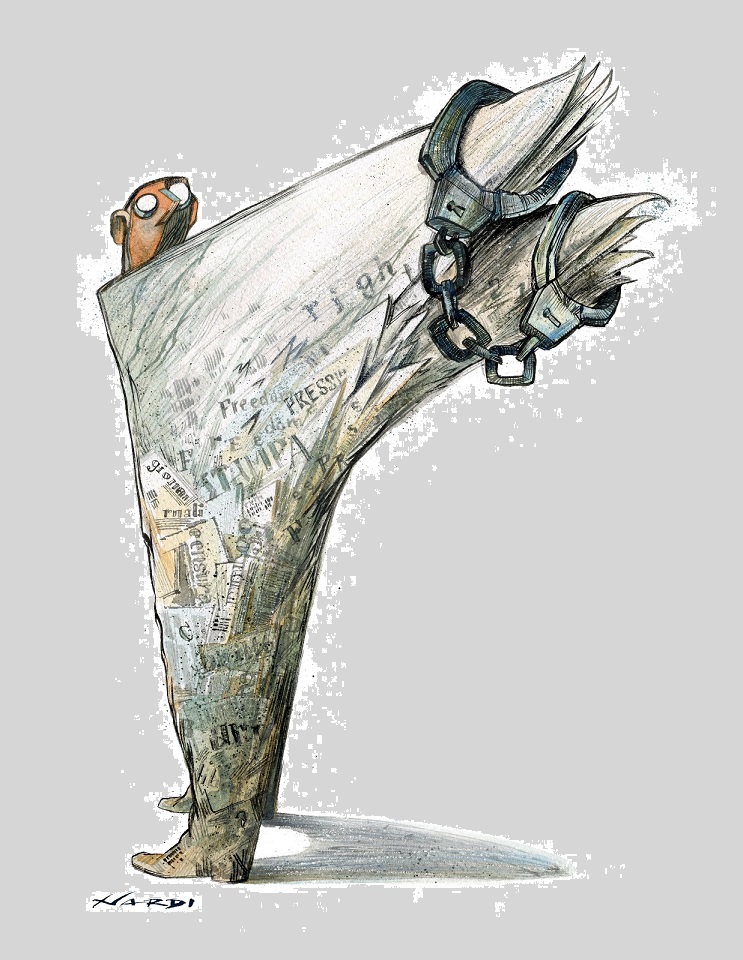
I believe in democratic values; freedom of expression is one of the most important values that we must all defend or help achieve. Each with their own tools and their own language. As far as I’m concerned, graphic language is the one the best, but I’m sure that music, art, literature, poetry, theatre, cinema or every artistic form can be effective even if not very powerful.
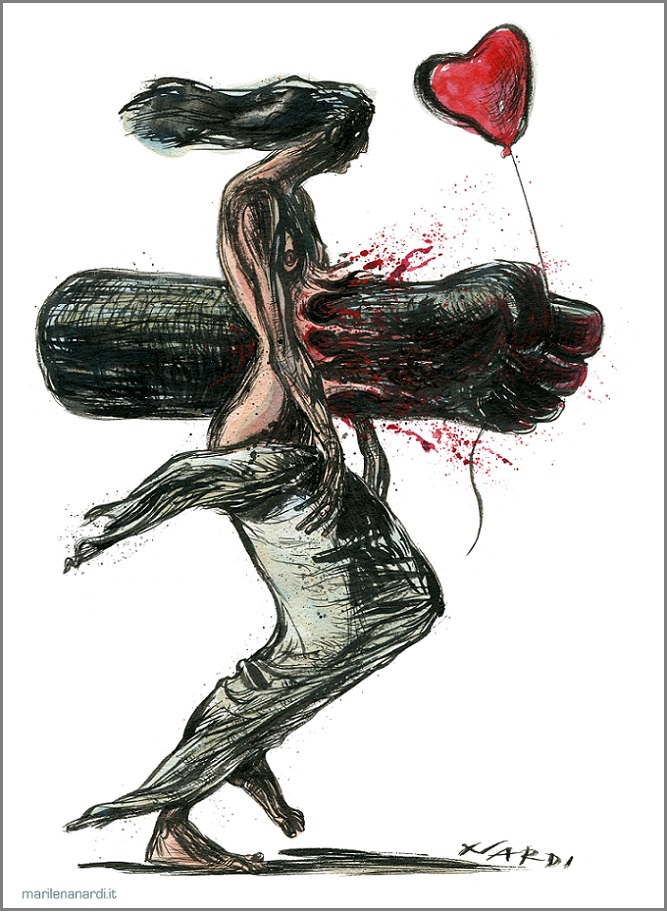 There are images that have become the emblem of some battles. The arts can be civil and peaceful tools for conquering democratic values and fundamental freedoms and rights.
They are not the only tools, but they are among the best.
For me as an Iranian journalist, your attention to the “Woman, Life, Freedom” movement in Iran is highly appreciated. What inspired you to focus on this movement?
I was born in Italy, not a perfect country, but here I had opportunities to study and work that other women in other countries don’t even dare dream of.
As a woman, but more simply as a person, I am outraged by the lack of consideration, respect and freedom that women suffer in Iran or in countries where their condition is even more terrible, such as Afghanistan. Without respect and without freedom there is no life.
This is intolerable. From here I cannot make revolutions, but at least with my drawings, I can express my closeness, my solidarity and my great admiration for the resistance of women in Iran and other countries. Drawing serves to strengthen intentions, to feel united and less alone.
 How does your Italian root influence your art?
I think I “breathed” the beauty of my country long before I was aware of it.
I have no merit in this, but only the luck of having been born here. Certainly, the history of my country has influenced me.
Even the darkest, which I studied in books or collected from the voice of witnesses, such as the twenty years of fascist dictatorship, the war and the struggle of the Resistance.
I am worried about the wave of nationalism that now goes from one continent to another and that, for the interest of a few, is devastating the planet and unleashing wars that annihilate entire generations.
Being a prominent female caricaturist in a field often dominated by men, what challenges have you faced?
When I started, the lack of internet helped hide my gender, as I signed with my family name, and they assumed I was male. Early interactions with colleagues were mixed—some treated me as a mascot, others ignored me, but a few supported me, for which I’m deeply grateful.
 Earning respect in this field took time and perseverance.
However, discrimination still exists; for instance, when I won the Grand Prix at the WPC in 2018, someone called me the “best among female caricaturists,” implying a second-tier status compared to men. I continue learning from true artists, regardless of their gender.
How do you perceive the role of technology in modern caricature? Do you believe it enhances or detracts from the art form?
Tools remain tools; whether they are technological or manual, the value or danger of a tool depends on who uses it and how.
Technology has certainly favored some aspects of the work of a caricaturist. I think of the ease and speed of sharing images and finding information.
But the other side of the coin has been a loss of originality, the risk of fraudulent use of other people’s drawings, the misunderstanding of the meaning of drawings when they are taken out of context. Technology brings pros and cons, and certainly social media have weakened the press and have weakened the critical capacity of readers. This seems to me to be the worst side.
Where do you see the art of caricature heading in the coming years, and what role do you see for yourself in shaping its future?
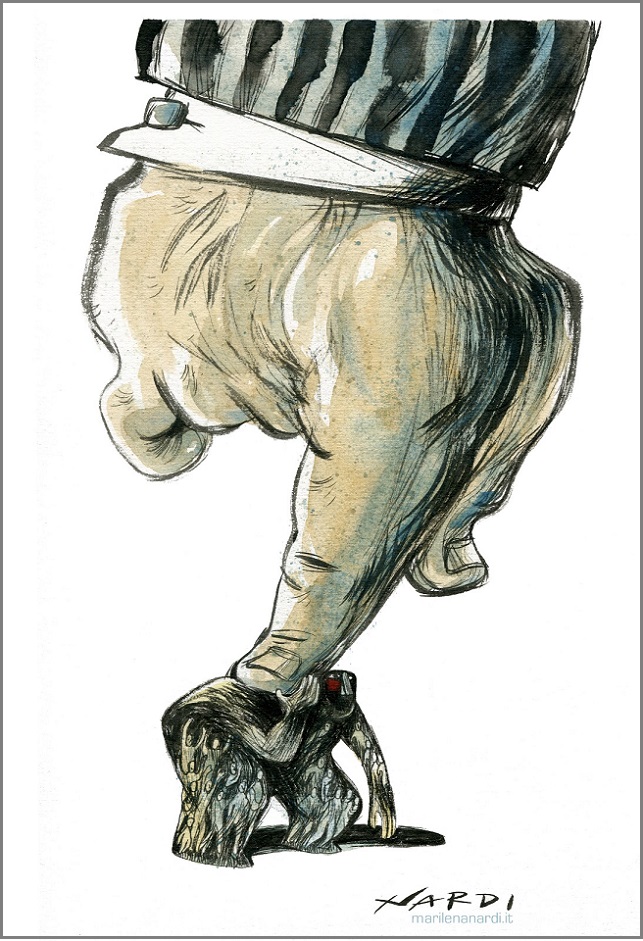 Caricature and editorial drawing are deeply tied to the press, democracy, and freedom of expression, all of which are in decline. While new generations will likely find alternative platforms to share their ideas beyond traditional newspapers, I aim to continue working with free-press outlets and sharing my work via social media. As a teacher, I dream of seeing caricature taught in schools—not as a relic of the past but as a vibrant, necessary art form practiced by young people in classrooms. While I am working toward this, I am unsure if I’ll witness its lasting impact.
What words and experiences would you give to aspiring artists, especially those interested in caricature?
It is difficult to give advice to aspiring artists. Today everything changes very quickly and the art of caricature is suffering greatly. However, I would tell them to follow their passions, their artistic interests, whatever they may be. To draw, to read, to study, to learn a lot from every form of art and not to have prejudices. To trust your instinct and not to be afraid to trace new and personal paths.
How would you like your work to be remembered, and what impact do you hope to have on the world of caricature?
Who knows if my work will be remembered? If it were, I would like it to be remembered as an “honest” job, done with sincerity and consideration for this profession. I hope to stimulate interest in this art and respect for those who practice it.
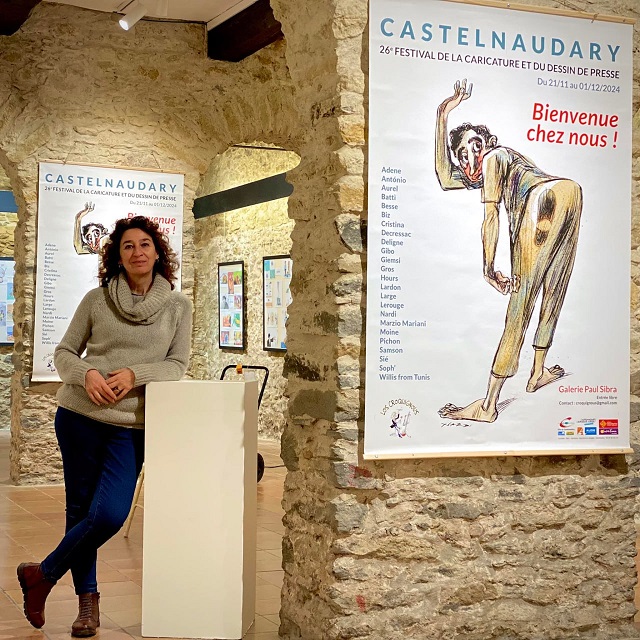 I have received many awards and prizes, both in Italy and abroad. I hope to continue to be part of the “world of caricature”, both in the sense that this profession continues to exist, and in the sense that I hope to continue practicing it. I would like to savour this pleasure for a long time and share this freedom of expression in art, with colleagues and readers.
*Rola Zamzameh: Senior journalist at European Commission and Parliament.
(Images and photos provided by the interviewee and authorized for free publication)
Part 1: Marilena Nardi’s journey through caricature










.jpg)












