
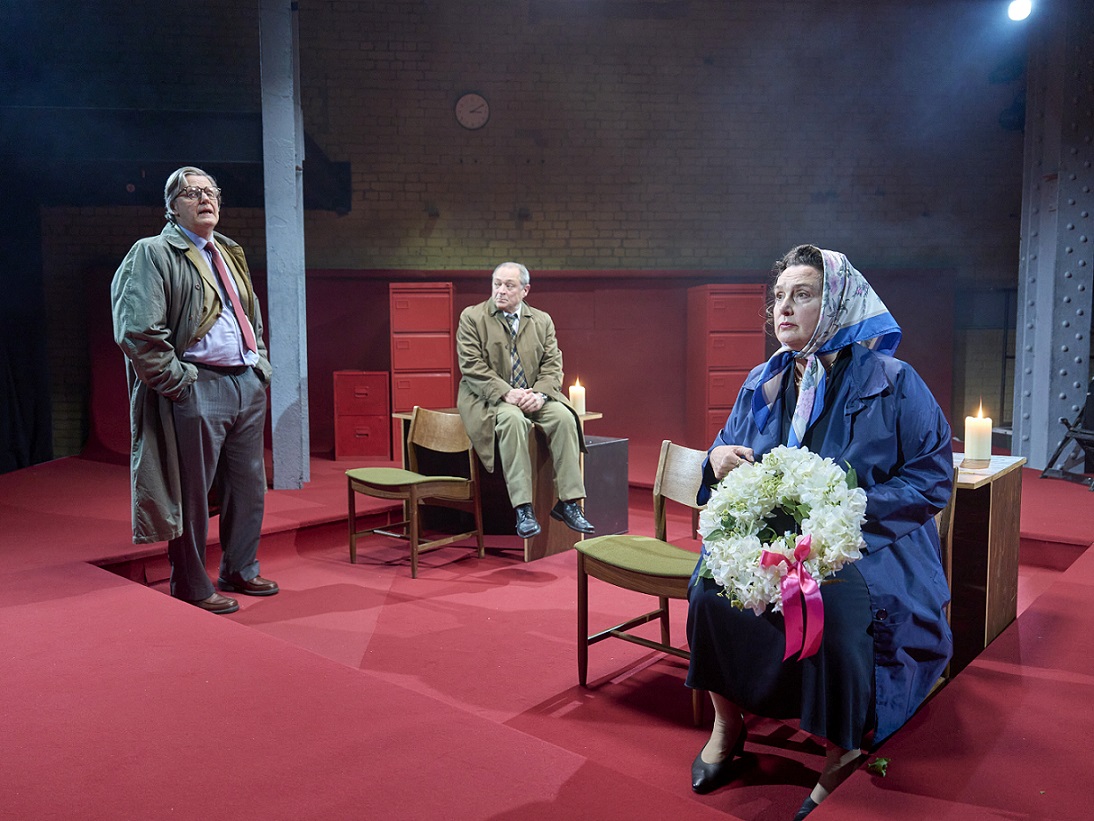
Dramatising on stage a novel by Barbara Pym seems an obvious idea now that it has been so successfully achieved at London’s Arcola theatre.
Sean Sheehan
The production comes to an end on June 20, so it needs to be seen this week to enjoy Pym’s deeply affecting but never sentimental portrayal of the lives of four late middle-aged office workers.
The four workers have little in common apart from their place of employment and their single lives which, in very different ways, see them coming to terms with not having a partner or a close friend. One of them, Edwin, is a widower who finds solace in his local church. Time, he knows, is supposed to go faster as one ages but the ten years since his wife died have, he observes, never passed so slowly. His rueful colleague Norman never married and is reconciled to his solitary life, protecting himself from solitude with an abrasive, sardonic wit. His playful banter and thinly disguised flirtation with the chilly Marcia is not something she can allow herself to reciprocate and she behaves as if devoid of humour. Like the other woman in her work space, Letty, retirement is imminent and then the two of them will face an uncertain future.
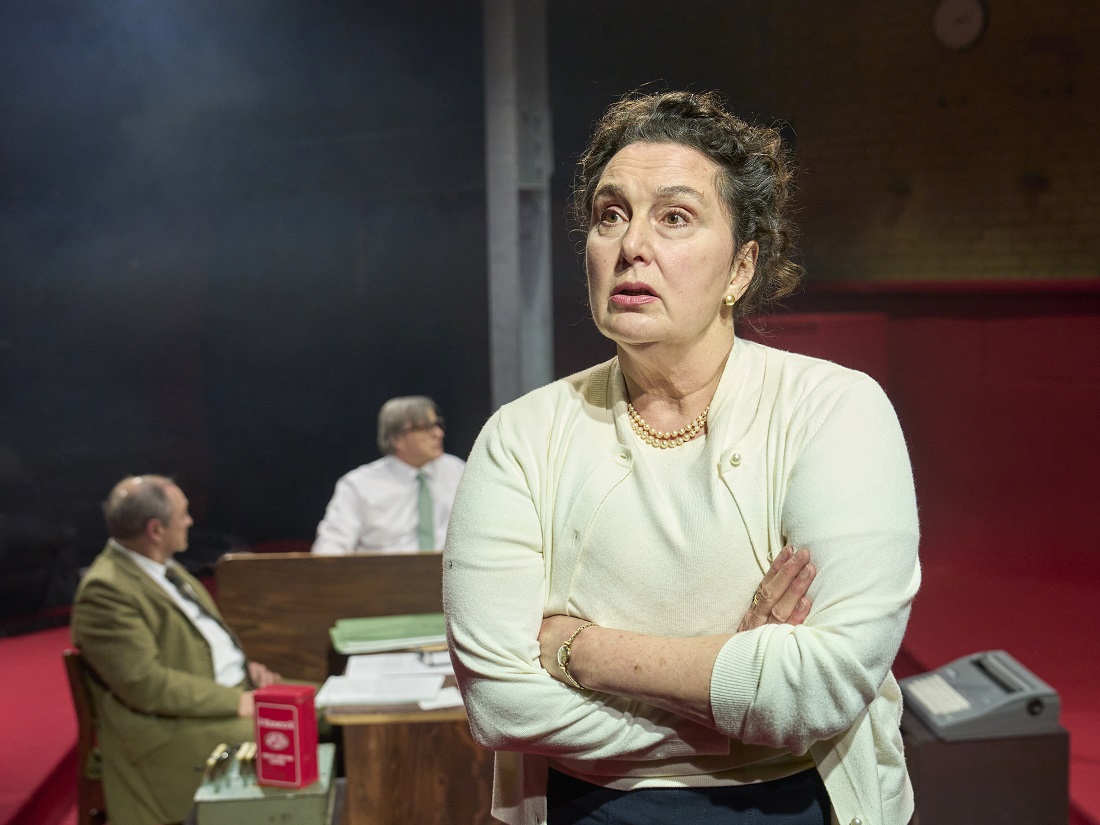
Marcia, we soon learn, has a fantasy life which she secretly treasures but which cannot protect her from private griefs which are affecting her capacity to manage; work has provided a structure of routines for getting by but this is now coming to an end. Of the four of them, Letty is the one who draws us into bonds of sympathy and we share her existential dread while envying her reservoir of fortitude and the ability not to succumb to the desperation of depression. Her facial expressions, from bemused astonishment to sheer angst, communicate what words so often fail to convey.
Pym’s novel, “Quartet in autumn”, is set in a London of half a century ago but her characters’ everyday grumbles are not foreign to contemporary concerns: they are not well paid, their jobs are not essential and grousing is one way of dealing with the meaninglessness of their work and of life in general.
The first half of this dramatization concludes with the retirement of Marcia and Letty; after the interval, Edwin and Norman are still at work as we find out how the two women are coping.
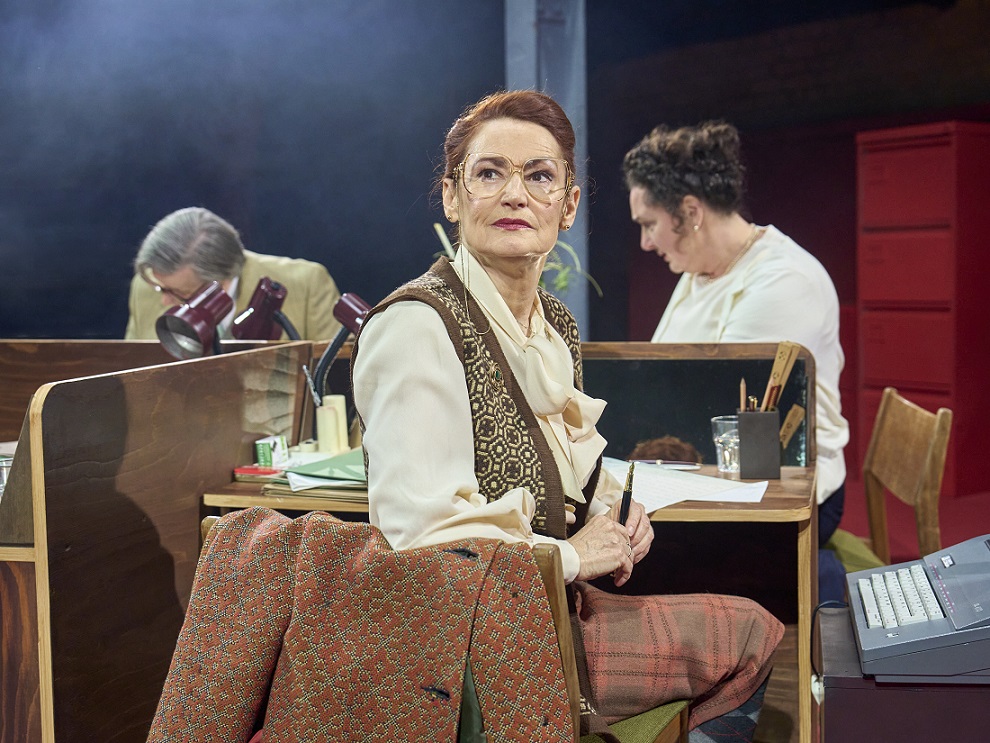
What continues for all four of them is a combination of thwarted hopes, emotional cul-de-sacs, conversations that conceal far more than they reveal and – this is what sustains the drama of the second half – a surprise that, on reflection, comes as no surprise at all.
Set design, costume, directing and the acting mesh wonderfully well in this superb and skilful adaptation of Pym’s novel.
“Quartet in autumn” is on at the Arcola theatre until June 20.
(Images supplied by Arcola theatre)
.










.jpg)












