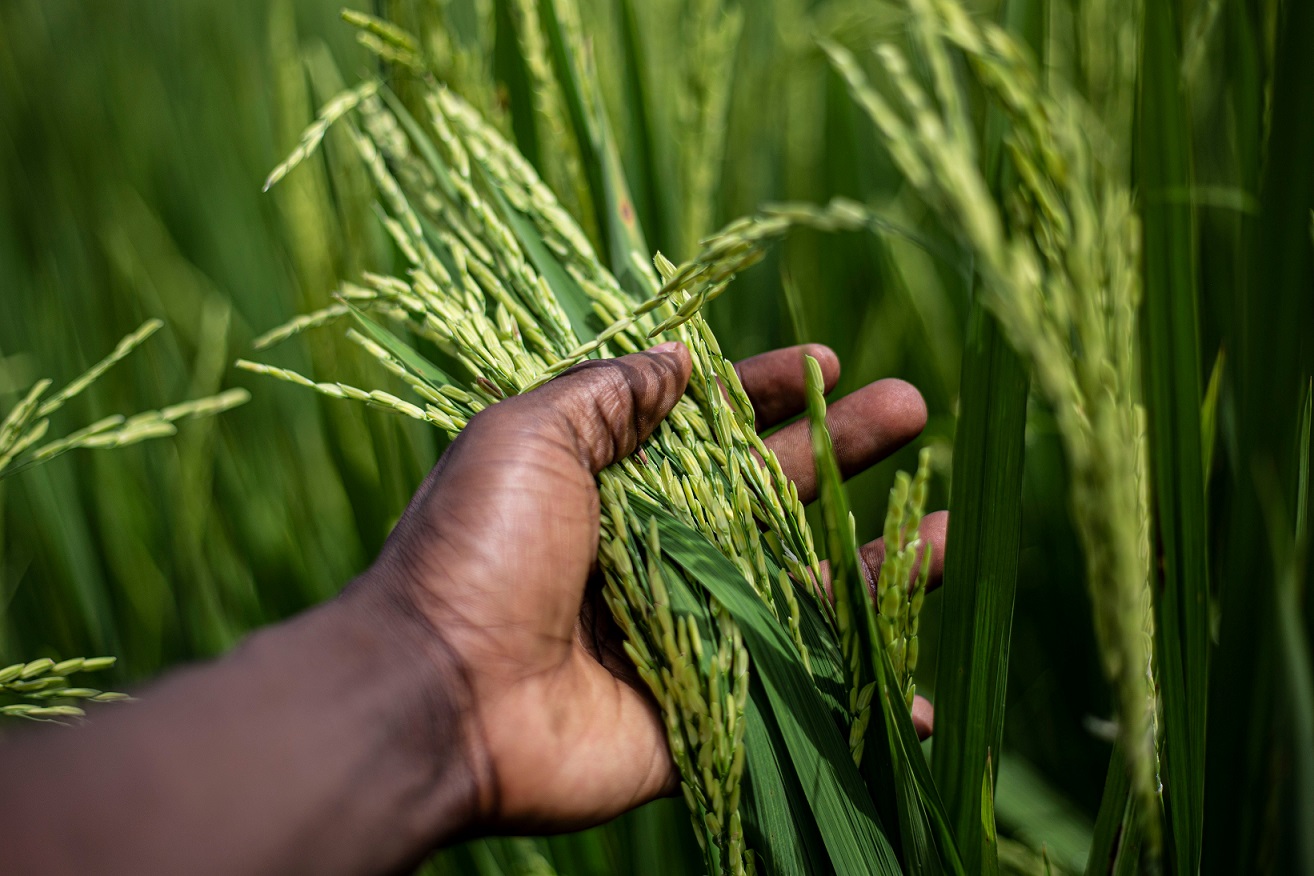
The elimination of tariff measures which protected Dominican rice are putting at risk a trade which generates around 300,000 jobs directly and indirectly, and which sustains thousands of rural families. It has ignited a debate.
 Mariela Pérez
The controversy intensified after President Luis Abinader issued Decree 635-26, which rescinded Decree 693-24, which had established tariff mechanisms to regulate cereal purchases in the context of the Free Trade Agreement between the Dominican Republic, Central America and the United States (CAFTA-DR).
The government’s decision provoked a debate that goes beyond the interests of farmers and raises issues about the country’s capacity to guarantee the supply of a staple food item, the conditions of competition between unequal economies and the scope for action authorities have with regards to international commitments.
The rice sector’s complaints are echoed by declarations from opposition political parties and left-wing organisations. The Government has highlighted advances in domestic production and announced initiatives to improve the crop’s sustainability. The now-withdrawn decree had established tariffs of 20% for certain rice imports within a specific volume and a tariff of up to 99% for anything exceeding this quota. It also allowed for a duty-free quota of 23,300 metric tonnes of white rice from America.
 This arrangement had been adopted in the midst of concerns for the CAFTA-DR’s expected liberalisation, in effect since 2005, and the expiration of the protection period granted for specific agricultural products.
Its withdrawal revived concerns about the capability of local rice cultivators to compete with their US counterparts who, according to local industry representatives, benefit from certain advantages, including subsidies, operational scale, access to financing and production conditions.
The conflict also raises questions about the balance between market openness and protection of a trade deemed to be strategic for national supplies.
Organisations are demanding the implementation of concrete measures to allow the preservation of local production and the incomes of families tied to it.
One of the main demands from the National Federation of Rice Producers (Fenarroz) is access to long-term loans, with low interest rates, grace periods and guarantees suitable for the features of the farming trade.
 Its president, Marcos Rodríguez, explained that farmers need resources to prepare the land, purchase fertiliser, monitor the development of crops and control pests and weeds. Fertilisers represent between 35-40% of the costs of production.
Cultivators also mention the increasing costs of fuel, agrichemicals, energy and labour, as well as the difficulties facing small farmers to access credit with favourable conditions.
They are demanding the reopening of grain exports to Haiti, a market viewed as an opportunity to sell part of the Dominican production. The sector involves around 32,000 workers and generates about 300,000 direct and indirect jobs for farmers, rural workers, transport, factories and merchants.
The social dimension of this conflict is clear: the consequences of a potential reduction in production would not be limited to farms, but could also extend to other economic activities connected with the crop. PL
(Translated by Donna Davison – Email: donna_davison@hotmail.com) – Photos: Pixabay








.jpg)