
Boston’s farms needed workers. What followed was one of the fastest demographic transformations in modern Britain, reshaping not only the county’s economy, but the identity of a town that would later find itself at the centre of Britain’s immigration debate. The Prisma Series: Lincolnshire transformed by migrants.
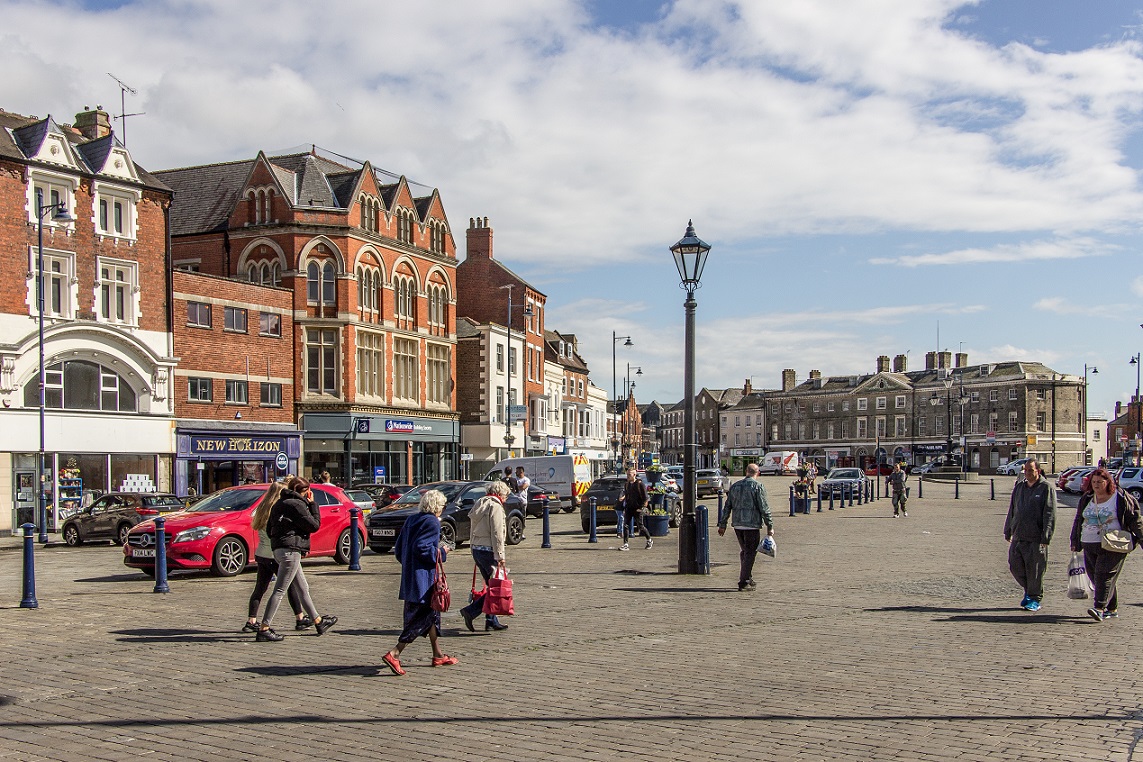
Toby Sardeson
To many people outside the county, Lincolnshire exists largely as a landscape of fields isolated from the rest of the country. Its flat horizons, remote market towns and agricultural economy place it far from the major cities that dominate Britain’s political and cultural life.
Yet over the past two decades, this rural county has become one of the most significant places in Britain’s immigration story. Nowhere illustrates this transformation more clearly than Boston. Once a largely homogeneous market town in south Lincolnshire, Boston has experienced one of the most rapid demographic changes in Britain. Today, around 23.6% of the town’s population was born outside the United Kingdom, one of the highest proportions in the country. In the 2001 Census, by contrast, 98.5% of its population identified as White British.
How did this happen?
To understand why thousands of migrants settled in Lincolnshire, The Prisma spoke with Ben Brindle, researcher at the Migration Observatory, University of Oxford, and Dr Agnieszka Rydzik, Associate Professor in Tourism and Work at the University of Lincoln, whose research focuses on migration and community life in Boston.
For Brindle, the answer begins with the county’s economy.
“There is no job or industry in the UK that is fully reliant on migrant labour,” he explained. “But the biggest exception to that rule would be seasonal agriculture.”
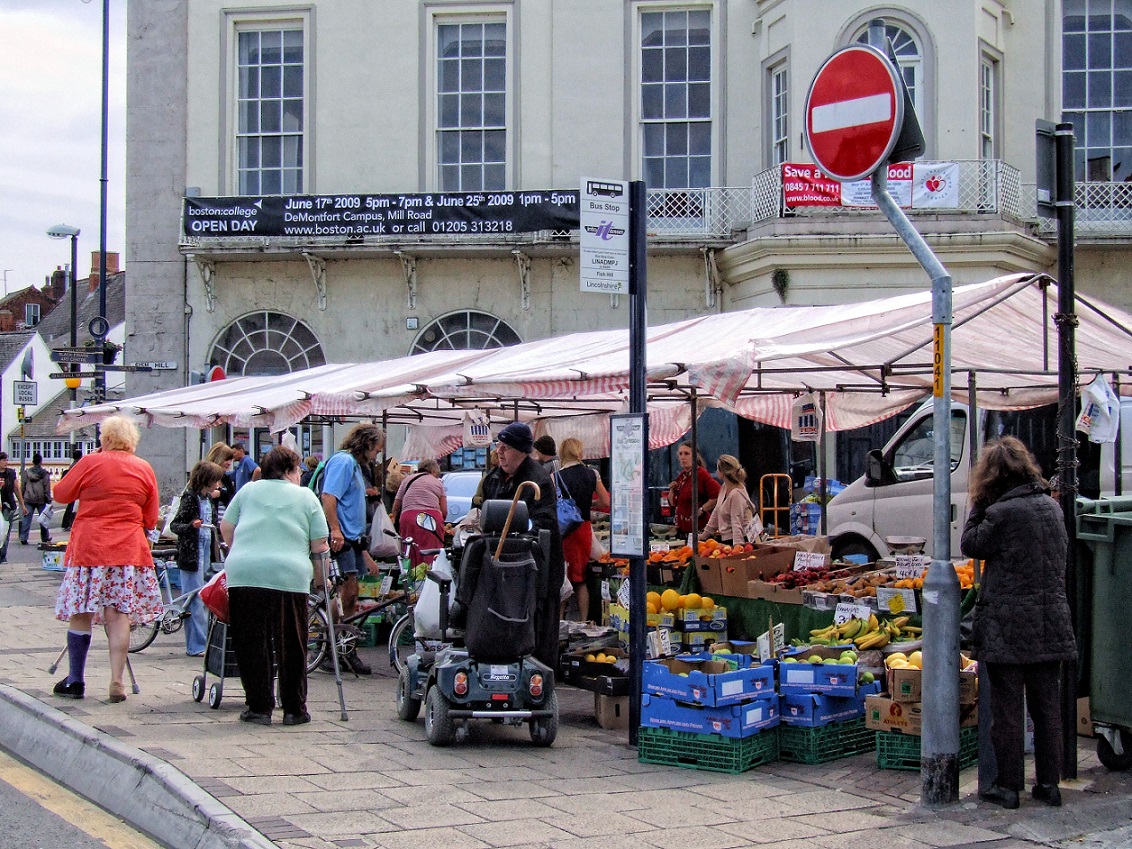
Agriculture has long been central to the local economy. The county’s flat landscape and fertile land support large-scale farming and food production.
Yet the work itself is often physically demanding, seasonal and relatively poorly paid.
According to Brindle, some estimates suggest migrants account for as much as 90% of Britain’s seasonal agricultural workforce.
Without that labour, he argues, production would effectively grind to a halt.
Lincolnshire’s farms and food-processing businesses have long struggled to recruit sufficient local labour, creating a demand that migrant workers helped to fill. That demand did not emerge in isolation. It was shaped by a political decision that would transform the town over the following two decades.
The growth of migrant communities in Boston cannot be separated from Britain’s decision to open its labour market to the countries that joined the European Union in 2004.
While many existing EU member states imposed temporary restrictions on workers from countries such as Poland and Lithuania, Britain, Ireland and Sweden opened their labour markets immediately.
Britain’s relatively strong economy, higher wages and the widespread use of English in Europe made it an attractive destination for many Eastern European workers.
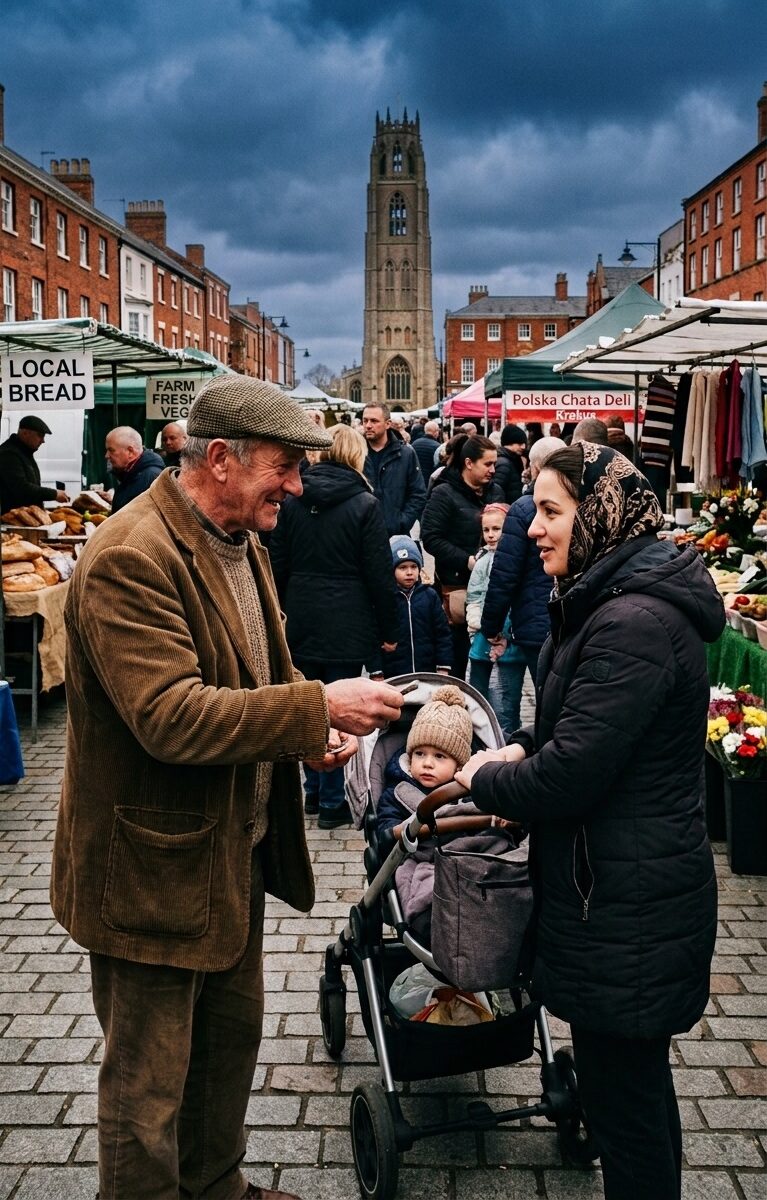
Over time, migrants from Poland, Lithuania and Romania — following its accession to the European Union in 2007— established some of Boston’s largest migrant communities.
Rydzik notes that migration to Boston did not begin entirely with EU enlargement.
Portuguese workers had already arrived before 2004 to help address labour shortages in agriculture and food processing. As a result, many local employers were already accustomed to recruiting overseas workers before the much larger waves of migration that followed the European Union’s 2004 enlargement.
Rather than creating an entirely new pattern of migration, EU enlargement accelerated one that was already beginning to emerge. That pattern of migration would prove remarkably resilient, surviving even the political earthquake that followed.
The importance of migrant labour has continued even after Brexit.
Under Britain’s post-Brexit immigration system, lower-skilled occupations in general no longer qualify for work visas.
Seasonal agricultural work, however, remains one of the few exceptions, with temporary visas still available for overseas workers.
For Brindle, this reflects the reality of the sector’s dependence on migrant labour. While these jobs may be considered relatively low paid by British standards, they often offer significantly higher wages than equivalent work in many migrants’ home countries.
Boston became one of the clearest examples of this process. Rydzik found that many migrants had never intended to settle in Boston at all, often imagining life in larger cities such as London or Manchester before employment opportunities brought them to Lincolnshire.
Seasonal work initially drew people to the area, but many eventually settled permanently.
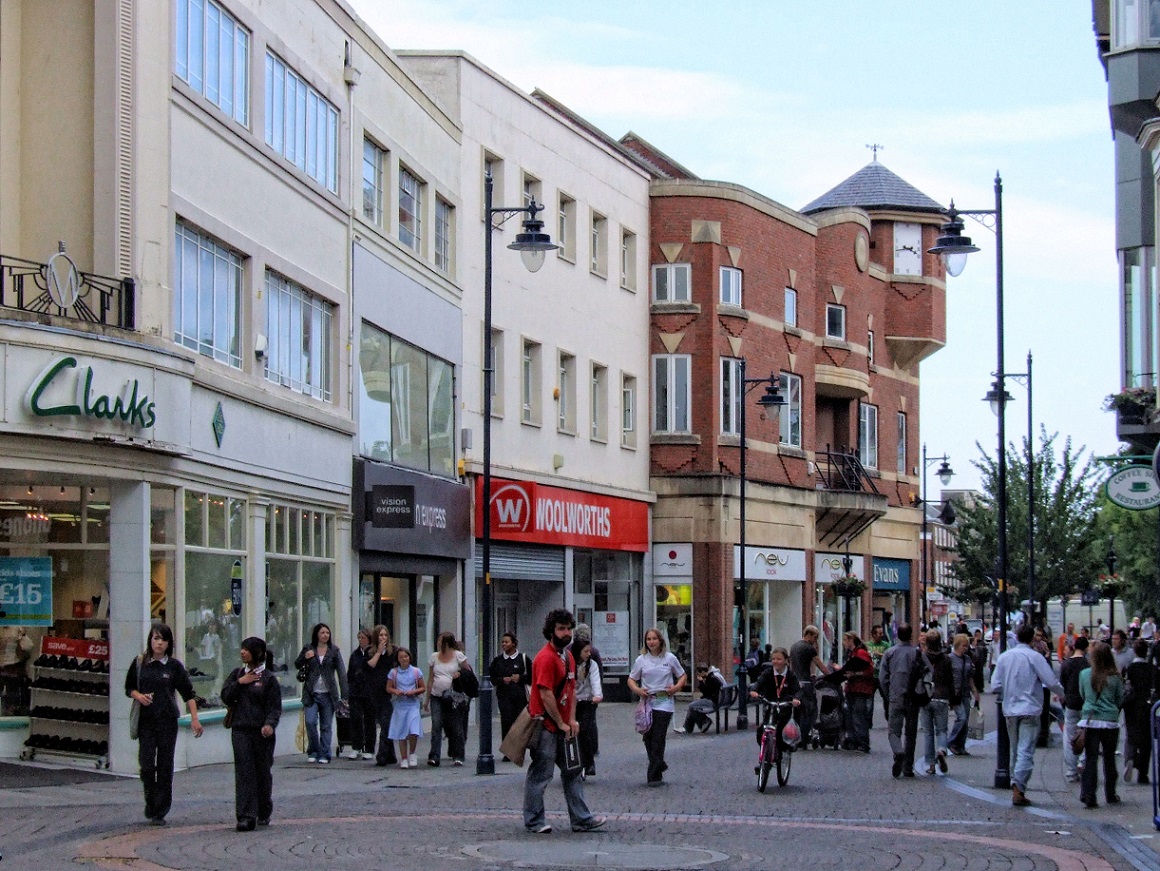
Friends recommended jobs to relatives, children entered local schools and families became established.
Brindle noted that a significant proportion of migrants now arrive not as workers themselves, but as dependants of people who have already settled, demonstrating how temporary labour migration can evolve into permanent communities.
Dr Agnieszka Rydzik argues that these processes gradually transformed the town’s social landscape.
Communities that initially arrived through work became embedded within local life, creating new neighbourhoods, businesses and networks. The speed of this transformation is what makes Boston unusual. Few British towns have experienced such dramatic demographic change within a relatively short period. The economic logic behind that change appears straightforward: employers needed workers, and migrants answered that demand.
But understanding Boston today requires looking beyond the fields and factories—to the questions of identity, belonging and community that have increasingly come to define it.
The town has increasingly become associated with debates about immigration, integration and national identity.
It developed a reputation as one of the strongest supporters of Brexit and has frequently been portrayed in national media as a symbol of public concern about immigration.
Those political and social questions remain deeply connected to the economic story that brought migrants to Lincolnshire in the first place.
Understanding how people live together in modern Boston, and how immigration has shaped both community life and local politics, will be explored in the next chapters of this series.
Through interviews with migrants, organisations supporting migrant communities, and others directly involved, the series will examine how these changes have been experienced by those living them. By bringing together a range of perspectives, it aims to move beyond statistics and political debate to explore the human stories behind Boston’s transformation.
*Next week: Living in parallel: community and tension.
The Prisma Series: Lincolnshire transformed by migrants.
The making of modern and multicultural Boston
Living in parallel: community and tension
The migrants who came to pick daffodils… and stayed
Asylum seekers building lives in rural England










.jpg)












