
Migration runs through family memories and work experiences, reflected in diverse communities and in voices such as Wilfred Emmanuel‑Jones and Ivy Ngeow. Amid resilience and creativity, their narratives reveal how newcomers transform cities, enrich culture and reshape the fabric of contemporary urban life.

Before diving into the stories of my recent radio guests, may I sketch in a little background from what caused my show to find the theme of migration to be a central agenda?
When I first arrived in London in the 1980s, unconsciously following the paths charted by my parents in the 1930s-50s, the concept of ‘That London’ was less ironic and more vestigial Thomas Hardy – occasional portentous references to far-off or expeditionary officialdom, noise, and spectacle. After the Depression and the Blitz and peacetime shortages and goods ‘for export only’ it made sense for many people to be part of the ‘overspill’ and set up in the shires, which in those days had a regional industrial culture and export capability (from my vantage point in a local brass band I remember a trade mission to France where one of our local coppers fell for the schoolmistress and learnt French in 48 hours.)
That was, I think, in 1972 when we were on the cusp of joining the EU. with a version of the mixed feelings being orchestrated now. So perhaps a vague reconstruction of the reconfiguration of the realm by economic migration attends the childlike worries I never had about the ‘foreign.
It was true that black and brown faces were rare on the streets of Poole and Bournemouth, but the maritime and seasonal demographics, expanding studenthood and a teaching hospital and where skills were needed broke down barriers.

I remember my Dad and his colleague, with what we might now perceive as well-intentioned political correctness, disguising themselves as Indian men, who in those days would often sell rugs and small gifts door-to-door, to freak out our Kentish expat neighbours who would casually use the ghastly N-word, Enoch Powell blovating in their truncated world view, over the garden fence.
The migrant experience in Dad’s engineering draughtsmans’ office was the balm for him of exacting endless calculations and hand-drawing of elaborate machine designs for peculiar enclaves. Franck from Hungary with his ‘secretaries’, Tom from Jamaica with his wisdom and cricketing punditry, Jerry from Dublin with a side-hustle cabbie and barmens’ sense of the authentic travellers’ tales among his own. And my Dad himself, who learnt Hindi in Pune in 1943, against Queen’s Regulations to partly dig his platoon out of trouble when they got lost in the jungle on exercise.
Ideas about what lies imperatively or cautiously beyond, of course, crop up in migration stories everywhere, along with the yen to preserve community among the carriers of this imperative. When I joined the NHS in 1996, one of the first people I met was Gareth, a full-time sociologist for the Central and North West London Trust, whose briefing was a fascinating deep dive into how he sought to syntactically — in and amongst the melting pot — keep track of rapidly shifting waves of arrivals. In my time there came Irish, Nigerian and Brazilian cohorts in sizeable numbers, who hit the ground running and brought textiles, street food and neighbourliness, eviscerated by the materialist gung-ho that preceded their arrival.
Above all, as my Mum observed when she visited That London, bringing colour and light and cleaning the place up (as my former client Vasilly from Moldau likes to do with aplomb in all weathers). Not long back I had an instructive year helping survivors of modern slavery whose heroism and skill, along with the infallible will to help each other in overcrowded and lean circumstances, was an object lesson. I cannot for the life of me understand why protocol is not waived to let these guys flourish and spread their wings at last.
 They do have, for now, the best of the backline of the Home Office and the Accounting sills of the Salvation Army, who also fund specialist Psychotherapy, to draw on.
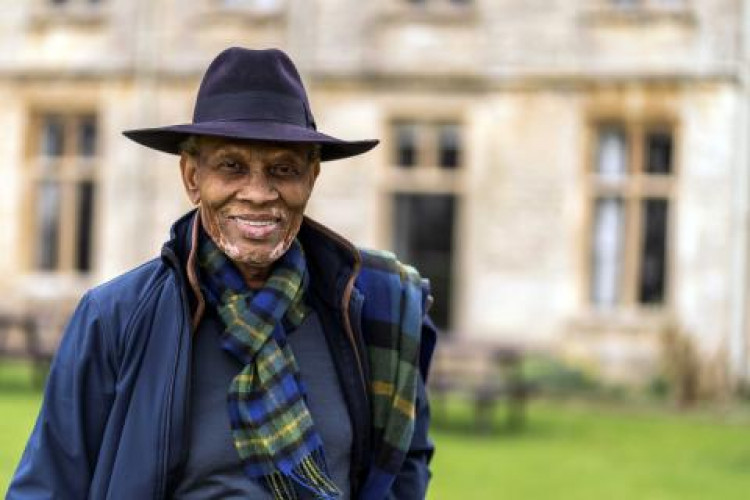
The first of the two recent guests on The Chim I would like to mention also found inspiration in what my Dad, transplanting a phrase from the Army, would call ‘mucking in’ (I think the equestrian late Duke of Edinburgh misremembered this unfortunately when he asked a housing association tenant ‘How often do you muck out?’). The phrase reflects urban grit and graft from which he was perhaps mournfully estranged. Anyway, mucking in for Wilfred Emmanuel-Jones has meant at various times opening the gate at BBC Pebble Mill for freezing security guards brewing up in their wooden hut, cleaning inside the building by stealth, opening a farm a bit further west from where I grew up and tilling it almost single-handedly, and way before that finding peace and the kernel of an idea on an allotment in racially- inharmonious Small Heath in Birmingham (that Powell factor again).
Wilfred Emmanuel-Jones, a son of the Windrush generation, now oversees an organic butchers’ chain which has transformed the whole experience of food shopping into a symbolic and classy act of welcome which seems very seasonally apt, but also an experience for all seasons.
It also seems to qualify the huge concerns about gentrification as ethnic cleansing by indicating exactly where the beef is in quality assurance.
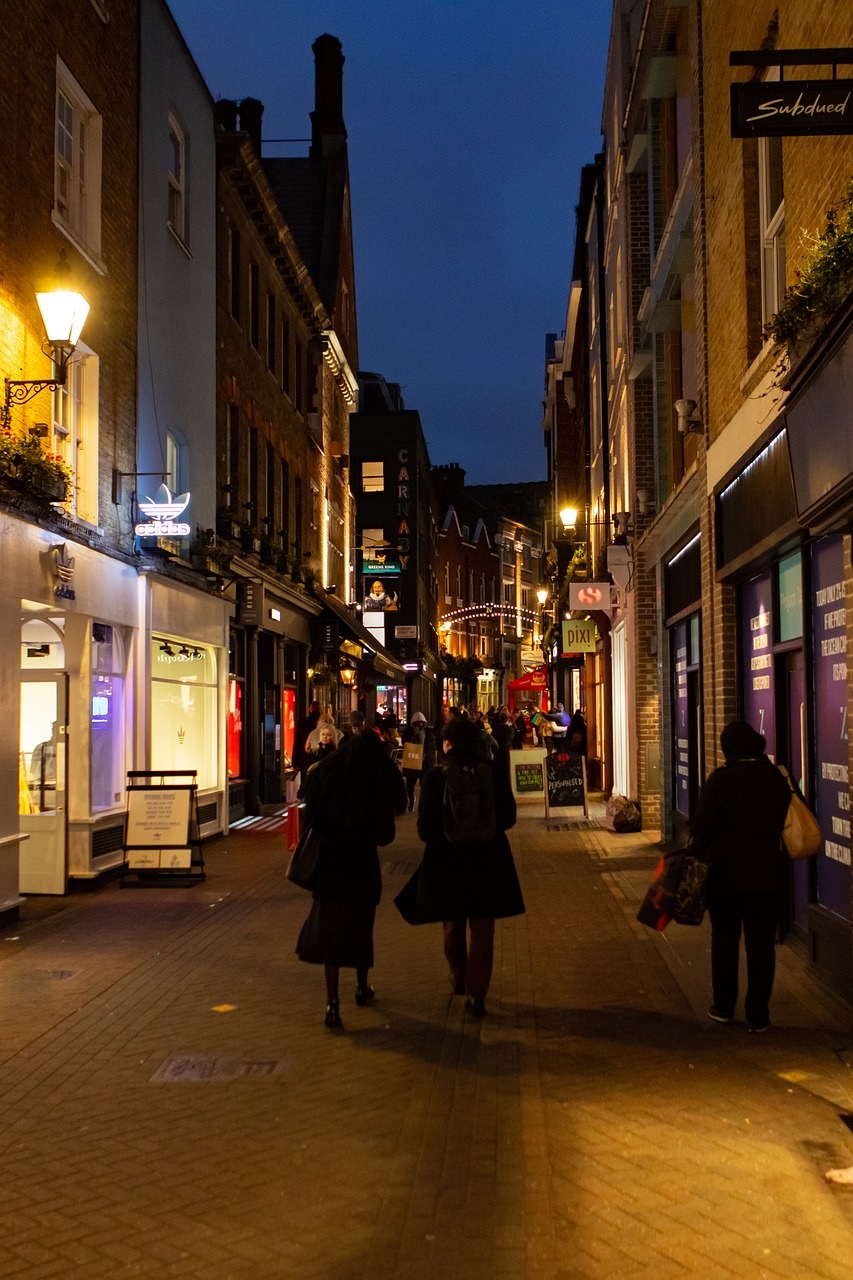 This homing in on what counts and a finely-tuned reading of the room (where the room is the pre-tuned, apparently random urban mix) is also central to the work of Ivy Ngeow, a Malaysian Interior Decorator and widely-read Novelist who lives in the Wimbledon area. Ivy, like Wilfred, has the knack I think of seeing the archetypal and elemental in personal experience.
While in Wilfred’s world view you are closer than you think to a good recipe and your own potential when inhaling its putter on the stove or the sensorium in his shops, Ivy shows in a paragraph how volatile the still life of quiet corners of integration and success can be, so how hard-won. Her characters find themselves , having arrived from the Asias, taking deft care of unfolding complexities in Key West, the edge of Chicago, chi chi Paris and of course the nuances of That London behind the drapes and the well-kept window boxes.
It’s important and instructive that many of her leading characters are women, but she has an ear for the multi-dimensional knuckling under of the modern arriviste geezer too. The pace of her work -of the worlds she depicts in her latest book, “In safe hands” for example, ostensibly about home care and small building works-is extraordinary, like so many Thrillers it has more literary skill aboard than disports itself explicitly because of the imperatives afoot. She cites Dickens a primer for this, and evidence that we build the informed, inevitable embrace of Migration by tuning in to how it attunes and enhances, and how, the flavours, colours and proper expression of the riches we have.
I think you’re going to enjoy these conversations as much as I have (my Thanks to my friend and colleague Pamela Mounter for interviewing Wilfred.
Pamela incidentally danced in Fela Kuti’s slightly chaotic club in Lagos in her early twenties and attributes the indefatigable spring in her step to those days) You’ll find the aforementioned interviews in the second hour of these recordings, prior to which you’ll find some jazz, some soul, some folk and a sort of adventure serial in a much smaller league than Ivy’s.
 In The Chim programmes you can find the full interviews with Wilfred Emmanuel‑Jones and Ivy Ngeow, where their stories of resilience, creativity and integration are explored in greater depth. They can be listened to through these Mixcloud links:
Ivy Ngeow: keep it under your hat – Part 1
Ivy Ngeow: keep it under your hat – Part 2
Wilfred Emmanuel Jones, the black farmer – Part 1
Wilfred Emmanuel Jones, the black farmer – Part 2
*Andy Bungay: Host, Riverside Radio. Shows live Saturday at 11 pm and Sundays 9 pm. (plus 8 pm Mondays through to January). Member of the Independent Media Association (IMA).
(Photos Andy Bungay y Pixabay)
 Special Edition on Migration
The diaspora beyond fear and misinformation
Life at the U.S-Mexico border under Trump administration
I came to the UK for a better future; now I’m stuck in the visa trap
“I wasn’t taught about colonialism in school, so I taught myself”
“Borders for me are a geography of pain”: A Kurdish journalist’s path to Sheffield
How local communities are rejecting media panic over immigration
Diaspora in London: stories of journeys, resilience and creativity
Hundreds march for unity in Falkirk
The Yemeni journey in Sheffield: struggle, solidarity and renewal
Violence against women, a weapon for racist propaganda
Seven activist documentaries available for free
Influence of the media on perceptions of migrants
From surviving the war to facing racism and xenophobia
When multiculturalism becomes a political weapon










.jpg)












