
Three years after arriving in the city, Aso Mohammadi reflects on his life in Kurdistan, making a home in the UK and his experiences of borders.
After the far-right riots against immigrants last summer in some British cities, many questions occupied my mind. One of them was: What am I doing in Sheffield? I asked myself this question many times.
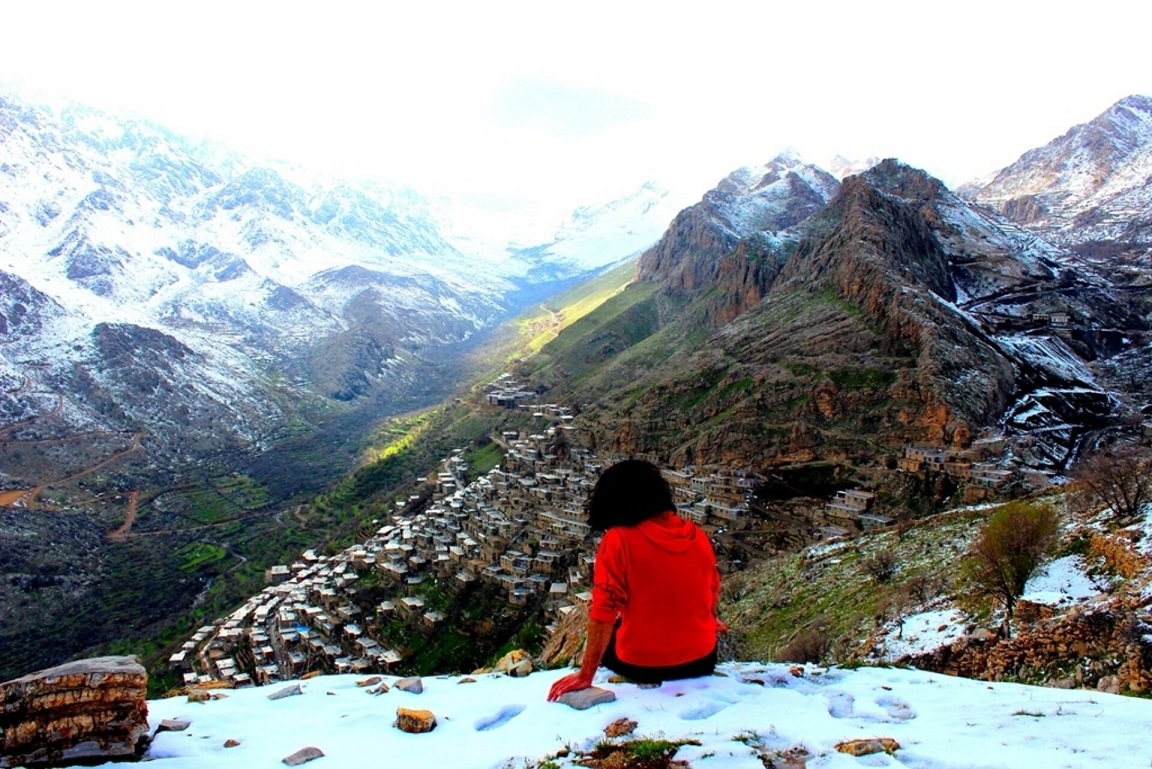
My whole life I’ve been involved in the issue of borders. I was born and raised in the ancient city of Hawraman Takht in east Kurdistan, on the invisible line between Iran and Iraq, which in political literature is called the ‘zero line’. When I was growing up, I couldn’t understand the atmosphere. There were militia cars all day, all the time around our village. When I was about 12, I asked my mum what they are doing here, these soldiers every day. I asked when the war was stopping. Mum said, ‘No, there is no war.’ I said, ‘These are guns, Mum. Guns are for killing.’
My mother never continued the conversation. It was as if there was a deep sadness behind it. Her experience of living through the Iran-Iraq war in the 1980s, and the chemical bombing of Kurdistan and Hawraman, had turned her into a quiet woman. So it remained an unanswered question. Growing up, you never went a day without seeing these militias, these guns, these trucks full of weapons. War is born on the border.
Years later, after studying contemporary history and being admitted to university in the field of journalism, I found out what happened for us, for our life. Kurdish people have been divided between four countries by international superpowers and colonial borders. Learning that we have been historically oppressed, tortured, persecuted, imprisoned, massacred and deprived of our basic human rights was deeply painful and shocking for me.
But where is Kurdistan? At nearly 50 million – this number is estimated and based only on unofficial statistics – Kurds are arguably the largest population group that does not have any form of political power.
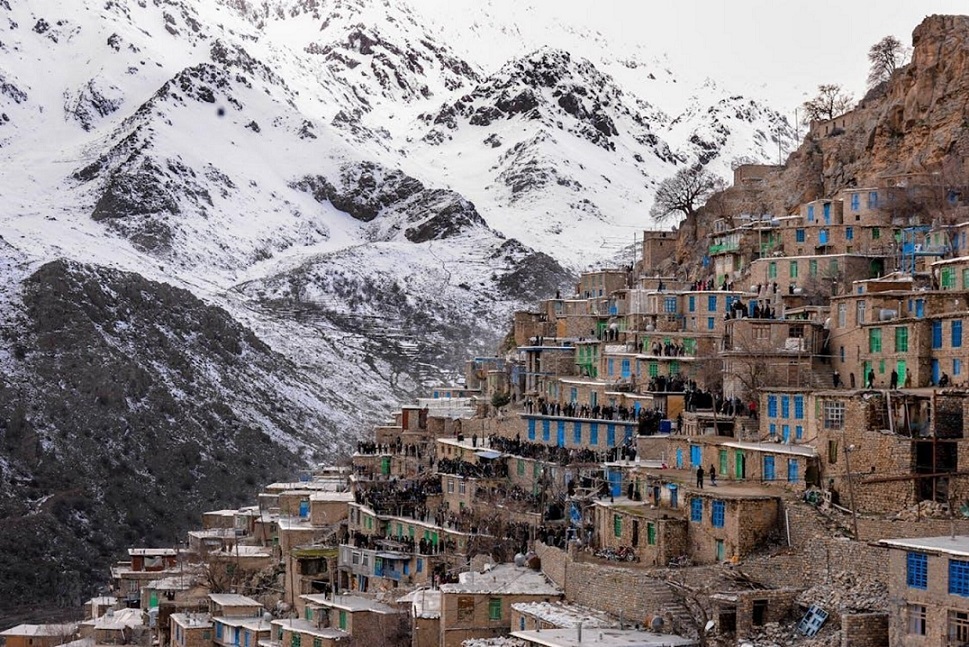
We have been divided between Iran, Iraq, Turkey and Syria since the First World War, but our persecution has been going on for more than 100 years.
Can you imagine a militarised border between Sheffield and Rotherham? Can you imagine not being able to see your siblings, relatives and loved ones who live just a few metres away on the other side of the border?
There is a Kurdish village here and a Kurdish village there – this side is Iran, that side is Iraq. If you pass the border without permission of the militia, they have the right to shoot and kill you, while you are going to see your family. Our people just want a peaceful life, consistent with respect, dignity and human rights, not to live as a forbidden other, under constant observation, discrimination, authority, domination and oppression. This issue is not only related to just one country. When they – the governments of Iran, Turkey, Iraq, Syria – talk about “territorial integrity,” it’s a bad joke for me and people like me.
Borders for me are a geography of pain and a territory of suffering. The colonial borders that powerful nations have drawn for the world tear apart our people, our lands, our languages, our culture and our history. This political chaos is caused by generations of Kurdish people facing forced migration in every part of Kurdistan, historically and still to this day. I am only the most recent generation forced to leave. It is completely baseless. Without paying any attention to who lives under these miserable lines, they took the world map and crossed us out.
There is a lot of tragedy in Kurdish history. For example, the Anfal genocide – more than 180,000 Kurdish people were killed because we live on the border. We have an expression: ‘When you sacrifice an animal, the meat is free.’ Kurdish people are considered to be free meat. They are not Persian, they are not Turks, they are not Arabs – so central governments don’t care.
 After I finished university I was writing about social problems, political problems in Iran, especially in Kurdistan.
Almost every week the Iranian government kills a Kurdish worker called a kolbar, a person who transfers goods from Iraq to Iran by crossing borders. So I was writing that Kurdish people were being killed by Iranian border forces. After ten years Iranian security forces called me in and told me, ‘You have no right to write about this issue. This is not your business.’ For a while I stopped writing and volunteered with a charity, but then I continued. I felt a duty. The last time I was arrested, I was in Tehran. I was beaten and tortured. I got death threats again and I found out they were looking for an opportunity to kill me, a situation where they make you disappear.
After I decided to leave, I saw lots of Kurdish people from different parts of Kurdistan. I saw lots of these people were displaced around European borders and our stories were the same. In every country, you can see Kurdish people because we lived with four borders in the middle of our homes. As a result of this historical disaster, generation by generation, we are targeted with forced migration.
When we are forced to migrate for our own safety from totalitarianism, tyranny and death sentences, another story begins. Politicians and governments demonise, dehumanise and delegitimise us by attaching labels – stranger, alien, foreigner, asylum seeker, refugee, illegal migrant – in order to deny us our human rights. We are tortured in our countries of origin, because they deny us our social, cultural and political rights, and again in our destination countries, where our basic rights are denied because we are ‘others’. Some people will say, why didn’t you stay and fight and resist?
I ask them, have you read the stories of the terrible Syrian prison Saydnaya, after the recent fall of the Bashar al-Assad regime? I ask them, could you fight a monster with your bare hands?
I think the most horrible situation that a refugee faces is when they arrive in their destination and think, ‘Ok, I’m in a safe place now and everything is going to work.’ We don’t know the real problem is in the destination society, when politicians build walls with anti-immigration policy to delegitimise you, to dehumanise you and distance you from their people. Fleeing my home, I couldn’t feel or touch the physical borders in, for example, the mountains of Italy. But I can feel border policy here in the UK, and in every country you live in as a refugee. It’s designed to tell you not to feel comfortable here, that you are always an other: ‘You need to remember – all day, always – you are a stranger. You crossed the border. This is your punishment. You don’t deserve a normal life.’
At the same time, when you are born and raised in Kurdistan you are involved in politics by default. Whether you like it or not, you’re automatically an activist. Half of Kurdish families have someone who has been killed, imprisoned or is fighting in exile in the struggle against central governments. All your actions are political actions – even if you’re just crossing the border to see your family.
So why Sheffield? No refugee knows where they will end up and the UK was just an option for me. I have family and friends here. The safest place isn’t just somewhere you are free from persecution – it’s somewhere you can rise again.
That’s why I chose Sheffield. After three years, and many ups and downs, I now have a place in the city I can call home. For that I offer my appreciation not to the government – who tortured me with the waking nightmare of anti-migrant policy, after I escaped one dictatorship and was threatened with being flown back out to another one – but the people here in Sheffield, who have warmly welcomed me with new connections and the possibility of a new life.
*Article originally published in Now Then.
 Special Edition on Migration
The diaspora beyond fear and misinformation
Life at the U.S-Mexico border under Trump administration
I came to the UK for a better future; now I’m stuck in the visa trap
“I wasn’t taught about colonialism in school, so I taught myself”
“Borders for me are a geography of pain”: A Kurdish journalist’s path to Sheffield
How local communities are rejecting media panic over immigration
Diaspora in London: stories of journeys, resilience and creativity
Hundreds march for unity in Falkirk
The Yemeni journey in Sheffield: struggle, solidarity and renewal
Violence against women, a weapon for racist propaganda
Seven activist documentaries available for free
Influence of the media on perceptions of migrants
From surviving the war to facing racism and xenophobia
When multiculturalism becomes a political weapon










.jpg)












