
When political and media discourse dehumanises the immigrant or obscures their reality, an alternative perspective is urgently needed. This Special Edition on Migration brings together independent media that address the diaspora with rigour and context. A journalistic endeavour free from stereotypes, necessary in the face of growing anti-immigrant sentiment.

 Monica del Pilar Uribe Marin
In the growing and universal anti-immigrant sentiment that inhabits most societies today, post-truth has been a decisive instrument. Politicians, nationalists, fascists, social media, and traditional media outlets have sown hatred and fear in host societies.
It is not a universal reality, but the tacit or explicit alliance between politicians (populists, right-wing and far-right) and the press has allowed people to blur, ignore or forget the history of their own reality and to blame the diaspora for their shortages, violence and everyday difficulties.
Efforts are made to convince nationals that social, economic and cultural problems are the result of immigration. The language they typically use is intimidating and negatively descriptive, giving the impression that immigrants come to take what they consider rightfully theirs and to destroy their cultural roots.
They are told that the lack of housing, deficiencies and rising costs in health and education services, a labour market that prioritises foreigners, and an identity, culture and set of values under threat, are all due to the diaspora, regardless of their background and motives. To this, they add another more intimidating factor: insecurity. It is suggested that every foreigner carries their own dose of violence and is ready to reproduce it in the host country. Perhaps for this reason, anti-immigrant sentiment easily turns into anti-terrorist sentiment.
Consequently, intimidated populations obliterate their own reality, often long-standing: a poor healthcare system, limited access to quality education, high street crime, large-scale drug abuse, chronic or rising unemployment, low wages, rising prices, and so on.

Media-driven fear
This manufactured post-truth is amplified on social media (where slanders, lies and grim forecasts multiply exponentially) and converted into quasi-truth or truth by mainstream media, as they deepen it and make the anti-immigrant attitude an almost irreversible phenomenon.
In the reporting process on migration, journalists employ condemnatory language from the outset. For example, the term “illegal” (instead of “irregular,” when appropriate) is used knowingly, as the word “illegal” conveys the impression that they are criminals. They also speak of an “invasion,” of “hordes” of immigrants, of streets covered with tents inhabited by asylum seekers, and of a supposed rise in insecurity.
This is compounded by media coverage in which the informational purpose is displaced by political and ideological aims. Racism, discrimination, intolerance, and the deconstruction of the realities of refugees, asylum seekers, and diasporic communities proliferate subliminally in content and headlines. Either they support a particular agenda or, on a highly personal level, they are anti-immigrant.
The facts presented to the public, for the most part, lack context and investigation. There is no mention of the reasons that dislocate entire communities from their countries (poverty, loss of homes and land due to multinational corporations, internal conflicts, invasions, gender-based violence, among others). Nor is it noted that host societies are, inevitably, the result of numerous migrations.
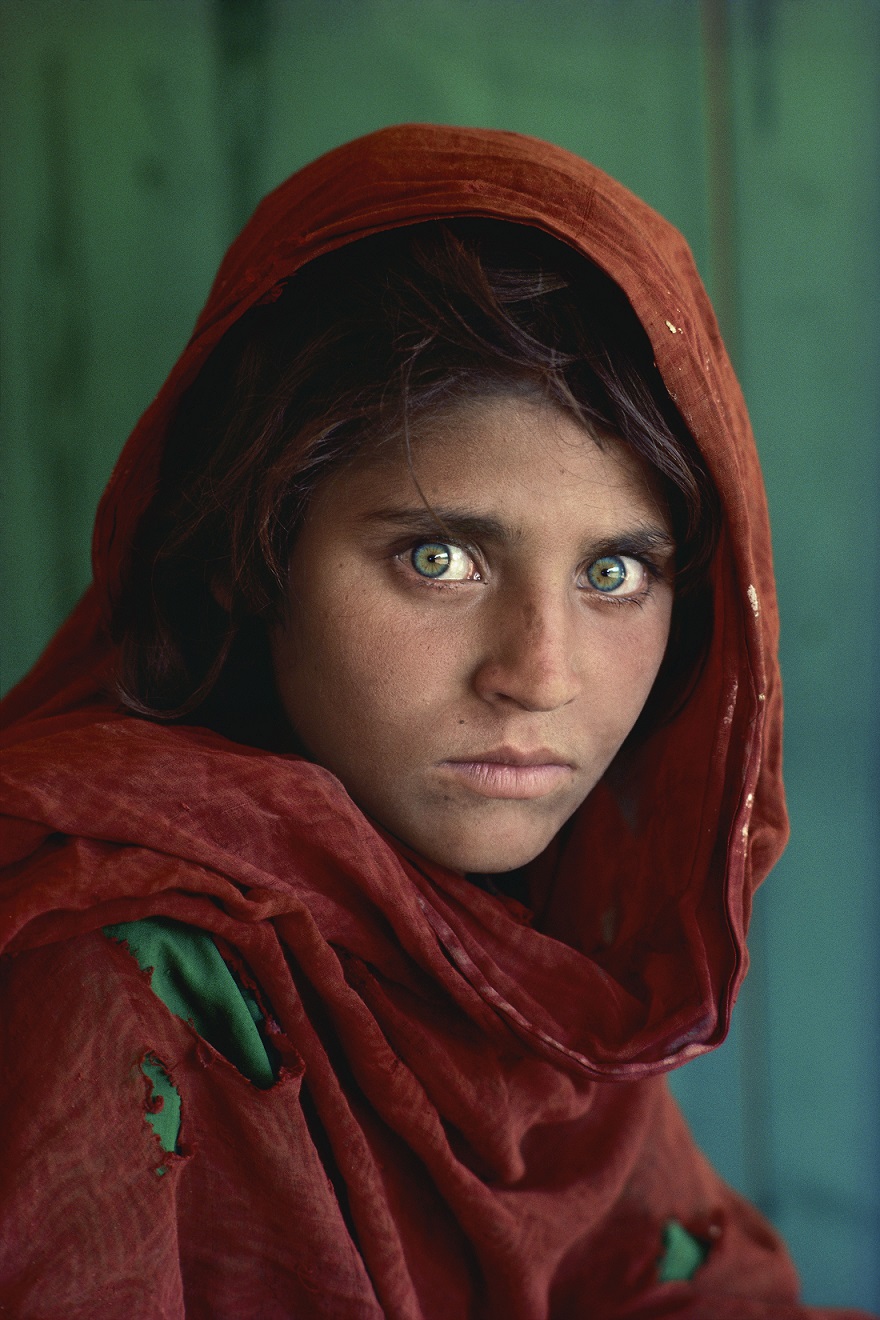
Even less is mentioned that many of their own nationals live, study, and work in other countries without being stigmatised or made victims of extreme policies.
Reality vs. information
Post-truth narratives are easy to generate when the number of foreigners is striking: by 2025, the number of international migrants had reached almost 304 million. Of these, 261.5 million migrated for economic, family, educational or other reasons, and 42.5 million are refugees. Added to these figures is another: 67.8 million “internal” migrants, those who, while continuing to live within their own country, leave their places of origin to move to other municipalities and cities, also due to economic reasons, unemployment and internal conflicts, for example.
Such figures “scandalise” residents of host countries, making it easy to place on the political agenda not only rhetoric, but also promises and laws aimed at expelling foreigners or preventing their entry, securing overwhelming approval among nationals, regardless of any injustice or cruelty—whether physical or rhetorical—inflicted upon the diaspora.
One example of this is the United States, which, although it has experienced an increase in anti-immigrant policies at state level since 2020, is under the current administration of President Donald Trump that the crusade against foreigners is in full swing, violating any respect for human rights. Paradoxically, and perhaps precisely because of the brutality of this offensive, a significant proportion (79%) of Americans and multicultural residents consider immigration to be a positive thing.
Something similar is happening in Europe. Anti-immigrant rhetoric and policies have intensified, to the point that right-wing and far-right parties are gaining broad support and growing popularity in several countries. France, Germany and Italy exemplify this trend. And, of course, the United Kingdom has generated major events and headlines through its actions against the diaspora, which began with David Cameron’s rise to power in 2010, but continued under the government of the current Prime Minister, Keir Starmer, in 2024.
 With rare exceptions, within the media landscape, their policies and discourses against immigrants are reproduced with enthusiasm. Few journalists take the trouble to show another side of immigrants’ lives: the reasons for their exile (whether voluntary or forced), the hardships they endure, the attacks of which they are constantly victims, and the hate-filled rhetoric and crimes that have become part of their everyday reality. Still less attention is paid to the contributions immigrants make to societies, or to how these societies have been enriched through multiculturalism. But, unfortunately, in societies where ethnic discrimination is deeply entrenched, it is easy for their inhabitants to reject foreigners — even for this rejection to come from individuals belonging to minorities who are themselves also targeted and attacked.
And this does not change within the media sphere. The hope that independent media might take an interest in reporting on migration fades upon closer inspection. Except when an event makes headlines, it is unusual for alternative or independent media (or both) to devote space to discussing immigrants or to showing the public the simple or complex realities that surround them.
 The Prisma presents this Special Edition on Migration with the aim of showcasing not only articles produced by our own newsroom, but also work from other independent media outlets that practise journalism in which immigrants are given relevance and treated with the necessary journalistic respect. We at The Prisma, specialists in migration and multiculturalism, welcome this kind of journalism as evidence that, across several independent media, there exists an ethical, supportive and responsible approach towards people who, for diverse reasons, have left their countries of origin and who today face one of the most difficult periods of their lives, as they are now more than ever victims of hatred, persecution and attacks.
This edition includes articles from several media outlets that are members of the Independent Media Association (IMA).
In this way, looking ahead to 2026, we offer a warm and supportive embrace to all immigrants, to all cultures, and to all societies that welcome immigrants and that also migrate. It is time to accept that multiculturalism runs through us all.
(Traducido por Rene Phelvin – Email: renephelvin@gmail.com) – Photos: Pixabay
 Special Edition on Migration
The diaspora beyond fear and misinformation
Life at the U.S-Mexico border under Trump administration
I came to the UK for a better future; now I’m stuck in the visa trap
“I wasn’t taught about colonialism in school, so I taught myself”
“Borders for me are a geography of pain”: A Kurdish journalist’s path to Sheffield
How local communities are rejecting media panic over immigration
Diaspora in London: stories of journeys, resilience and creativity
Hundreds march for unity in Falkirk
The Yemeni journey in Sheffield: struggle, solidarity and renewal
Violence against women, a weapon for racist propaganda
Seven activist documentaries available for free
Influence of the media on perceptions of migrants
From surviving the war to facing racism and xenophobia
When multiculturalism becomes a political weapon










.jpg)












