
In a context where human rights in Iran are under increasing pressure—from arbitrary arrests to structural violence against minorities and women—the country’s future hangs in the balance; these issues are brought to light in the second part of our conversation with Mai Sato, the UN Special Rapporteur.
 Rola Zamzameh*
In recent years, Iran has witnessed intensified repression of religious and ethnic minorities, shrinking civic freedoms, and violations of women’s and children’s rights.
From systemic pressures on the Bahá’í community to uneven enforcement of hijab laws and violence against children and adolescents, the human rights landscape in the country is bleak.
Reports and field observations, discussed in a conversation with UN Special Rapporteur Mai Sato, show that repression is not only ongoing but has become more complex through modern surveillance tools and legal restrictions, heightening risks for society and future generations.
Based on the reports on the Bahá’ís’ situation in Iran, how has the nature of repression against the Bahá’í community evolved especially in the context of recent military escalations?
You might be referring to a side event that was organized last year for the UN General Assembly. It was not my report. The report was published by an Australian university, and I was there among the guests to celebrate the launch of the report. So, I’ll answer that in two parts. In my current General Assembly report, presented last month, I talk about the intensification of repression against the Bahá’í’s especially after the military escalations. The Bahá’ís have been used as scapegoats for the linkage with Israeli collaboration, espionage and so forth.
Also, it is not new that there was a broad charge against the Bahá’í’s for many years but it has been intensified recently. Referring to thefindings of the report, which was published one year ago, what that report talks about is the changing nature of persecutions, so that for example in the 80’s, there were more executions but in recent years, we don’t really hear about the Bahá’í’s being sentenced to death or executed but there are other forms in which the Bahá’í community human rights protection is violated.
Based on the report published by the Australian university, what were the key findings?
The report published last year discusses the changing nature of repression against the Bahá’ís.
In the past, it often involved loss of life through the state’s lethal use of violence, but now it has shifted toward more structural and cultural forms of violence—such as limited access to higher education, employment, and so on. The report argued that this marks a change in the nature of repression.
On the second point, which relates more to recent repression, yes, you’re right: the Bahá’ís continue to face arbitrary arrests, violent raids on homes, raids on businesses, property confiscations, and increased surveillance.
I wouldn’t single out the Bahá’í community compared to other religious and ethnic minorities, but there has definitely been an intensification of repression and surveillance.
What are the main factors driving the intensified persecution of the Baluch population and the Sunni minority in both Sistan–Baluchistan and Kurdistan?
The Baluchi community is almost entirely Sunni. In the Kurdish community, more than half are Sunni Muslims, while some are Shia Muslims, and others practice indigenous minority religions, along with a small number of Christians and Jews.
Based on the reports I have received, the arrest and intimidation of religious leaders and worshippers intensified after the 2022 protests. This is linked to the fact that the regions of Kurdistan and Sistan–Baluchistan were major centres of mobilization. However, I should emphasize that it would be too simplistic to attribute this solely to Sunni identity or religious minority status. Both Kurdistan and Sistan–Baluchistan are not “only” Sunni-majority regions but also ethnic minority regions, and it is this intersection of identities that contributes to the heightened persecution of these communities.
I would also add that the widespread poverty—particularly in Baluchistan—significantly limits access to human-rights awareness and legal representation, which in turn exacerbates the human-rights violations taking place there.
 You highlighted serious concerns regarding discrimination against women and the lack of legal protection against domestic violence in Iran in your report. Could you explain more about these elements?
I specifically focused for the Human Rights Council in March, on the gendered dimension of human rights protection in the Islamic Republic of Iran.
I talked about the problems of femicides, where often they are homicides, as well as when women become perpetrators of homicides, and the distinction between other homicides and honour-related killings and etc. I also talked about Iran’s lack of criminalization of domestic violence, including marital rape. In June this year, the government formally withdrew the domestic-violence bill — the bill to protect the dignity and security of women — that has been pending since 2017, and the reason for the withdrawal was that there had been extensive legislative alterations that basically undermined its core.
Now, we could put a positive spin on this and say that we would welcome a new bill that is progressive, including the criminalization of marital rape, but we will have to wait and see what the new bill will be if it is tabled.
How do you assess the current enforcement of Iran’s hijab laws and the increasing reliance on surveillance and business-based enforcement?
There is a slightly more positive development on the hijab law: I believe the Law on Protecting the Family through the Promotion of the Culture of Chasity and Hijab has not been enforced, but wearing a hijab still remains mandatory. The note to Article 638 of the penal code, punishes women who appear in public without the prescribed hijab with imprisonment or a fine.
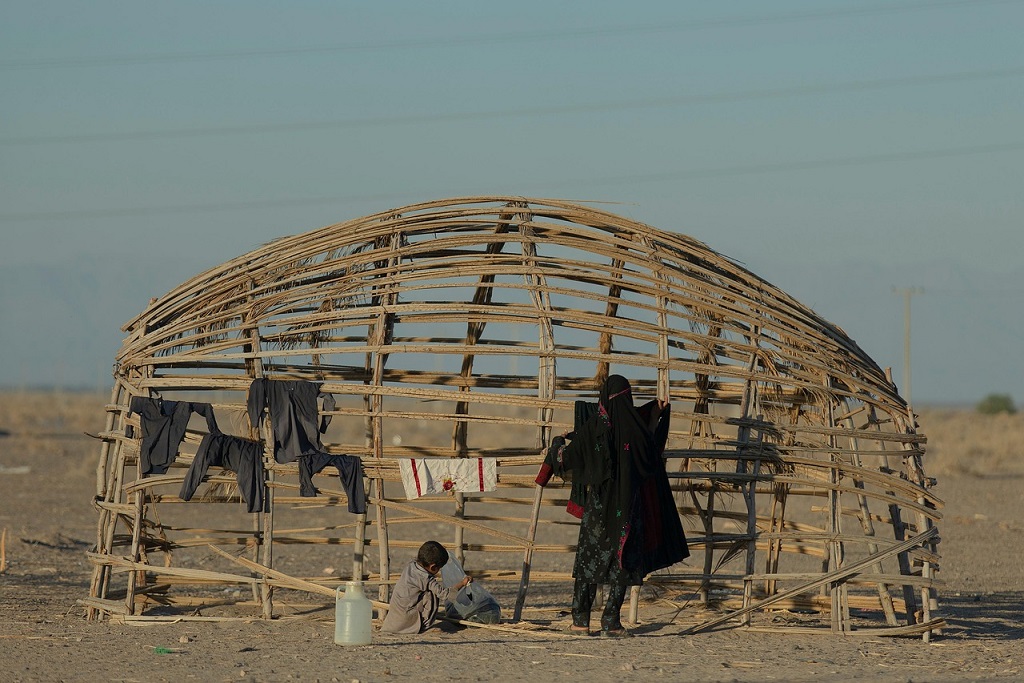 Now, there is a question over the extent to which this is enforced.
I am getting mixed reporting. I don’t think there is much enforcement in, for example, Tehran, but I do receive reports of more enforcement in regional and remote areas. I
also think the nature of enforcement is perhaps changing — with more use of surveillance and more use of monitoring businesses about the implementation of the hijab law.
What are the most pressing human rights risks for children and juvenile offenders in Iran, particularly those facing execution?
To understand the risks facing children and juvenile offenders in Iran, it’s important to understand the factors that often lead to offending in the first place. Child marriage, poverty, etc. represent a significant pathway into the criminal justice system, as highlighted in cases like that of Goli Kouhkan.
Early marriage can trap children—particularly girls—in cycles of abuse, poverty, and limited opportunities that may subsequently lead to involvement with the law, whether as victims who become criminalized or through circumstances arising from their vulnerable situations. For those fortunate enough to secure release, they face the daunting task of restarting their lives whilst carrying the stigma of being an ex-offender—a burden that is particularly heavy for young people who should be beginning their adult lives with opportunities for education, employment, and social integration. International law provides unambiguous guidance on these matters, establishing that children should never face execution and must be afforded special protections that recognize their developmental stage and capacity for rehabilitation.
What trajectory do you foresee for human rights in Iran over the next year, and what specific actions should states take now?
 The death penalty will likely continue to be used extensively, whilst civic space will continue shrinking, leaving civil society actors with even fewer opportunities to operate safely and effectively.
States could grant humanitarian visa programs to protect Iranians at immediate risk. Increased funding for civil society organizations’ operating outside of Iran is essential to maintain documentation efforts and support networks. On transnational repression, states can also take proactive action to protect individuals at risk within their own borders. Police in host countries face significant challenges, as they must first build trust with victims who often distrust law enforcement based on their experiences back home.
Police authorities also need specialized training on how to effectively handle reports of transnational repression, recognizing the unique dynamics and fears that characterize these cases.
*Rola Zamzameh: Senior journalist at the European Commission and Parliament.
(Photos: Pixabay)
Part 1: Executions as ‘organised crime’: Iran’s tool of control
 Special Edition on Migration
The diaspora beyond fear and misinformation
Life at the U.S-Mexico border under Trump administration
I came to the UK for a better future; now I’m stuck in the visa trap
“I wasn’t taught about colonialism in school, so I taught myself”
“Borders for me are a geography of pain”: A Kurdish journalist’s path to Sheffield
How local communities are rejecting media panic over immigration
Diaspora in London: stories of journeys, resilience and creativity
Hundreds march for unity in Falkirk
The Yemeni journey in Sheffield: struggle, solidarity and renewal
Violence against women, a weapon for racist propaganda
Seven activist documentaries available for free
Influence of the media on perceptions of migrants
From surviving the war to facing racism and xenophobia
When multiculturalism becomes a political weapon










.jpg)












